Forest Dialogue 2026: Biodiversity as a key to resilient forests 

How can biodiversity increase the adaptation capacity and resilience of forests that are also managed for wood production? At WaldDialog – Forest Dialogue – Dialogue Forestier 2026, this question brought together forest scientists, practitioners, policymakers, forest owners, communicators and administrators from Switzerland, Germany, France and beyond. On 10 September 2026, we all gathered at the University of Basel to explore what this means for forests facing increasingly uncertain conditions.

The event, organised by the TriNational ForestLab, SwissForestLab, the Conference of Cantonal Foresters (KOK) and the Swiss Federal Office for the Environment (BAFU), created a space for something our forests – and we as well – increasingly need: dialogue across disciplines, institutions and borders.

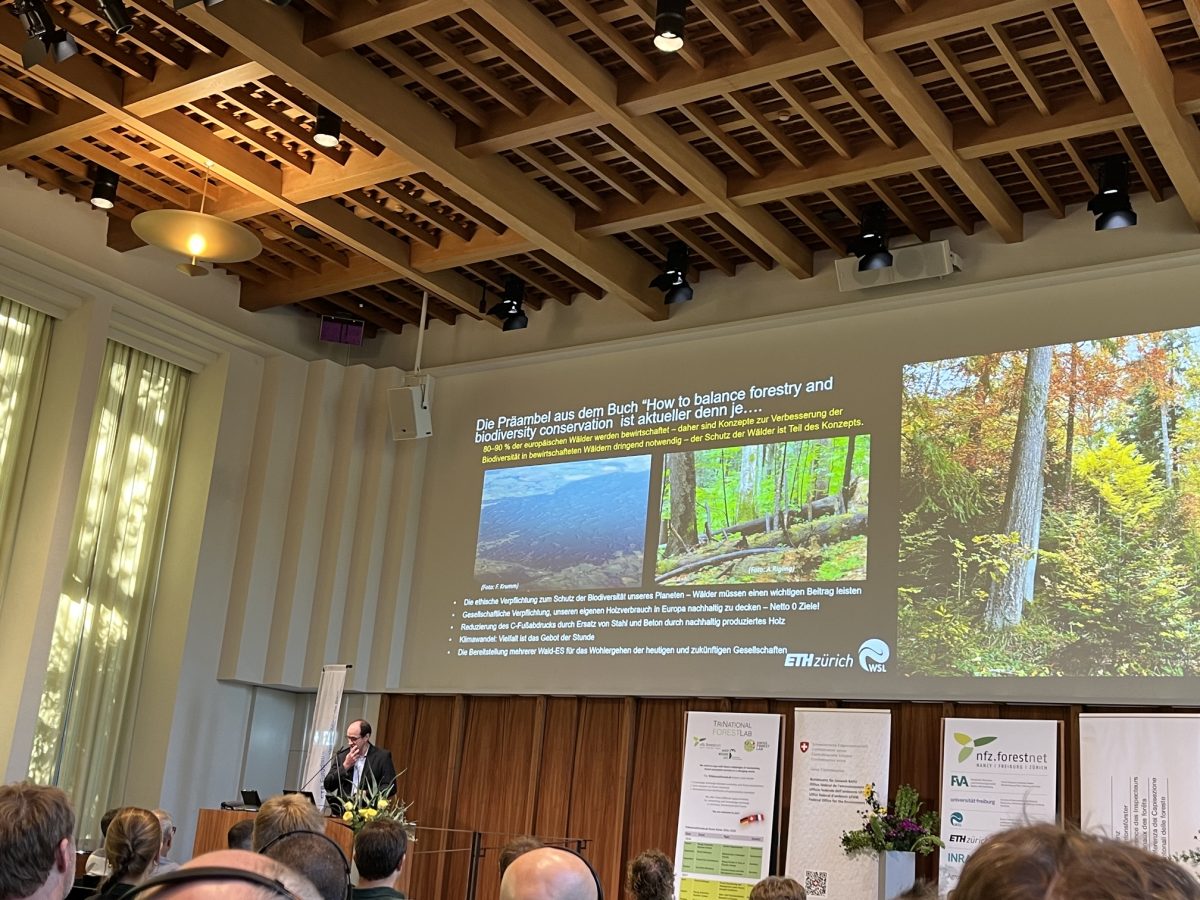
I felt that the urgency of this question was made tangible from the very beginning. As Arthur Gessler (WSL/ETH) emphasized, 2026 marks a turning point. Extreme heat and drought are increasingly visible in forests, with trees such as beech already showing severe stress early in the growing season. Across the Basel region, monitoring indicates that rainfall has been reduced in almost every month, leaving forests under considerable pressure, Gessler emphasized.

A strong argument for diversity

A recurring theme throughout the presentations was that diverse forests are better equipped to cope with climate change and uncertainty. Research presented by Hervé Jactel (INRAE) showed that mixed forests tend to be more resilient to drought, fire and wind disturbance than monocultures. They can also be more productive: mixtures of coniferous and broadleaved species can benefit from complementary traits such as different rooting depths and patterns of water use. However, a specific mixture of broadleaved and conifer species is needed for both forest resilience and productivity, and that mixture needs to be identified. Still, the results are promising, highlighting the potential of diversity to strengthen forests in a changing climate.

Diversity, however, is about more than simply planting several tree species. Genetic diversity within species can provide the basis for adaptation to changing conditions, as Jörg Kleinschmit (FVA) highlighted. The choice of tree species — and potentially the use of assisted migration — therefore needs to be considered alongside the genetic resources available to forests.

At the same time, biodiversity conservation cannot be reduced to tree diversity. Frank Krumm and Martin Gossner (both WSL) highlighted the importance of habitat trees, microhabitats and deadwood. Microhabitats are small, specialised structures such as tree cavities, cracks, loose bark or dead branches that provide food, shelter or breeding sites for many species. Many of these valuable structures are found in or develop from deadwood, making it an important element of forest biodiversity. Around a quarter of forest species are closely dependent on it, while many more benefit from it. Natural forest reserves therefore remain an essential component of biodiversity conservation, particularly for species requiring specialised deadwood structures, Gossner emphasized.

Potential of biodiversity in managed forests

But managed forests also offer opportunities, and this event mainly aimed at exploring these. Instead of viewing biodiversity conservation and forest management as separate worlds, foresters can actively create microhabitats and make use of structures generated by natural disturbances. This is where the concept of “close-to-nature forestry” becomes particularly relevant: working with natural processes rather than against them, while maintaining the multifunctionality of forests.
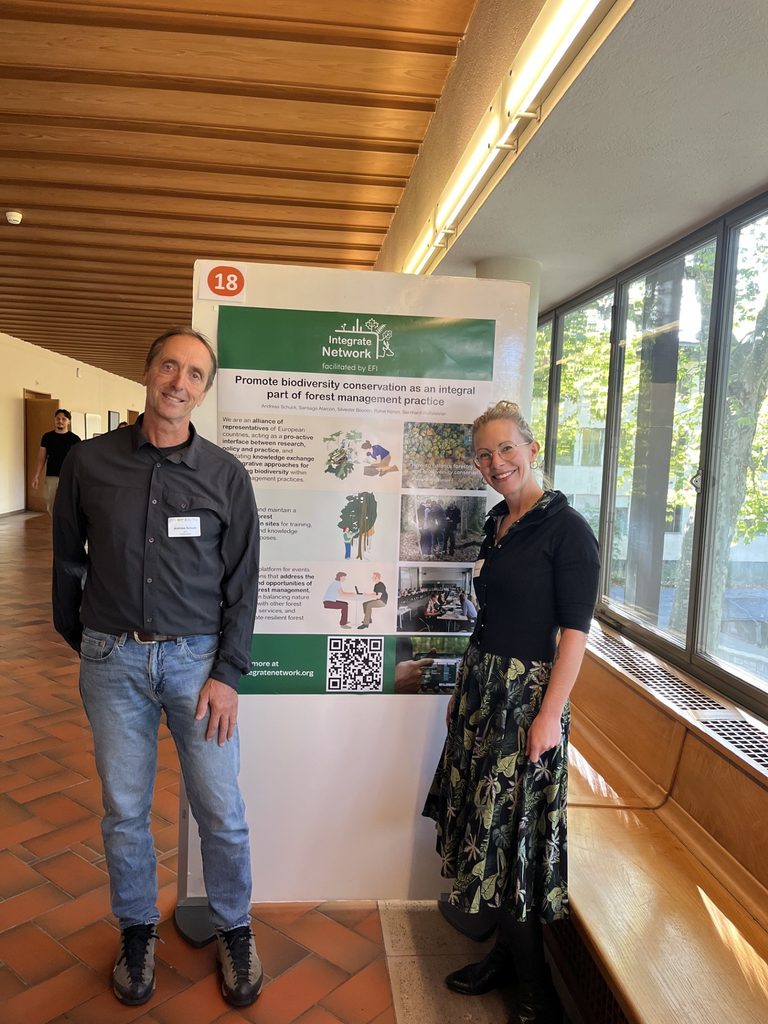
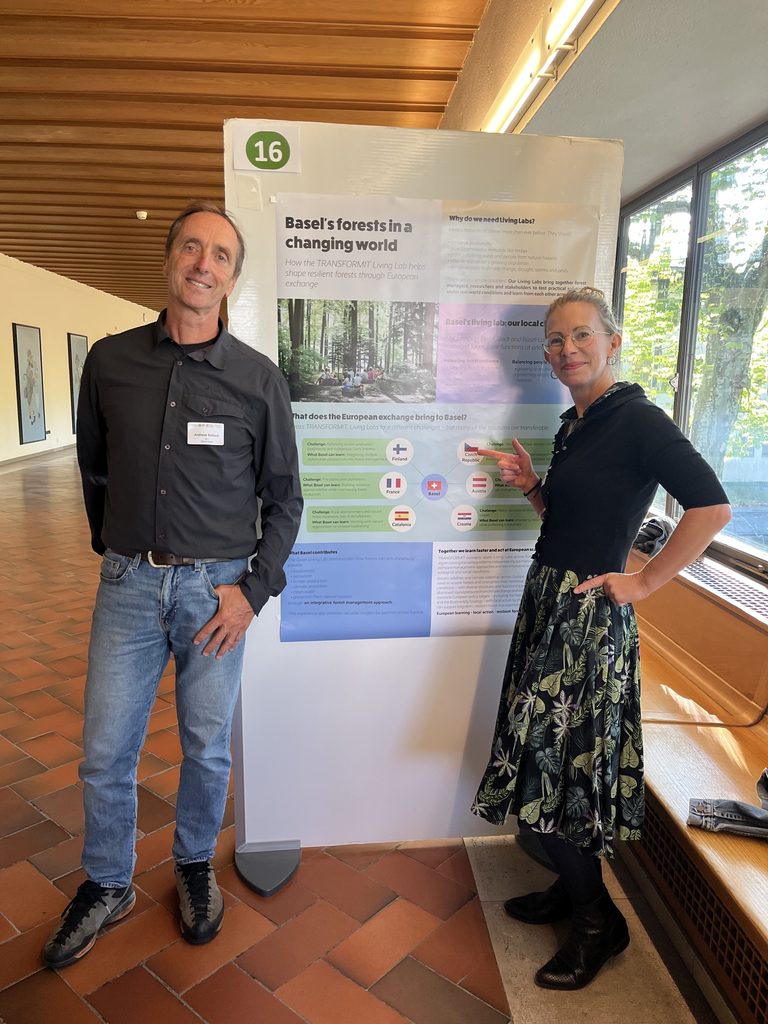
The practical examples presented during the afternoon demonstrated that these ideas are already being put into practice. Case studies from Switzerland included a presentation by our Living Lab partner Amt für Wald beider Basel, Switzerland, represented by the coordinator of the Living Lab Ueli Meier. Examples from Baden-Württemberg (Germany) and Alsace (France) showed how natural regeneration, species diversification, habitat trees and the retention of surviving trees after disturbances can gradually transform forest composition. In Baden AG, for example, the proportion of broadleaved trees increased substantially over 25 years, supported by a strong focus on natural regeneration.

The discussions also made clear that there are no simple or one-fits-all solutions. Increasing deadwood can create safety challenges for forest workers. Changing tree species can involve economic and ecological uncertainties. Continuous-cover forestry offers structural and species diversity but also faces questions around economic risks and social acceptance. And local conditions matter enormously.

From local conditions to European approaches

This is precisely why this cross-border dimension of Forest Dialogue was so valuable. Drought, heat, pests, biodiversity loss and changing societal expectations do not stop at national borders. Forests may be managed locally, but the challenges they face are European.

The direction of European policy reflects this reality. The EU Biodiversity Strategy for 2030 and the Nature Restoration Law place increasing emphasis on restoring ecosystems, improving biodiversity and strengthening resilience. Yet this does not mean that Europe needs one standardised model of forest management. Instead, European objectives must be translated into approaches that work under different ecological, economic and social conditions.
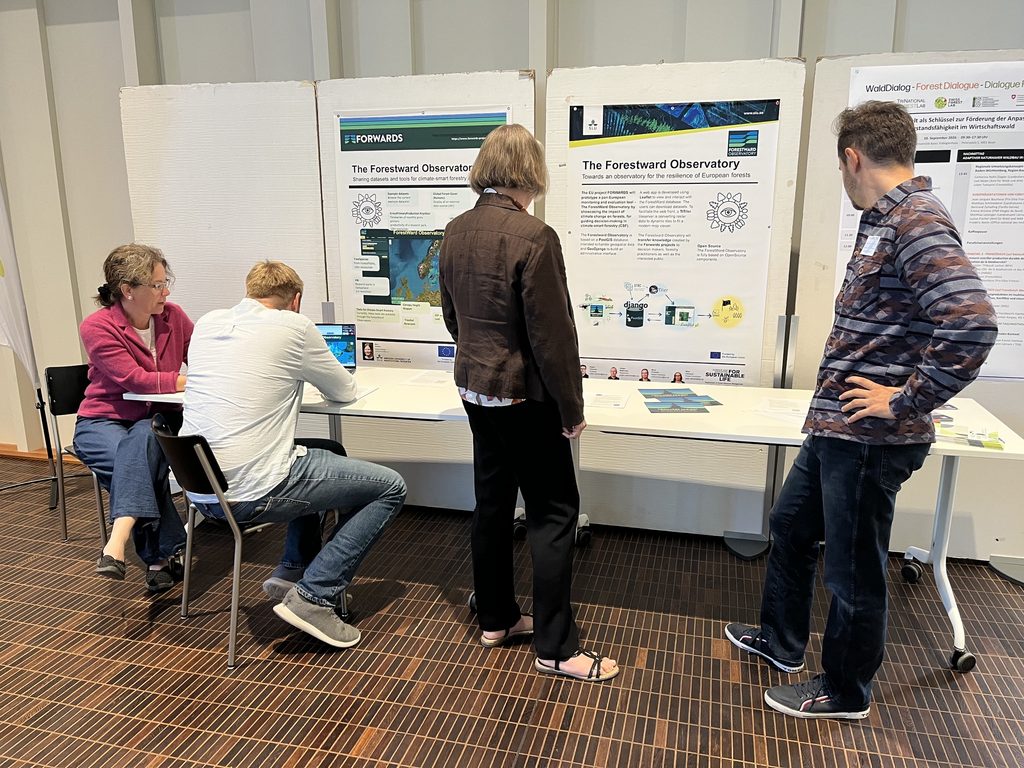

FORWARDS presentation by Barbara Mihok

For me, one of the strongest messages from Forest Dialogue was therefore the importance of knowledge transfer as a three-way process. Science needs to inform practice, but researchers also need to learn from the experience of those working in forests every day. The role of policy makers is to provide the interface between science and practice: translating evidence and practical experience into effective policy, while also ensuring that the realities and lessons from the field feed back into policy development. In this way, policy can become not simply an end point for knowledge, but a bridge that connects research, practice and decision-making. Projects such as TRANSFORMIT and FORWARDS as well as an established collaboration like the European Network Integrate (all presented there by my colleagues and me in sessions, via posters and talks) demonstrate different ways of connecting research, policy, and practice. TRANSFORMIT, for example, brings these communities together through Living Labs, stakeholder engagement and the development of practical, evidence-based guidance for Integrative Forest Management. FORWARDS connects scientific monitoring, modelling and data with the needs of forest managers and policy makers, with its ForestWard Observatory designed to support decisions on climate resilience and forest adaptation. The European Network Integrate provides a longer-term interface between the three, combining scientific evidence with demonstration sites, practical experience and policy exchange across countries.

The Forest Knowledge Gateway offers a practical platform to bring these different strands of knowledge together. It makes scientific findings, practical experience, tools and other resources easier to discover and access, helping users find relevant knowledge for the challenges they face in their own forests. In this way, the Gateway can help bridge the gap between knowledge being produced and knowledge being used.
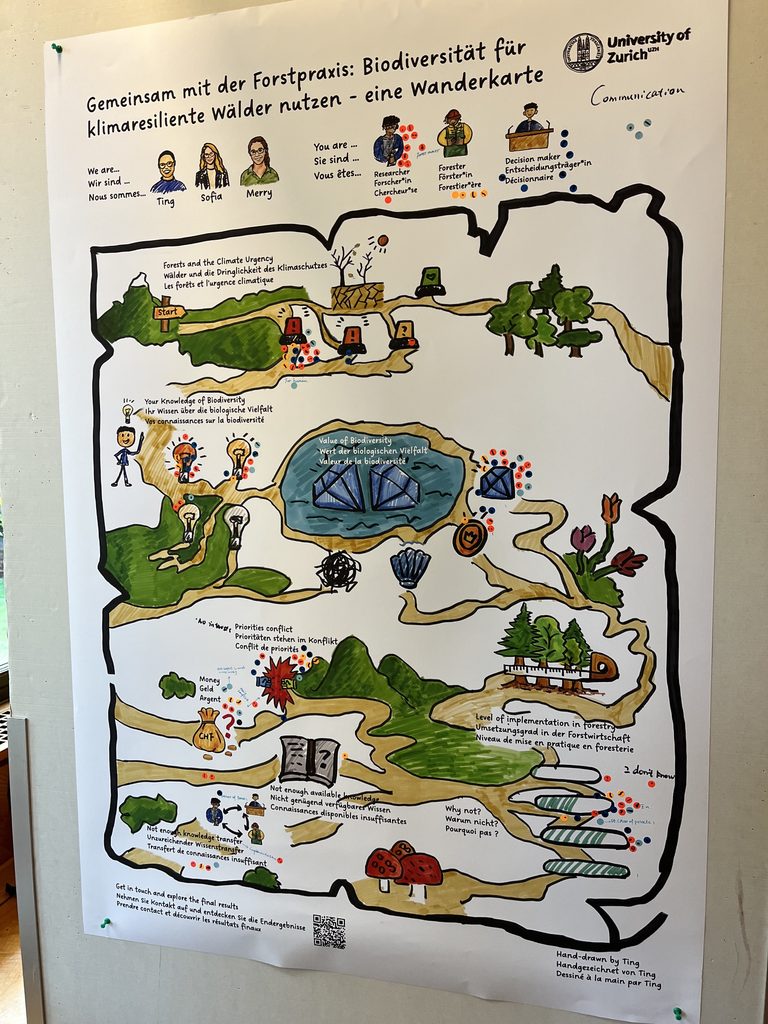
What a nice resilient forest game developed by Ting Tang (ETH Zürich)

Ultimately, knowledge only becomes valuable when it helps someone to make a better decision in the forest – this is why I also very much enjoyed the presentations by forestry practitioners, who shared what answers they need from research and thus made the exchange more fruitful.

That is what made the Forest Dialogue 2026 particularly encouraging. Despite different perspectives and some smaller controversies, there was a shared recognition that biodiversity, climate adaptation and forest management must be considered together. Bringing different perspectives into the conversation is essential to understand the challenges from all sides, identify solutions that work in practice, and build the trust needed to put them into action. Dialogue and meaningful stakeholder engagement are therefore not just a way of exchanging knowledge – they are part of the process of finding a way forward for resilient forests.

Surveying the House Where Many Live: Recap of the Very First “IBP Train-the-Trainers” Workshop

Written by Silvester Boonen, European Forest Institute

In April 15th and 16th 2026, 30 forest practitioners, forest owners, researchers, trainers, and students from 12 European countries gathered in southwest Germany for two intensive days dedicated to one deceptively simple question: How can we better understand the biodiversity potential of forests – in a way that supports real management decisions?

The answer, or at least part of it, was the Index of Biodiversity Potential (IBP), a field-based diagnostic tool that has steadily gained recognition across Europe over the last 15 years. Hosted through the Integrate Network and supported by the HE TRANSFORMIT project, the workshop combined classroom presentations and discussions, insights into the scientific background of the IBP, and extensive field training exercises to prepare future trainers to bring the IBP into their own forestry contexts and institutions.

From the classroom to the forest floor

On the first day, we were welcomed at the town hall of Binzen by Andreas Schuck (EFI) and Frank Krumm (WSL), introducing IBP experts Laurent Larrieu (INRAE, CNPF) and Pauline Marty (CNPF) as our field trainers. Little did we know that the next two days were about to be filled with a tandem of new learnings about the IBP, its theoretical background and a lot of practical knowledge on how to apply the tool in the field.

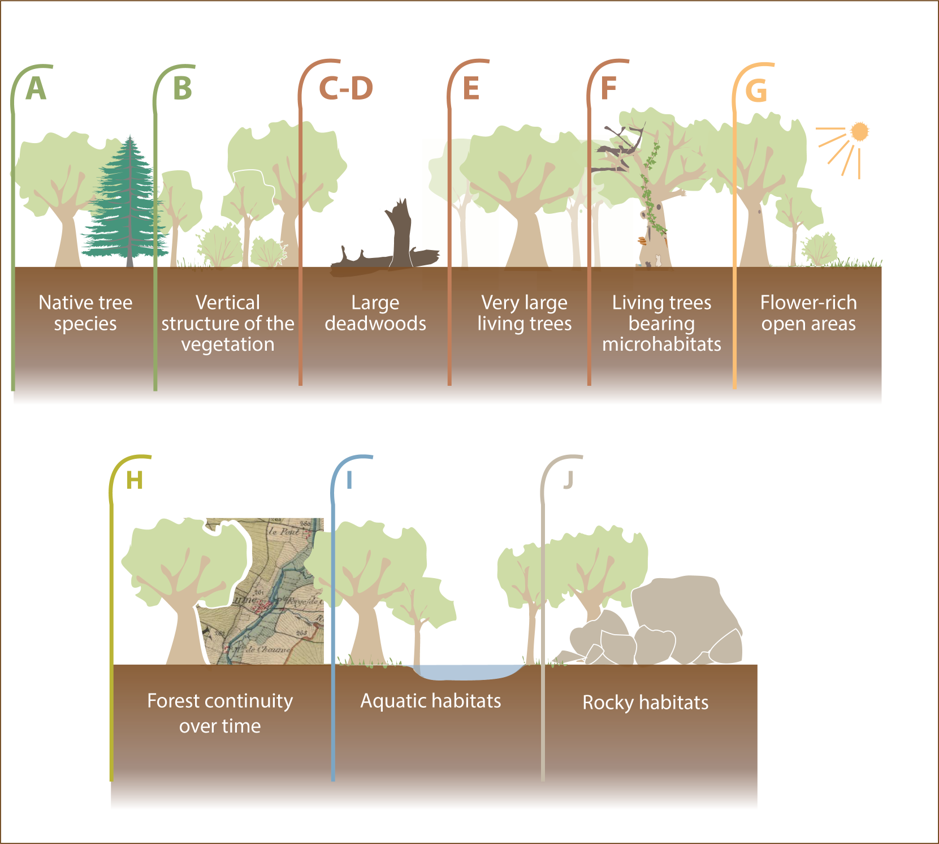
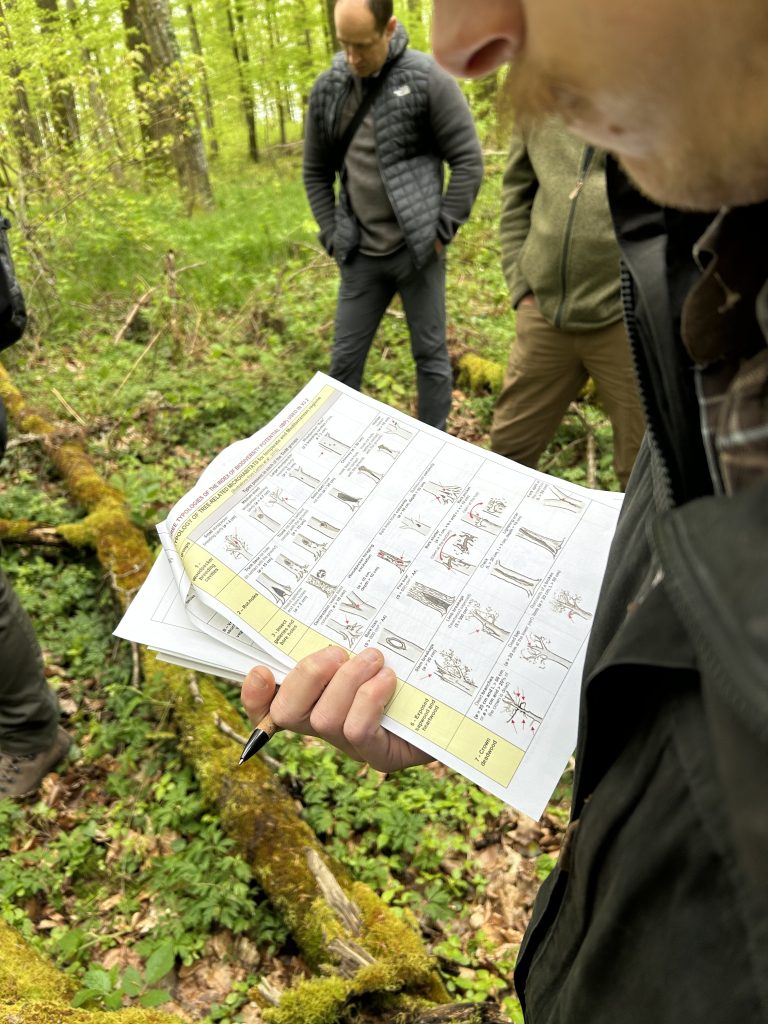
So, what is the IBP? For starters, rather than directly measuring species richness, the IBP evaluates the so-called hosting capacity, habitats and structural features that support biodiversity at the stand level. Pauline explained that the IBP is used as a diagnostic tool, based on ten factors, seven relating to forest management and three to context. These range from deadwood and vertical forest structure to ancient forest continuity and tree-related microhabitats (TreMs). Each factor is scored from 0 to 5, allowing a maximum of 50. The workshop quickly revealed how much ecological research hides behind this easy-to-apply tool. Pauline explained that the IBP is designed to work fast, ideally within 20 to 30 minutes per stand. She then proceeded to go through each IBP factor and why it matters. Let’s take, for instance, the factor for flower-rich open areas: For this factor, the percentage of flower-rich open areas is recorded in comparison to the surveyed area’s size of the stand. As many species not only rely on deadwood, but also the occurrence of flowers, or both, this factor is highly relevant. Some hoverflies species that need deadwood for their larvae and use the nectar from the flowers in the adult stage.

The IBP, a brief overview of the scientific background

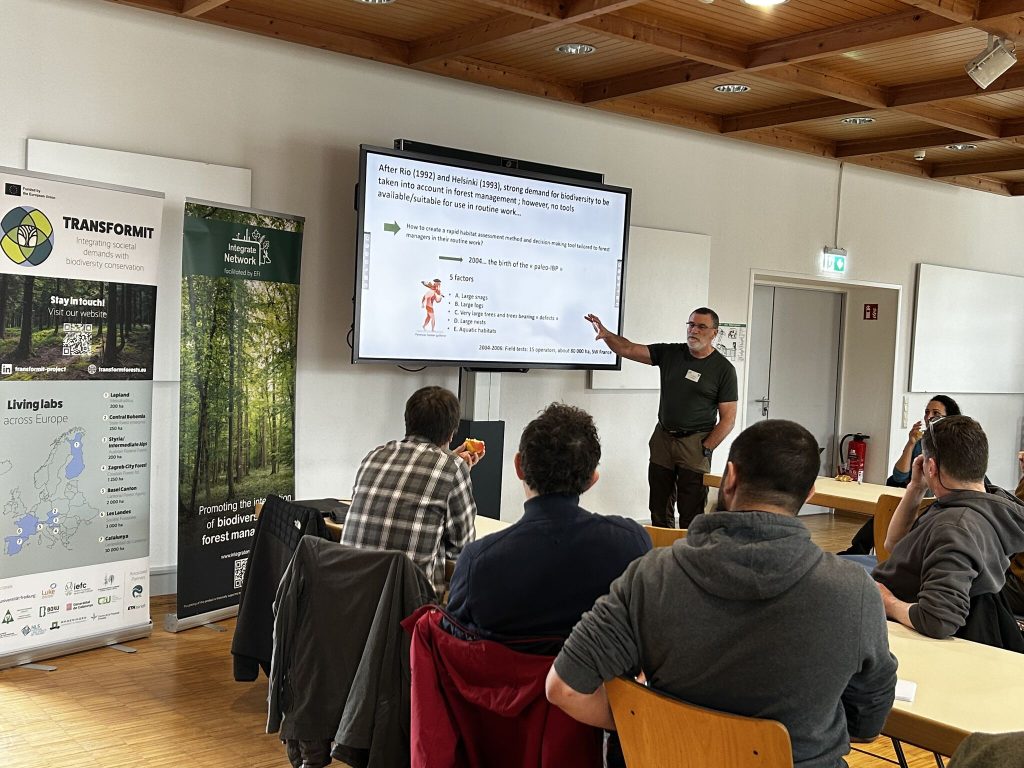
Following the introduction of the 10 factors by Pauline, Laurent took over and gave insights into the science behind the IBP. What appears in the field as a quick and practical scoring tool is, in fact, rooted in two decades of ecological research and development. Laurent reflected on the beginnings of the so-called “Paleo-IBP” around 2004, when he and his colleague Pierre Gonin first explored the idea of creating a rapid biodiversity assessment method for forest managers during their routine work. The first version focused on only five factors – large snags, large logs, very large trees and trees bearing “defects”, large nests, and aquatic habitats. This work eventually led to the landmark 2008 publication introducing the IBP as a “quick and easy method” that did not require taxonomic expertise. Laurent explained how the following years saw continuously refining and validating of the tool. Research explored whether the factors complemented each other, how sensitive the scores were to different forest types and management intensities, and how certain ecological components – especially tree-related microhabitats, deadwood, and forest continuity –could be better understood scientifically. Further, the IBP was adapted to different biogeographic regions (e.g. temperate Europe and the Mediterranean Basin). This process is still ongoing as new regions plan to apply the IBP. Despite all this scientific depth, Laurent stressed that the strength of the IBP remains its practicality: a fast, accessible field tool!

“TreMs are way nicer!”

After all this, it was time to head to the field!  We drove to a local communal forest, which Frank introduced to us. The stands consist mainly of high-quality oak with an understory of hornbeam. “They serve the needs of the community as a financial reserve, for example, to renovate a school”, Frank explained.

It was then time to investigate the diverse IBP factors hands-on! Spring was in full swing as the trees had their fresh green leaves, and the ground was covered with spring flora. To start off, Pauline introduced the five layers of the factor, also called ‘vertical structure’ (e.g. 1.5-7 m being the third layer). Here, a layer counts when you can observe a 20% occupancy of leaves in that layer. Important to note is that spring flowers on the forest floor would not be counted as an area for flower-rich open areas, as this factor looks at flowering plants linked to gap dynamics, open areas, and forest edges.  

Laurent advised to ‘eliminate’ individual factors as quickly as possible. This means that once the threshold of a factor is reached (e.g. 5 different tree genera), one can neglect that factor, as the maximum score of 5 points is reached. This speeds up the process of filling out the survey and allows forest practitioners to concentrate on the factors which are more difficult to record.

Laurent also noted that an “IBP is a score for today, but one should keep in mind that forests are dynamic and scores can change over time!”

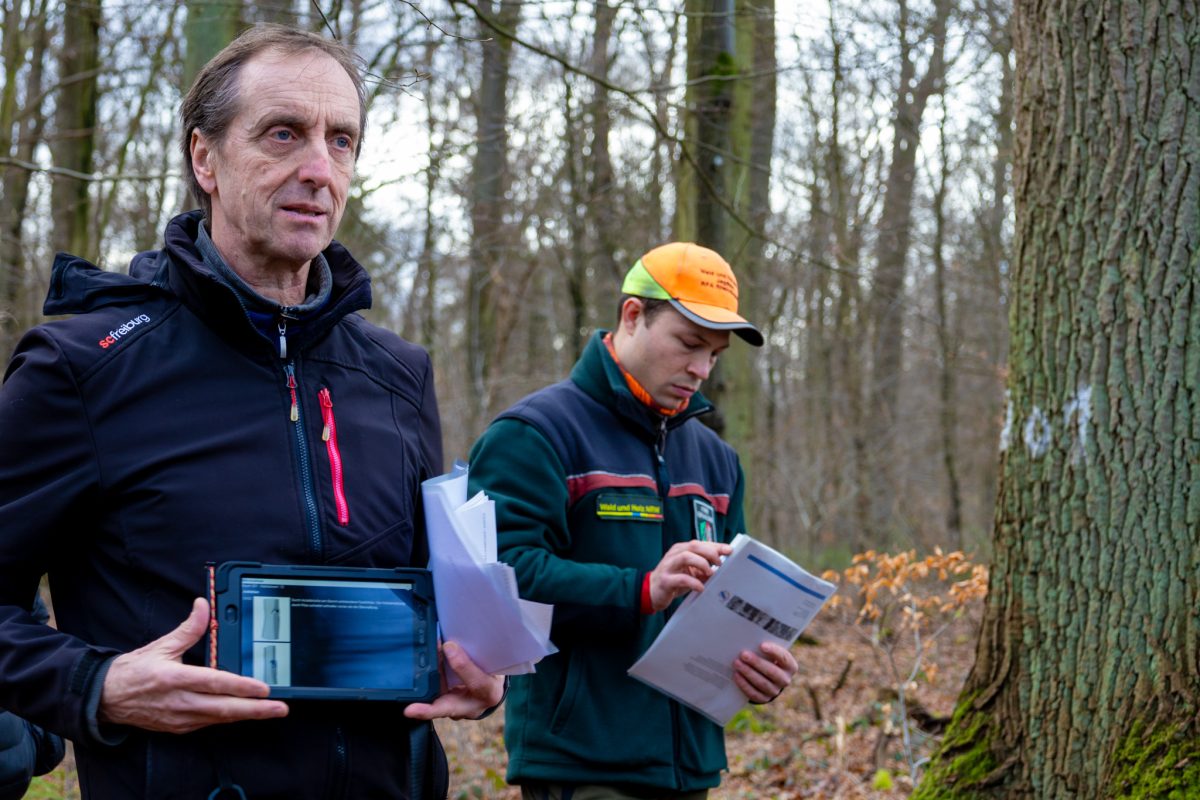
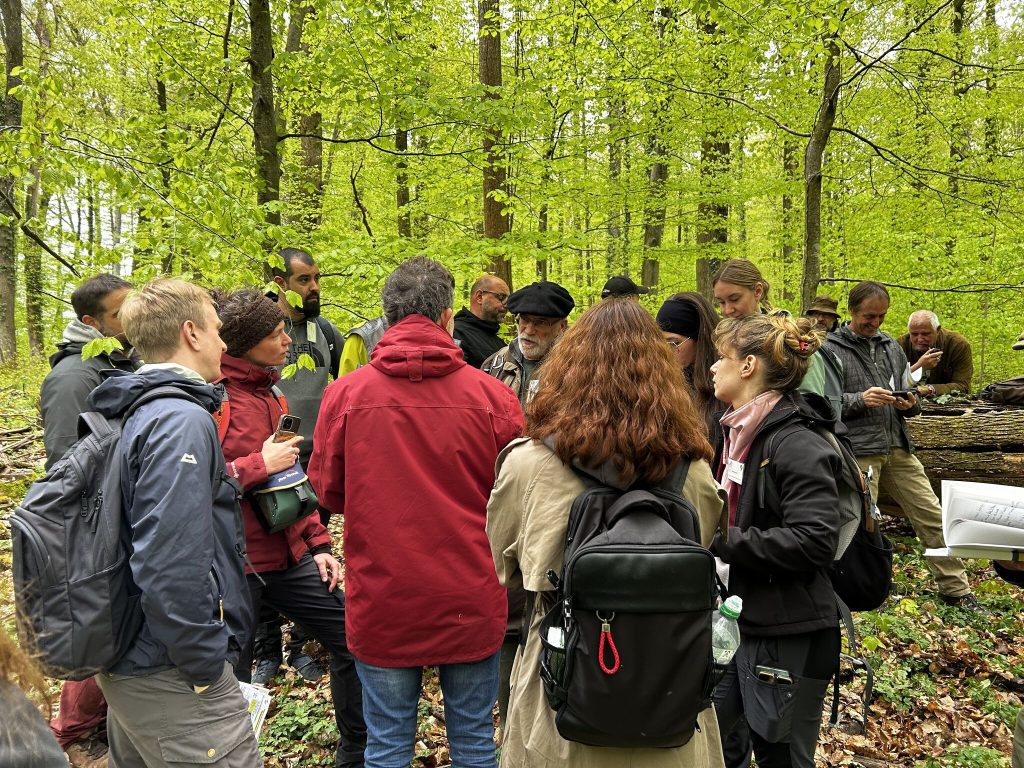
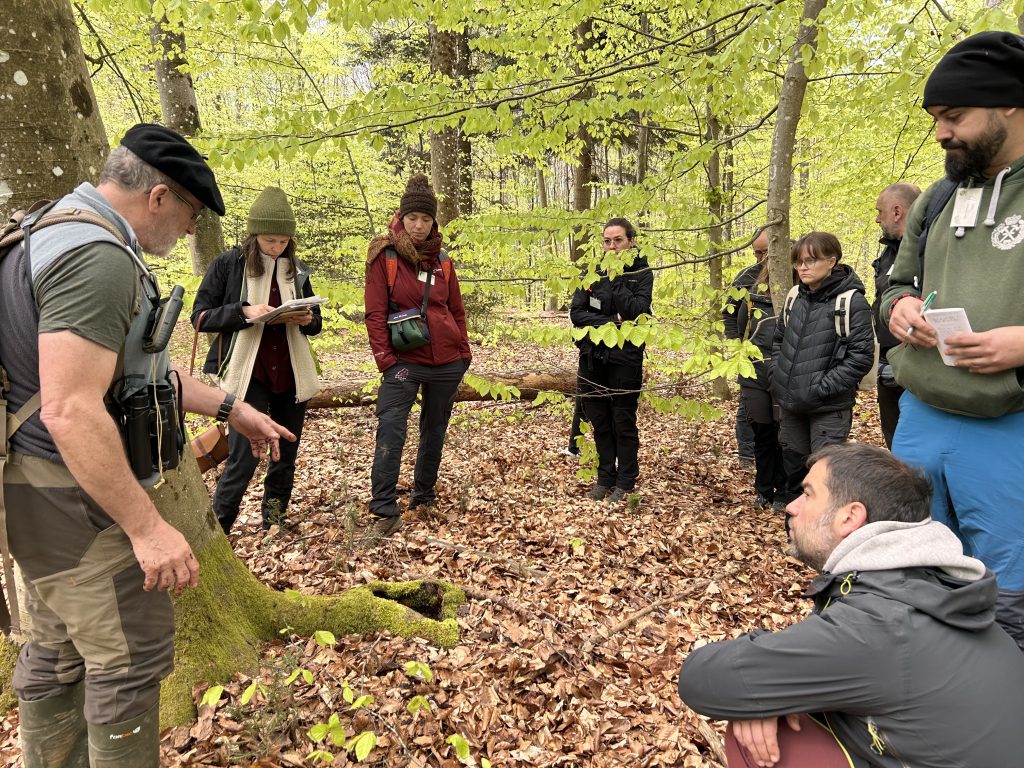
We stopped at a large oak tree. Laurent turns to the group and says: “So, flowers are nice, deadwood is nice, but TreMs are way nicer! I wish TreMs could be higher than 5 in the score, but my colleague Pierre said no, all the factors need to capped at 5”. Everyone laughed! Laurent showed us why he likes this tree, pointing at the loose bark. “This is a bark shelter. It’s loose hanging bark that can serve as a shelter along the trunk with an opening at the bottom; an important feature, e.g. for bats or birds. We then took a look inside and, “voilà”, we could see a nest! Pauline then presented us with a special case, where we saw a combination of both a deadwood log and a snag. While the tree broke down, the lower stem (snag) was still attached to the upper stem that became a log. Such a tree can thus be counted as both lying and standing deadwood.

When we walked further, we came across an atypical kind of pond, a skidding trail, with an aquatic habitat that hosts different species. While this sounds great for biodiversity, skidding trails are caused by harvesting machinery, thus damaging the soil of the forest. This is one of the main reasons why, according to the IBP framework, it is not counted as an ‘aquatic habitat’ and therefore not recorded within the survey.  This was the final stop before wrapping up our walk, now having a much better understanding of each IBP factor and ready to soon put the knowledge into practice the next day.

As a final stop we partook in a guided tour through Frank’s farm in Binzen, learned about the local wine culture, and got a small taste of the wine and liquor he makes from his own grapes and cultivated fruit trees.

Walking a plotline

On the second day, we headed out to the Kandern Community Forest, which is part of the foothills of the Black Forest. We met at the natural monument “Beheleneiche”, an old oak tree that has an estimated age of more than 300 years. It only died and fell over around a year ago. Its tree trunk remains, as lying deadwood, offering food and habitat for many organisms –  a haven for biodiversity!

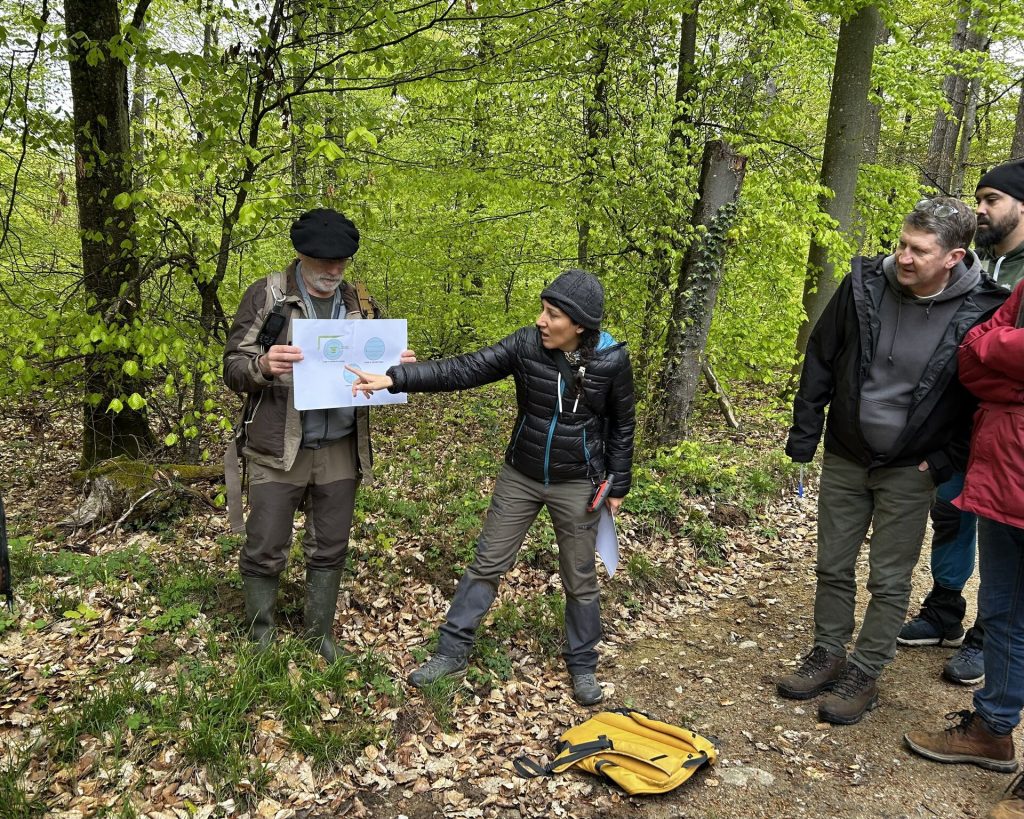
So, what was waiting for us that day? With the hope of putting our newly acquired knowledge into action and completing an IBP survey, we divided into small groups. Not sure where to start, Pauline and Laurent helped us by introducing diverse inventory approaches, including 3 possible methods: a route in a) concentric circles, b) a star shape or c) parallel lines. Each group got to pick one method, with our group choosing the concentric circle one.

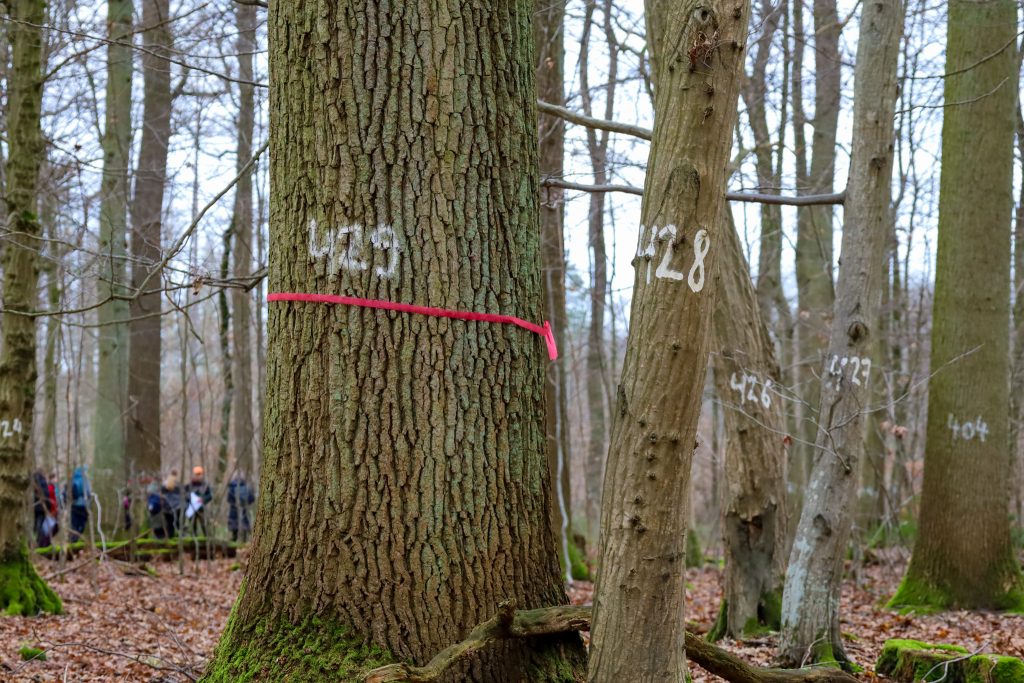
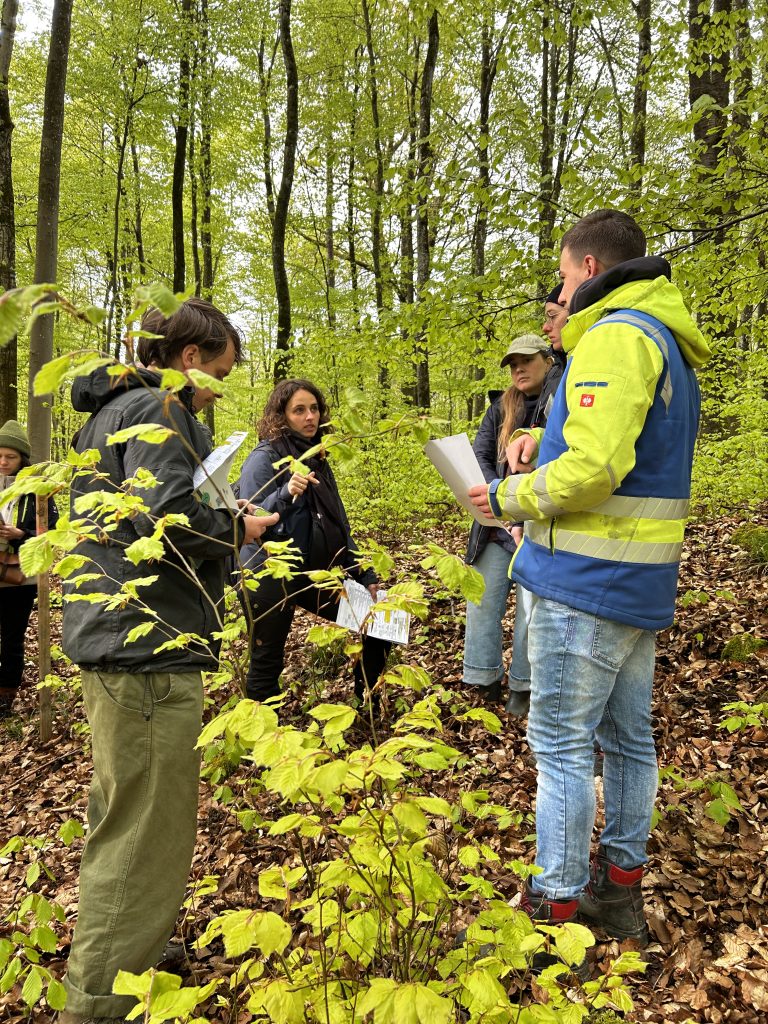
We then started our survey in the Behleneiche marteloscope, named after the monumental oak tree. To save time, we learned to check the factors as much as possible from one location, as some required much more discussion or detailed observations. Native tree genera were an easy exercise: we spotted beech, maple, oak, wild cherry, and pine… check, 5 points! We then marked the broken tree as a snag, but … wait …  another participant noticed that the tree was still alive! Still important for the IBP survey, as it may bear microhabitats. We then were able to count some medium-sized logs as lying deadwood. We also used a TreMs field guide and identified a split fork in a wild cherry.

After the inventory of the inner circle we went on to survey the circular route. We paid particular attention to the factor of ‘vertical structure’, while identifying a few very large trees that were checked for additional TreMs.  We then wrapped up our survey : 5 points for native tree species, standing deadwood, living trees bearing microhabitats, very large trees, 2 points for large lying deadwood and vertical structure. The factors with no score were flower-rich open areas, forest continuity, aquatic and rocky habitats, as there were simply none present.

We then started to gather at the Behleneiche, to exchange on what we had surveyed. The local forester, Otto-Jesko von Schröder, joined and shared some insights on the Kandern Community Forest and its management. He highlighted the aim of ensuring a large number of different tree species in stands, emphasising those that can best cope with climate change impacts. One important detail we learned from Otto-Jesko was that formerly these sites were used for mining, which means that in the past, parts of these forests were cleared. For the IBP score this means 0 points for forest continuity over time.

Back in the classroom, the final afternoon sessions gave participants the opportunity to reflect on the IBP survey and place them into a broader operational context, learning about special cases (e.g., the uncapped version of the IBP). They also offered a glimpse into the future development of the IBP, including digital tools and applications designed to support field inventories and data collection more efficiently. By the end of the workshop, the IBP no longer felt like a simple scoring system, but rather like a practical framework that truly connects ecological understanding. Quite a few participants already announced that they will initiate training events in their home countries. Thus, it seems, the mission of training “future” trainers was already accomplished in Binzen! In any case, a memorable workshop for all – one that will hopefully continue to bear its fruits in many forests across Europe.

For more knowledge and guidance on how to apply the IBP, visit: https://www.cnpf.fr/ibp-index-biodiversity-potential

Webinar: Marteloscopes as tools for Integrative Forest Management

On 26 June 2026, the FOREXT Fridays webinar series will bring together forest professionals, advisors, researchers, and stakeholders for an engaging webinar exploring how Marteloscopes can support integrative forest management and informed decision-making across Europe’s forests.

Organised in partnership with the EU-funded FORADVISE project, this edition of the FOREXT Fridays webinar series will showcase practical Marteloscope experiences from Ireland and Germany, demonstrating how these innovative learning and decision-support tools help balance ecological, social, and economic forest objectives.

A Marteloscope is a specially designated forest area where every tree is tagged, measured, and mapped. In addition to timber-related information such as wood quality and market value, detailed data are collected on biodiversity features including cavities, deadwood, fungi, lichens, nests, and other microhabitats. By bringing these different dimensions together, Marteloscopes provide a unique environment for training, stakeholder engagement, and testing management decisions in a realistic forest setting.

Marteloscope exercise in the Kottenforst, close to Bonn, Germany (photo: Rosa Castañeda)

As forests face growing demands related to climate resilience, biodiversity conservation, timber production, and recreation, integrative forest management has become increasingly important. Marteloscopes offer a practical way to visualise trade-offs, foster dialogue among stakeholders, and strengthen the capacity of forest advisors and managers to make balanced, evidence-based decisions.

The webinar programme will introduce the Marteloscope concept through the Integrate Network before presenting two case studies. Participants will learn about a Marteloscope initiative in Ireland and discover how Marteloscopes in North Rhine-Westphalia, Germany, are being used as effective tools for stakeholder engagement. The session will conclude with a discussion on how these approaches can support forest advisors in addressing complex management challenges.

The webinar will take place online on 26 June 2026 from 13:00 to 14:00 CEST. Participation is open to anyone interested in sustainable and multifunctional forest management.

Join FOREXT Fridays to explore how Marteloscopes are helping turn the principles of integrative forest management into practical action on the ground. Register here: FOREXT Fridays – FOREXT

IBP “Train the Trainers” event is bearing first fruits: Ireland to host multiple outdoor workshops this Spring

During April and May various Marteloscope workshops are already taking place in Ireland, organised by Teagasc Forestry Development Department (National Forest Extension Agency) in collaboration with the Forestry Division of the Department of Agriculture Food and the Marine (DAFM). Those are outdoor in-forest workshops, which aim to promote and facilitate discussions on integrative forest management options and approaches, together with forest owners, practitioners, and forestry students.

Credits: Jonathan Spazzi

The recent “Train the Trainers” event in Binzen, Germany, jointly organised by TRANSFORMIT project and the Integrate Network, and attended by Jonathan Spazzi (Teagasc) and Dermot Dunphy (DAFM), was instrumental to further bring the IBP survey methodology front and centre as part of the Irish Marteloscope workshops. As fully booked events, these workshop series showcase the current interest in Ireland to learn more about the integration of biodiversity conservation into management practices and, in particular, the Index on Biodiversity Potential. Here a blend of forest owners, practitioners and students are coming together to take part in frank and meaningful discussions.

So far, the feedback received is excellent, says Irish Integrate Network member representative Jonathan Spazzi. The organizers expect around 80 participants to be trained this spring with more planned to attend trainings in Autumn.

Through the Integrate Network and a range of research and development projects, including SimInForest and the TRANSFORMIT project, collaboration across Europe between educators and researchers is ongoing on how best to best promote and communicate new, integrative, and closer-to-nature management solutions and ensure that forest health and productivity can continue to provide essential services to society’s collective well-being.

How can a tool like the “Index of Biodiversity Potential” spread more widely?


From 15–16 April, 30 forest practitioners, researchers, and representatives from 12 European countries gathered in Binzen, Germany, for a very special two-day workshop – the first-ever “Train the Trainers” event on IBP, organised by the Integrate Network in collaboration with the EU Horizon TRANSFORMIT Project. We specifically invited a small group of participants to allow for a real hands-on and interactive experience.


On the morning of the 15th, Laurent Larrieu (INRAE) and Pauline Marty (CNPF – Centre national de la propriété forestière) gave us in-depth insights into the science and development of the tool and its ten key factors of biodiversity. In the afternoon, theory was brought to life. In the forest, participants reviewed what had been discussed with real stands and conditions.


Our second day started in a marteloscope in Kandern – participants were split into four groups to test their knowledge and conduct the IBP survey at the forest site. Laurent and Pauline provided hands-on support throughout the exercise, and the local forest manager joined to share the history and management of the forest we were standing in.


Rich Q&As, deep group discussions, and diverse reflections from various national contexts and forest types across Europe – all of these made the exchange valuable, not only with the two trainers but also between participants.


Over the past two days, various participants shared with us their perspectives on the IBP, why the tool is relevant to their local context, and how they are hoping to bring the knowledge from the training back to their colleagues and forests.

With their commitment to bring the knowledge and application of the “Index of Biodiversity Potential” home, we’re grateful for the success of this first iteration of an IBP “Train the Trainers” event!

You could watch the afterevent video on the right to learn more about this event.


Curious to know more about the IBP? Dive into the topic through EFI’s “What is” series and stay tuned for our upcoming articles regarding the IBP, its potential applications, and our IBP “Train the Trainers” participants’ reflections on our two days together.


Photo credits: Shanqing Gao & Rahel Könen, EFI

Diversity in Integrative Forest Management: our Satellite Demonstration Areas

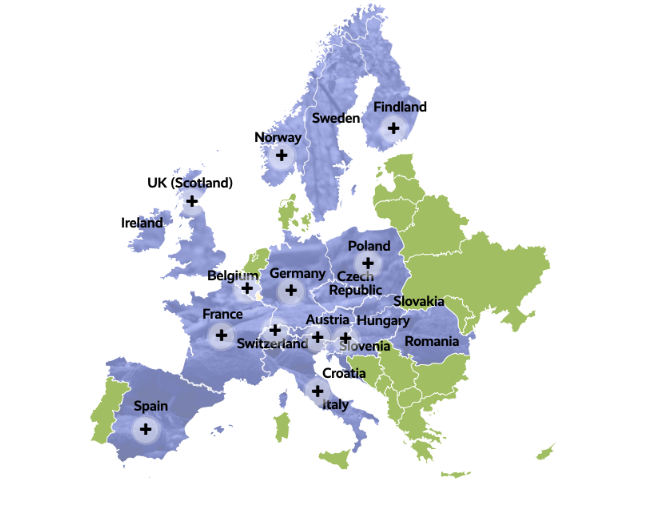
Across Europe, our unique network of TRANSFORMIT Satellite Demonstration Areas (SDAs) is bringing to life the diversity of forests, management traditions, and innovation pathways needed to address climate change. From Mediterranean landscapes to boreal forests and urban green spaces, these selected sites illustrate how locally adapted solutions can contribute to resilient, multifunctional forest systems. The SDAs aim at showcasing several good practice examples of Integrative Forest Management (IFM) across Europe, thus broadening the scope of expertise available and enlarging the IFM Network. These areas are now available on Main – Transformit.

Maps of TRANSFORMIT’s SDAs across Europe.

Close to Nature forest management in action

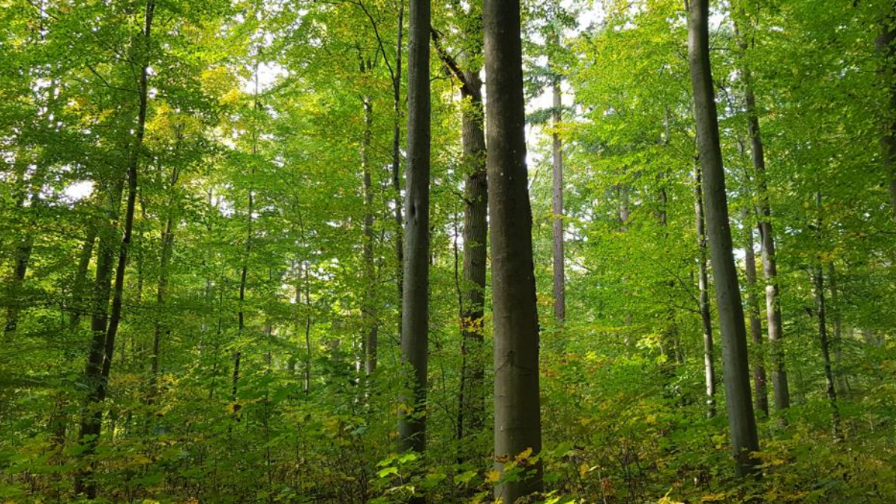
A beech forest in Kalebsberg, Germany.

Several German forest enterprises – including Schütt-Frank and Kalebsberg – demonstrate how close-to-nature forest management can build climate resilience. Their approaches emphasise natural regeneration, soil health, balanced wildlife populations, and stable forest microclimates. Together, they highlight a shift away from rigid management towards adaptive, self-regulating forest systems.

Forests for people: urban and social functions

In highly frequented landscapes such as the Kottenforst (Germany), the Sonian Forest (Belgium), and the City Forest of Baden (Switzerland), forests must balance recreation, biodiversity, and cultural heritage. These SDAs show how integrative management can meet societal expectations while maintaining ecological integrity. Innovative approaches like “ecosponsoring” in Switzerland further demonstrate new forms of collaboration between society and forest stewardship.

Multifunctionality across Europe

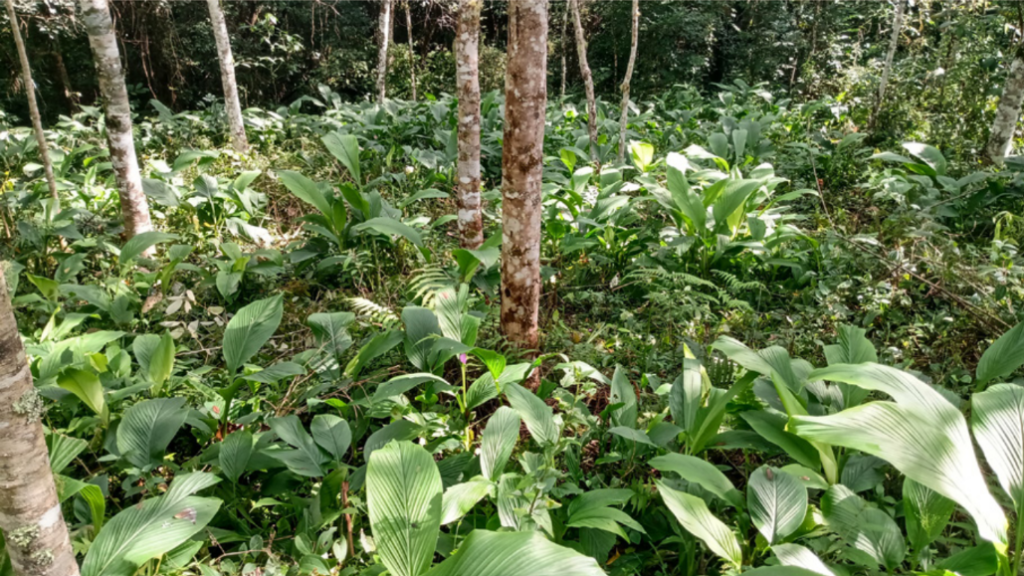
Agroforestry. Tree vegetation has established itself in an abandoned plantation with Turmeric (Curcuma
longa) – Abbey St Bathans UK-Scotland Dobie family, Scotland.

From Scotland’s Abbey St Bathans to Slovenia’s Pahernik Forest and Norway’s Vestland region, forests are managed to deliver multiple ecosystem services. While timber production remains important, these SDAs also support biodiversity, cultural values, and education. In Poland’s Woziwoda Forest District, this balance is captured through the principle of “nature protection through moderate and rational use.”

Mediterranean innovation and adaptation

Our Southern Europe’s demonstration areas highlight innovation under climate pressure. In Spain, forests such as Vall d’en Bas and Ribera Salada explore how to combine biodiversity conservation with high-quality wood production, while others integrate fire as a natural and necessary management component. In Italy and France, sites like Val di Susa, Pratomagno, and Hèches focus on multifunctional forestry – balancing production, protection, and long-term ecosystem resilience in the face of climate change and biodiversity loss.

Forests for research and education

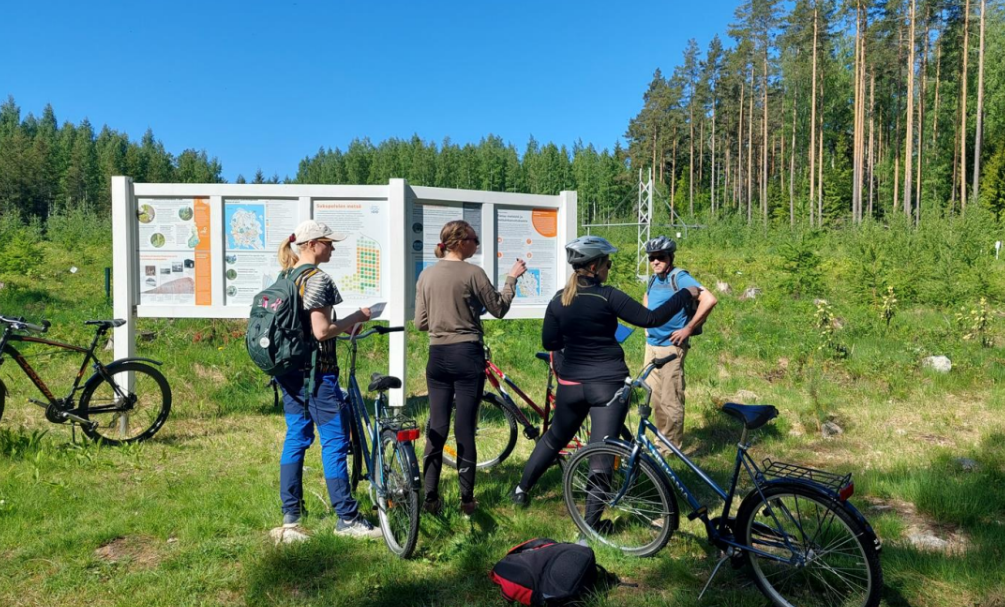
Training/Education at Punkaharju Research Park, Finland.

Some demonstration areas serve as centres for research and education, such as the Punkaharju Research Park in Finland, the University Forest Enterprise in Zvolen, Slovakia, and Universitätsforstamt Sailershausen in Germany. These sites connect science, practice, and society, ensuring that forest management is continuously informed by evidence and innovation.

By connecting these sites, TRANSFORMIT creates a living network of knowledge and practice, demonstrating that there is no single solution to climate and biodiversity-related challenges but many locally grounded pathways that, together, shape a more sustainable future for Europe’s forests.

FORWARDS to boost the Forest Knowledge Gateway

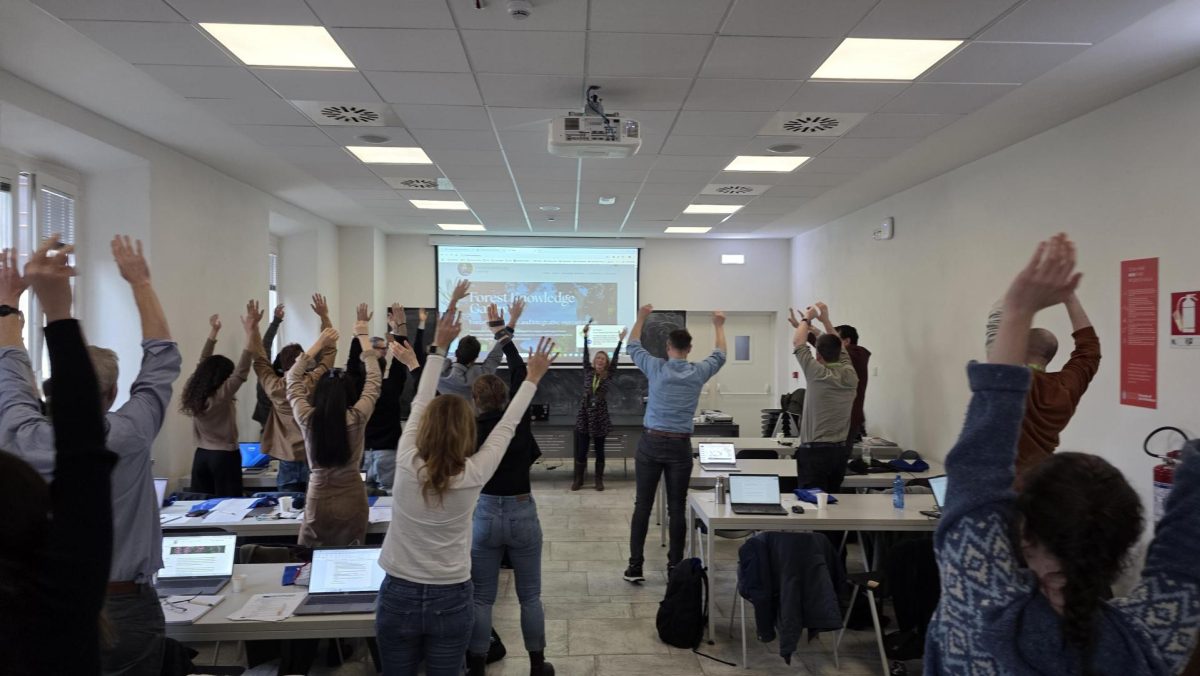
FORWARDS is set to contributing to the future of the TRANSFORMIT-led Forest Knowledge Gateway, bringing in a wealth of scientific insights, practical tools, and policy‑relevant outputs generated across its work packages. With a growing body of content for integration – including scientific papers, and eventually good practice guides, tools and stories – FORWARDS is preparing to make the Gateway an even more powerful hub for forestry practitioners, policymakers, and scientists. This was discussed after a Gateway presentation as part of the FORWARDS project’s annual meeting in Florence.

A key opportunity lies in the project’s diverse digital outputs. These range from interactive applications developed within the ForestWards Observatory (WP5) to modelling tools for disturbances, carbon dynamics, and climate‑smart forestry. The intention to publish good‑practice guidance and multilingual materials directly onto the Gateway will further enhance accessibility and support its role as a European reference point.
FORWARDS’ commitment to sharing scientific publications and storytelling-based lessons learned adds to its value proposition, reinforcing the Gateway as a platform not just for data, but for knowledge exchange, engagement, and narrative‑driven impact.


Strengthening Synergies: TRANSFORMIT & FORWARDS

The collaboration potential between TRANSFORMIT and FORWARDS is emerging as a promising avenue for cross-project enrichment. Both projects emphasise practitioner-oriented engagement and communication, data-driven insights, and innovative digital outputs – making joint dissemination not only strategic, but mutually reinforcing. As FORWARDS moves into a crucial phase of shaping its policy messages, the collaboration with TRANSFORMIT offers a chance to amplify shared lessons, align outreach efforts, and strengthen Europe’s capacity to support climate‑smart and resilient forest management.

Featured image: performing trees before the Gateway presentation with the FORWARDS Consortium (photo: Katharina Freund)

Roots of resilience: Insights from the Integrate Network World Café in Dublin

In early October, the Integrate Network representatives gathered in Dublin, Ireland, for their annual meeting – a few autumn days brought together forest owners, researchers, policymakers, and practitioners from across Europe. They came with a shared mission: to learn from each other’s successes and challenges in Integrative Forest Management (IFM) practices.

Among the many productive sessions and exchanges, one captured the collaborative spirit of the gathering – an interactive World Café. This participatory method invites people to rotate between small discussion tables, sharing perspectives and building on one another’s ideas as they go. It turns a meeting into a living dialogue, where every voice adds a piece to the bigger picture.

We had five tables, three questions, and one goal: to reflect together on why IFM is needed, what barriers stand in the way of its wider adoption, and how collaboration can help drive progress.

Why – The roots of resilience

When the first question was asked – Why do we apply integrative forest management? – the answer came as a series of insights that rooted back to one word: resilience.

Participants spoke of forests that must endure uncertainty – storms, pests, changing climates, and shifting societal expectations. To strengthen resilience, they agreed, is to ensure that forests can provide multiple goods and services – timber, biodiversity, recreation, clean water – without losing their vitality.

One participant captured it simply: “It’s about balancing production with diversity and all the other ecosystem services society depends on.” Another added that IFM is “a means of compromise” – between societal interests, biodiversity conservation, and the needs of forest owners.

Stories emerged from practice too. A forest owner had started planting oak, “just to do something different,” his peers recounted. This small spark of curiosity became a symbol of innovation – a forest that is more diverse and resilient. It showed how change often begins quietly, with one decision that ripples outward.

And as others noted, IFM is also an act of education: “It’s not just on paper. Everybody can see how it looks outside in the forest.”

What – Between vision and reality

As the conversation turned to practice, the tone grew more grounded. Implementing IFM, the groups agreed, is demanding, held back by limited training, a shortage of skilled contractors, and insufficient financial incentives. The forestry systems in many countries are still “set up for big machines,” which makes closer-to-nature approaches harder to apply. Some raised issues like deer pressure, fragmented ownership, or the need to better adapt IFM to regional contexts where conditions and traditions differ.

“Integrative forest management is more complex to manage,” as the conversation went. “There are more things you have to take into account – and for that reason it’s more costly.”

Yet behind each challenge lies persistence. In smaller forests where hiring a professional was unaffordable, owners learned by doing, guided by peer exchange and shared experience. Participants also discussed the importance of valuing the benefits of IFM – not just timber, but carbon, water, biodiversity, and the social value of healthy forests.

How – Growing together

The final question – How can we collaborate better? – explored the potential of working side by side to support a widespread adoption of IFM.

Forest demonstrations and peer learning were seen as powerful catalysts for change. “If one forest owner plants differently, a neighbour might follow. It takes one person to break the ice,” as one reflection captured.

The conversation grew into a reflection on networks – the need for “champions” who inspire others, and for meetings that bring people together not just professionally, but as a community. Collaboration, participants noted, requires translation – not just between countries and professions, but also for society. “Foresters talk to each other in the same language,” one participant observed. “But society needs to understand us too so that we can show improvements and gain acceptance.”

Inclusion was another key theme: being mindful of local customs, power dynamics, and the ways policies align across EU and national levels. The discussion closed with a clear takeaway: investing in collaboration and education today builds resilience and understanding for tomorrow, avoiding the higher costs of restoration later.

A living conversation

The World Café in Dublin ended with a sense of shared direction. “Why Integrative Forest Management?” one participant reflected aloud. “Because we can. Because it’s possible – and our skills keep growing. We can do it, and that’s exactly why we do it.”

This message lingered in the room long after the discussions ended – as an affirmation of what unites the Integrate Network: the belief that forests, like communities, grow stronger through diversity, dialogue, and care.

And in that shared space – between the forest and the meeting room, between policy and practice – something continued to grow: understanding, trust, and the quiet confidence that IFM remains a living practice, strengthened by dialogue, tested by challenges, and carried forward together.

From Samechov to the world: forest lessons inspire the Living Lab Network 

It was the morning of 22 September 2025 when the TRANSFORMIT team gathered at the hotel, shaking off the early chill before boarding the bus to the forest. Inside, a gentle mix of English, Czech, Finnish, and Chinese filled the air – voices from across continents united by a shared curiosity about the forest. Greeted by the Czech management team and our hosts, Petr and Miro, we were soon immersed in the story of Samechov – a place where ecological forestry is not just discussed but lived. Inspired by ideas developed by Jerry F. Franklin and colleagues in the United States, the approach here follows the rhythms of nature itself, using natural disturbance regimes as a model and treating the forest as both classroom and teacher. By the time we stepped beneath the canopy, the concept ofIntegrated Forest Management had transformed from words into something tangible.

Although the area is naturally dominated by beech, only about 29% of the forest reflects that today – the rest remains shaped by the long-standing spruce monocultures typical for the region. Against that backdrop, the beech stands appeared as pearls in a spruce storm. 

Petr and Miro explained that ecological forestry in Samechov aims to restore natural diversity – using biodiversity not as a goal, but as a driver for other ecosystem functions. Natural regeneration plays a key role in promoting this variety, alongside a mix of management approaches rather than relying on just one. This creates structural diversity and resilience, supported by core principles such as avoiding clearcuts, preserving veteran and habitat trees, and managing deadwood according to the “1:10 rule” of biomass retention. 

As we walked deeper into the forest, the discussions turned lively. Participants compared ecological and economic criteria, debated the challenges of financing mixed forests, and talked about risk management in a changing climate.

“Natural variability is the best key for resilience,” one of the hosts reminded us – a phrase that lingered throughout the day.

Later stops revealed the practical side of this philosophy. We visited stands where old spruce and pine had been logged, leaving space for light-demanding species like maple and beech to thrive. In other areas, small unmanaged patches showed that sometimes the best management decision is to simply let nature take its course, allowing habitats for fungi, lichens, beetles, bats, and endangered species to thrive.

The afternoon brought us to younger stands, where foresters are experimenting with Variable Density Thinning – a technique that mimics natural disturbances by creating varied light and gap conditions. While sometimes controversial, this approach breaks the monotony of even-aged stands and strengthens long-term resilience.

The day ended in a nearby nature reserve – an awe-inspiring old-growth beech forest where management stops and nature takes over. Surrounded by centuries-old trees, deadwood, and rich biodiversity, participants could see the principles of ecological forestry in their purest form. “We are standing inside the very template that guides our management,” someone noted quietly as the group stood beneath the tall beeches.

Another milestone

Four representatives of Satellite Demonstration Areas (SDA) from Norway, Italy and Germany joined the meeting, further expanding the Living Lab network. In total, 31 SDAs have now committed to contribute their experiences and sites to the project – a crucial step to bring even more perspectives and practical examples into our collaboration.

The second day was dedicated to in-depth discussions in parallel working groups: 

  • One group explored policy frameworks, comparing how Europe and China define and apply IFM, and identifying indicators that could be shared across contexts. 
  • Another focused on decision-support tools – what’s needed to provide tools for researchers, practitioners, and decision-makers, and the potential of a joint platform  
  • A third group worked on international collaboration, brainstorming ideas for joint publications, trainings, study trips, and exchanges between Living Labs. 
  • The communication group looked at practical ways to stay better connected through joint webinars, newsletters, and closer links between project websites.

Deepening the dialogue 

On the third day, discussions turned practical – and forward-looking. Participants split into groups to explore key challenges the project faces: how to bring IFM to life, how to strengthen internal communication, and how to engage more people beyond the project’s core network.

One group tackled one of the biggest questions: how can IFM be implemented under real economic and institutional conditions? The conversation circled around market realities (where timber prices still dominate) and the limited budgets of public forests. Participants agreed that ecosystem services like carbon storage or biodiversity need to become more than just ideals; they must also make economic sense. They highlighted that IFM isn’t just about balance, but also about resilience: by diversifying outputs and approaches, forests can better withstand both ecological and financial uncertainty. To move forward, they saw a need for stronger advisory services, supportive legal frameworks, and clearer communication of the benefits IFM brings.

Another group focused on internal communication and project engagement – a challenge when partners are spread across continents. Language barriers, different expectations, and even practical issues like visa requirements for Chinese colleagues often stand in the way. The group suggested creating a shared event roadmap, distinguishing between online meetings for research and in-person events for practitioners, and updating contact lists to make roles and responsibilities more visible. The message was clear: communication works best when it’s coordinated, open, and easy to navigate.

The third group looked outward and asked the following question: whose voices are we still missing? They pointed to schools, NGOs, media, and policymakers as key groups that could help spread understanding of IFM and its benefits. Ideas ranged from inviting journalists to Living Labs, to producing simple and translated materials, to bringing policymakers directly into the forest. The group agreed that engagement should be proactive. Instead of waiting for stakeholders to come to us, we should invite them in. Firsthand experience, after all, is what turns curiosity into commitment.

A living example of nature-led forestry 

The meeting wrapped up with the visit to the Satellite Demonstration Area Velká Bíteš, a landscape that tells its own story of transformation. The forests here are owned by seven municipalities and managed by the Forest Cooperative of the Union of Municipalities.

The forest management style presented on the excursion is a “freestyle” or ecological forestry approach that emphasises natural processes and respects ecological principles and wildlife. Implementing IFM here means working with nature – focusing on recovery, regeneration, and deadwood management – an approach still rather unusual for this area.

Disturbances affecting the SDA also endangered the local population economically, so actions were needed. The drought and the outbreak of bark beetles wiped out almost all the spruce monocultures. But it also created opportunities for a new style of forest management in accordance with the recommendation of Czech forest scientists. Instead of replanting spruce monocultures, foresters decided to let nature take its course. Now, there is birch succession alongside other pioneer tree species like maple, oak and rowan, full of red berries. Rather than harvesting all the affected trees, foresters decided to leave some in place to foster biodiversity, protect soil and, most importantly, shield surviving trees and prevent clearcuttings and costs. The forest is now full of life. Among the deciduous trees, there are many bird species – including some that are endangered – along with wild animals and mushrooms. The remaining spruce stands still mark the areas where they were once planted.

As forester Jirka Nohel, who guided the visit, explained, this approach now offers a model for resilience that others can learn from. The Pro Silva president gave positive feedback on the management approach, predicting it could one day make its way into textbooks.

This project meeting clearly showed that while Europe and China may have different historical and political contexts, they face similar challenges – from climate change to economic frameworks and balancing forest protection with use. The excursion, the new SDA partnerships, and the lively discussions demonstrated the great value of international collaboration. 

With 31 Satellite Demonstration Areas on board, an expanding network, and fresh ideas, we are well prepared to take the next steps – to further develop and implement Integrated Forest Management together in practice.


Text: Martina Kičić, Petr Kjučukov, Katharina Freund, Silvester Boonen, Daria Kononenko

Pictures: Petr Kjučukov, Shanqing Gao, Daria Kononenko

Waldlabor – A forest laboratory for experimental research, discovery and education

Credits: Rahel Könen

How can we better communicate forest management issues to the public? How can we reconnect forests and people in times of increased alienation? These two questions lie at the heart of Switzerland’s first outdoor Forest Lab called “Waldlabor” – a place for forest research and experiential learning.


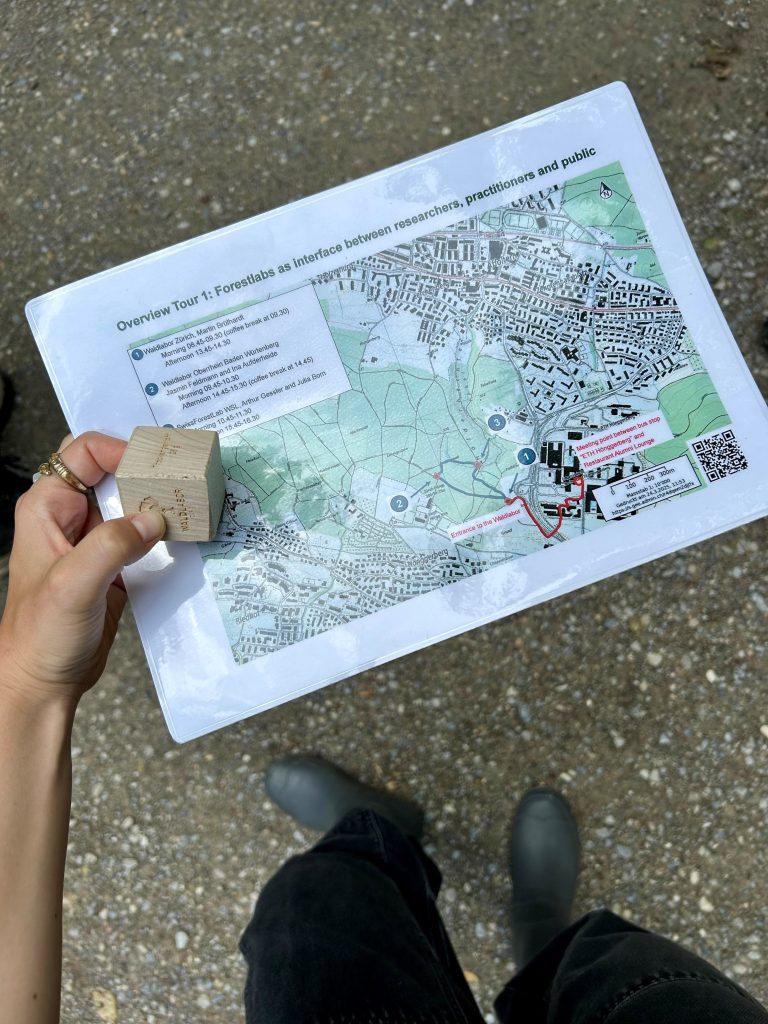
It’s a misty Tuesday afternoon in June at the ETH Hönggerberg Campus in Zurich. Participants of our Swiss Integrate Network workshop have geared up in waterproof clothes and are ready for a few more hours of outdoor fun at the so-called “Waldlabor” – a unique forest area on the outskirts of the city. Diverse learning sessions at this 150-hectare mixed broadleaved forest already lie behind us, and we await in anticipation the second round of educational activities.

Zurich’s “Waldlabor”, or Forest Lab, functions as an innovative demonstration and research site – a prototype for public engagement and science communication that we get to experience as part of a full-day programme at the Integrate Network workshop. Together with Martin Brüllhardt, managing director of the Forest Lab, we walk towards one of the entrances of the forest area. He explains that the initiative to bring this project to life originated with WaldZürich, a local association of forest owners.


“There was a need to create a space where forest owners could communicate about managed forests and forest ecosystem services. A place that could offer more exchange between the public, practice, and research”, explains Martin Brüllhardt.


The vision was to create an open classroom, a place for exploration, recreation and research – where visitors can come to, be immersed in the forest, and learn about different types of forest management practices, including historical, current and future ones.


“The Waldlabor is designed as an open research and communication forest – anybody that wants to contribute or tackle a research question is invited to do so”, mentions the managing director.


In 2019, after a year of envisioning and planning, six entities – including ETH Zurich, the Swiss Federal Institute for Forest, Snow and Landscape Research, Green City Zurich, the Office of Landscape and Nature of the Canton of Zurich, and the Association of Zurich Foresters – came together to launch the Waldlabor association. As an initiative, it’s unique in that it is the first real-life laboratory for immersive education and experiential forest research in all of Switzerland.

Open to diverse kinds of research questions, Martin Brüllhardt explains that one aspect the initiative is investing into is the overall designability of landscapes and forests. Asking, how can we better shape forests? And how can we create and showcase respective forest ecosystem services?


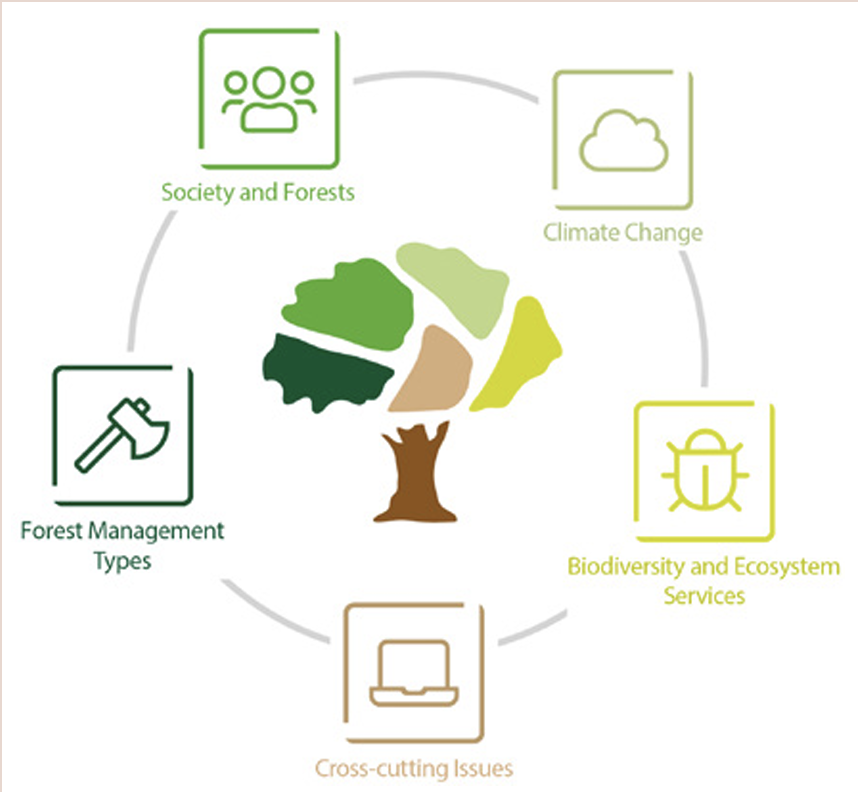
The Waldlabor’s five main themes as featured on Fig. 2 in chapter ‘Box C 10 Waldlabor Zürich – the Zürich Forest Lab’ (pp.380-383) of the book How to balance forestry and biodiversity conservation – A view across Europe (2020). 


“The idea is to become better at communicating about these issues with real-life examples, both visible to the public as well as other forest managers and owners”, says the managing director of the initiative.


As we visit the forest site, it becomes clear that the Forest Lab hosts many kinds of research projects. Some focus on gaining new insights on climate change and biodiversity, while others explore integrative approaches related to managing habitat trees or deadwood islands.

Trying to connect different disciplines, one project currently aims to analyse a huge dataset to better understand how forest ecosystems interact and function. This is called “ecological macroscoping” – a way to study the complexity of ecological systems and the diverse factors that interrelate to shape its whole.

Other projects are of more educational nature and integrate different teaching pedagogies. One example here is a project showcasing species diversity within a collection of mid-European woody species. Other on-the-ground activities highlight the diversity of management schemes and their impact on forests.


“We have this idea to become a kind of dynamic museum of different forest structures as a result of different interventions,” explains Martin Brüllhardt.


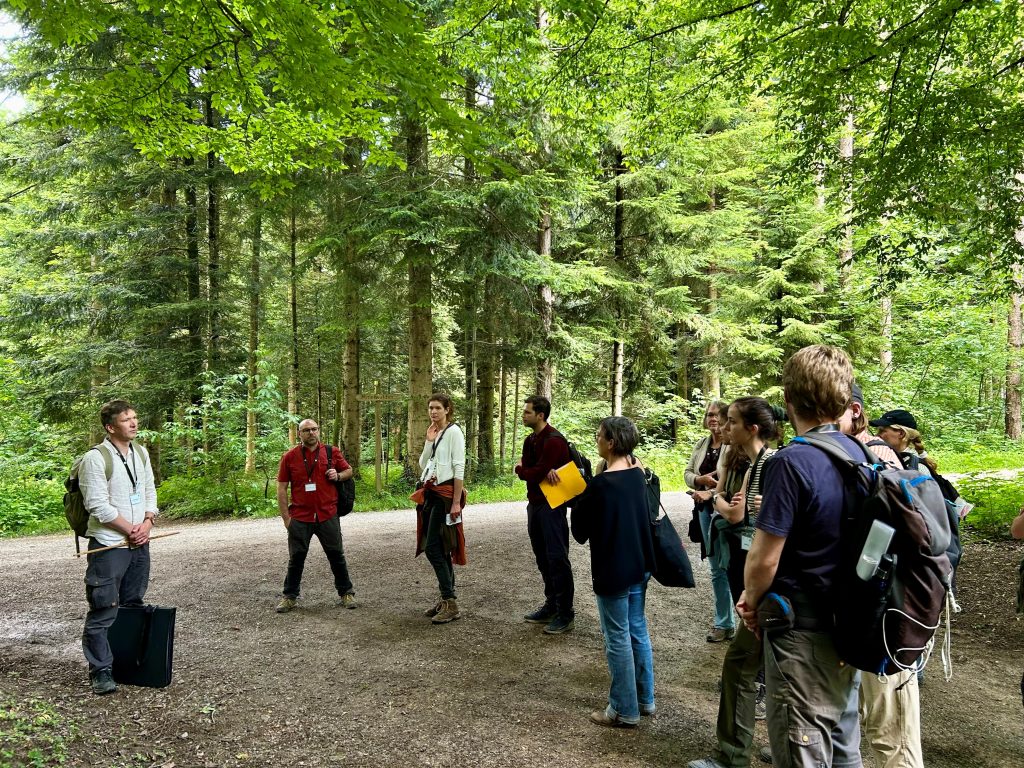
Martin Brüllhardt (left) on an interactive excursion through the “Waldlabor”. Credits: Rahel Könen

In general, the idea is to continuously increase the number of projects hosted at the forest plot and remain open to new ideas from forest managers, researchers and the public. 

With the support of volunteers, the Forest Lab also offers guided tours to both experts and lay audiences. An interactive map is accessible in the Waldlabor-App and makes it easy for visitors to explore the forest area on their own.  

Towards the end of the tour, Martin Brüllhardt notes that, as a forest plot that connects both forest production and protection, they only ever cut the amount that annually can also regrow. As such, they hope to ensure and showcase the sustainability of wood production.


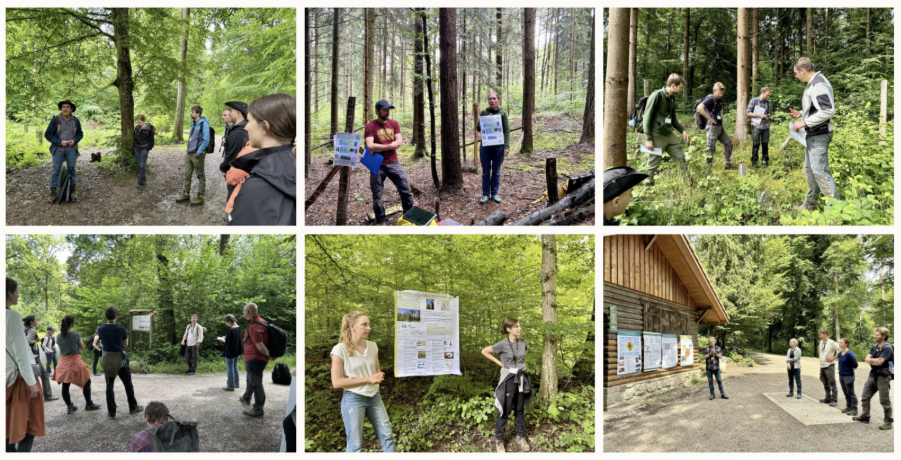
Diverse learning activities that took place at the Waldlabor Zurich as part of our Integrate Network workshop in Switzerland. Credits: Rahel Könen

Visiting Zurich’s Forest Lab was part of a larger Integrate Network workshop, organized by the Federal Office for the Environment FOEN, ETH Zürich and the Swiss Federal Institute for Forest, Snow and Landscape Research WSL. Read more about the workshop here.