“This is a fully automated machine translation. The quality and accuracy of machine translation can vary from one text to another and between different language pairs. TRANSFORMIT website admins do not guarantee the accuracy of the translation and accept no liability for possible errors. Please refer to the original text in its original English version if there is any doubt. Some content (such as images, videos, files, HTML links and acronyms) may not be translated or may be inaccurate due to the technical limitations of the system.”
We are pleased to share a recently published article by El Periódico on our TRANSFORMIT Living Lab in Moianès, Catalonia: a landscape where forest management must respond simultaneously to drought, rising temperatures, biodiversity loss, and the risk of large wildfires.
Across 30,000 hectares, our local partners are testing different approaches to managing dead trees and forest biomass: removing some wood, retaining large logs as shelter and food for species, or applying intermediate solutions. The aim is not simply to “cut down trees”, but to learn – through evidence on the ground – which practices can create more diverse, resilient forests that are easier to manage in the face of extreme fires.
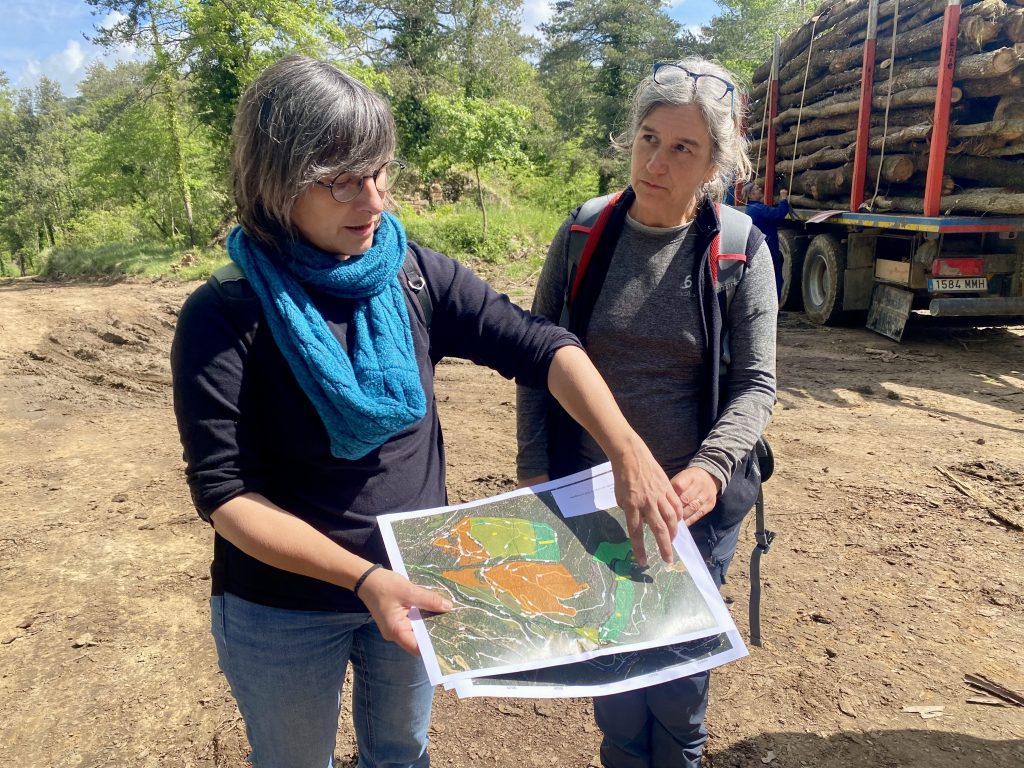
Teresa Baiges and Mercè Vilardos during TRANSFORMIT’s media field trip in the Moianès Living Lab
The article also reflects something that is central to our project: transformation does not just happen through forest processes, it happens through active collaboration and dialogue. Teresa Baiges, from the Centre de la Propietat Forestal of the Catalan Government, highlights the need to integrate biodiversity and climate-adaptative approaches into forest management. Mercè Vilardosa, a forestry technician for the region, works with landowners and links local needs to potential solutions. Other voices, including Pilar Clapers from the environmental group El Fanal, Josep Maria Espelta, a researcher at CREAF, Asier Larrañaga from the GRAF unit of the Catalan Fire and Rescue Service, and forest owner Antoni Masferrer demonstrate why collaboration among science, public authorities, landowners, civil society and emergency services is vital for creating climate-resilient forest futures.
The Moianès Living Lab and case study is relevant as it shows that integrative forest management requires place-based and adaptive decisions: retaining trees with high ecological value, reducing fuel continuity, and evaluating outcomes over the long term. Managed areas may not necessarily stop a fire, but they can reduce its intensity and give firefighting teams more opportunities to intervene safely.
What complex questions must we address to supportMediterranean forests in adapting to a changing climate?
Written by Silvester Boonen, European Forest Institute
In April 15th and 16th 2026, 30 forest practitioners, forest owners, researchers, trainers, and students from 12 European countries gathered in southwest Germany for two intensive days dedicated to one deceptively simple question: How can we better understand the biodiversity potential of forests – in a way that supports real management decisions?
The answer, or at least part of it, was the Index of Biodiversity Potential (IBP), a field-based diagnostic tool that has steadily gained recognition across Europe over the last 15 years. Hosted through the Integrate Network and supported by the HE TRANSFORMIT project, the workshop combined classroom presentations and discussions, insights into the scientific background of the IBP, and extensive field training exercises to prepare future trainers to bring the IBP into their own forestry contexts and institutions.
From the classroom to the forest floor
On the first day, we were welcomed at the town hall of Binzen by Andreas Schuck (EFI) and Frank Krumm (WSL), introducing IBP experts Laurent Larrieu (INRAE, CNPF) and Pauline Marty (CNPF) as our field trainers. Little did we know that the next two days were about to be filled with a tandem of new learnings about the IBP, its theoretical background and a lot of practical knowledge on how to apply the tool in the field.
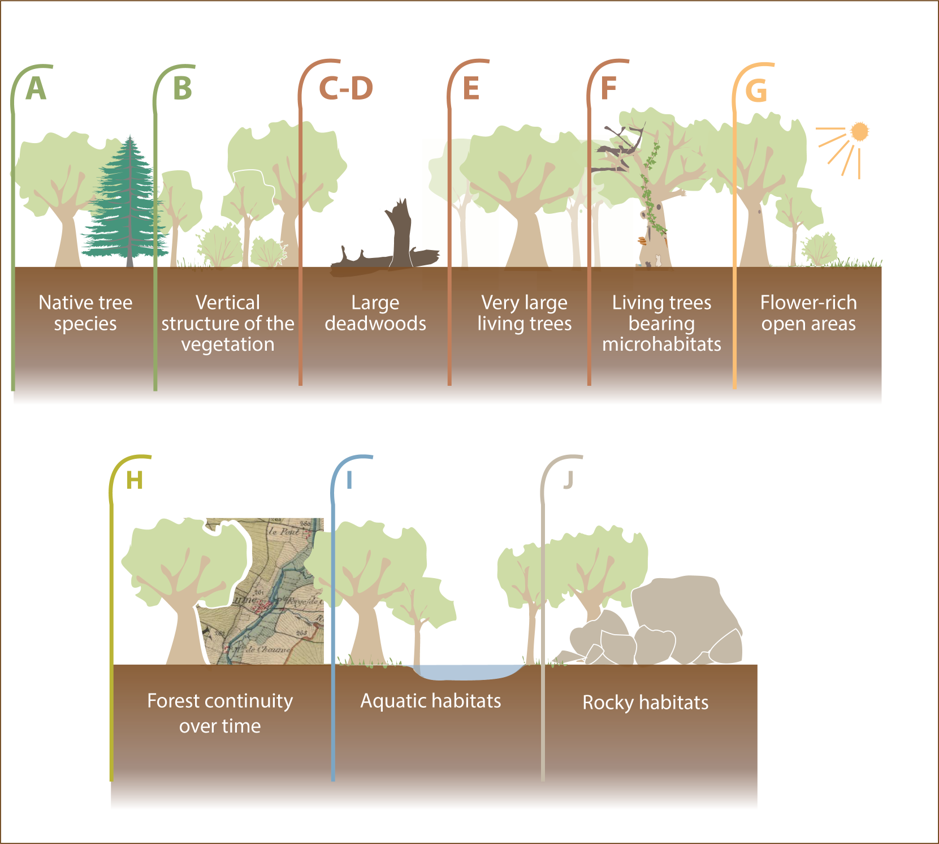
So, what is the IBP? For starters, rather than directly measuring species richness, the IBP evaluates the so-called hosting capacity, habitats and structural features that support biodiversity at the stand level. Pauline explained that the IBP is used as a diagnostic tool, based on ten factors, seven relating to forest management and three to context. These range from deadwood and vertical forest structure to ancient forest continuity and tree-related microhabitats (TreMs). Each factor is scored from 0 to 5, allowing a maximum of 50. The workshop quickly revealed how much ecological research hides behind this easy-to-apply tool. Pauline explained that the IBP is designed to work fast, ideally within 20 to 30 minutes per stand. She then proceeded to go through each IBP factor and why it matters. Let’s take, for instance, the factor for flower-rich open areas: For this factor, the percentage of flower-rich open areas is recorded in comparison to the surveyed area’s size of the stand. As many species not only rely on deadwood, but also the occurrence of flowers, or both, this factor is highly relevant. Some hoverflies species that need deadwood for their larvae and use the nectar from the flowers in the adult stage.
The IBP, a brief overview of the scientific background
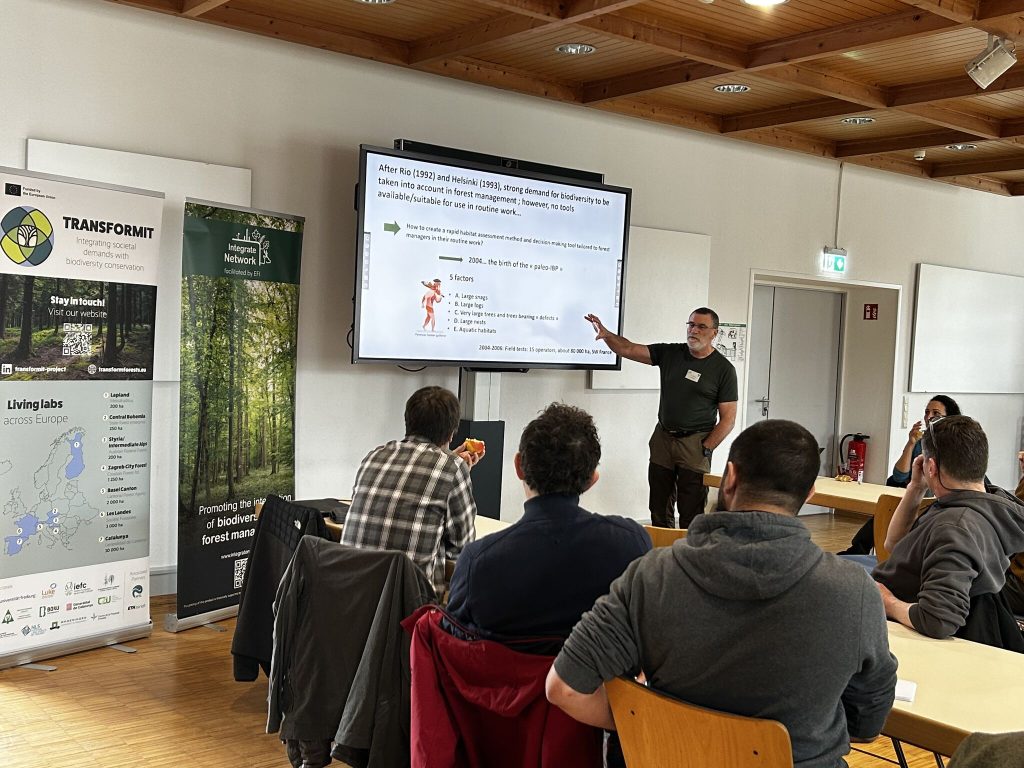
Following the introduction of the 10 factors by Pauline, Laurent took over and gave insights into the science behind the IBP. What appears in the field as a quick and practical scoring tool is, in fact, rooted in two decades of ecological research and development. Laurent reflected on the beginnings of the so-called “Paleo-IBP” around 2004, when he and his colleague Pierre Gonin first explored the idea of creating a rapid biodiversity assessment method for forest managers during their routine work. The first version focused on only five factors – large snags, large logs, very large trees and trees bearing “defects”, large nests, and aquatic habitats. This work eventually led to the landmark 2008 publication introducing the IBP as a “quick and easy method” that did not require taxonomic expertise. Laurent explained how the following years saw continuously refining and validating of the tool. Research explored whether the factors complemented each other, how sensitive the scores were to different forest types and management intensities, and how certain ecological components – especially tree-related microhabitats, deadwood, and forest continuity –could be better understood scientifically. Further, the IBP was adapted to different biogeographic regions (e.g. temperate Europe and the Mediterranean Basin). This process is still ongoing as new regions plan to apply the IBP. Despite all this scientific depth, Laurent stressed that the strength of the IBP remains its practicality: a fast, accessible field tool!
“TreMs are way nicer!”
After all this, it was time to head to the field! We drove to a local communal forest, which Frank introduced to us. The stands consist mainly of high-quality oak with an understory of hornbeam. “They serve the needs of the community as a financial reserve, for example, to renovate a school”, Frank explained.
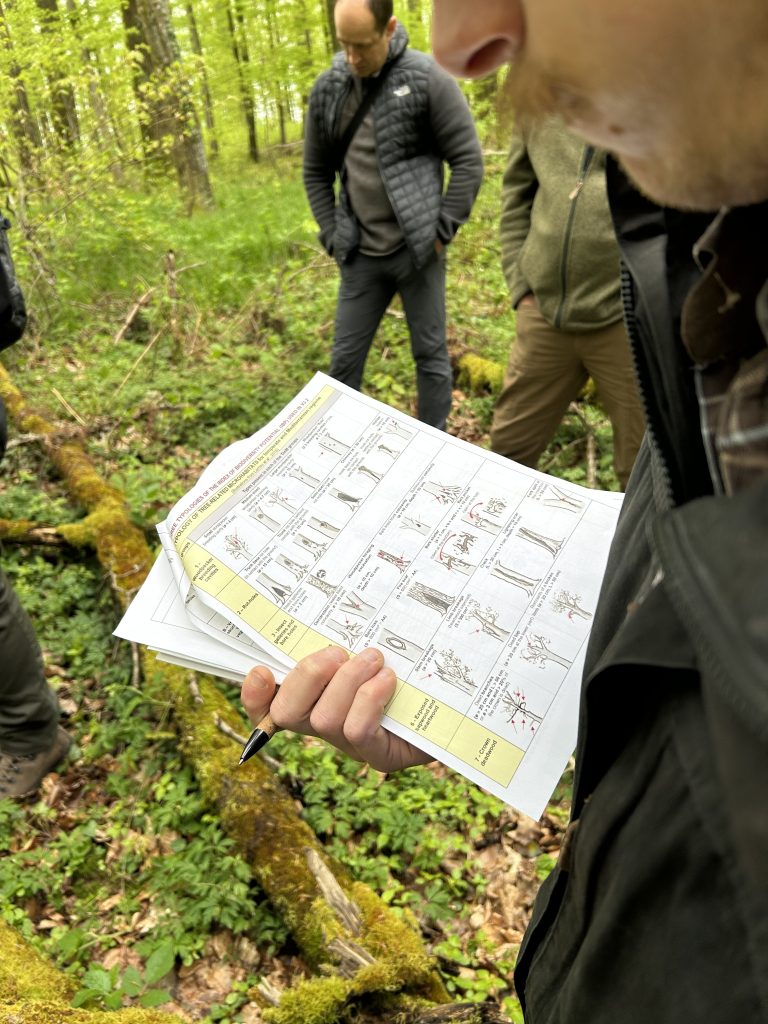
It was then time to investigate the diverse IBP factors hands-on! Spring was in full swing as the trees had their fresh green leaves, and the ground was covered with spring flora. To start off, Pauline introduced the five layers of the factor, also called ‘vertical structure’ (e.g. 1.5-7 m being the third layer). Here, a layer counts when you can observe a 20% occupancy of leaves in that layer. Important to note is that spring flowers on the forest floor would not be counted as an area for flower-rich open areas, as this factor looks at flowering plants linked to gap dynamics, open areas, and forest edges.
Laurent advised to ‘eliminate’ individual factors as quickly as possible. This means that once the threshold of a factor is reached (e.g. 5 different tree genera), one can neglect that factor, as the maximum score of 5 points is reached. This speeds up the process of filling out the survey and allows forest practitioners to concentrate on the factors which are more difficult to record.
Laurent also noted that an “IBP is a score for today, but one should keep in mind that forests are dynamic and scores can change over time!”
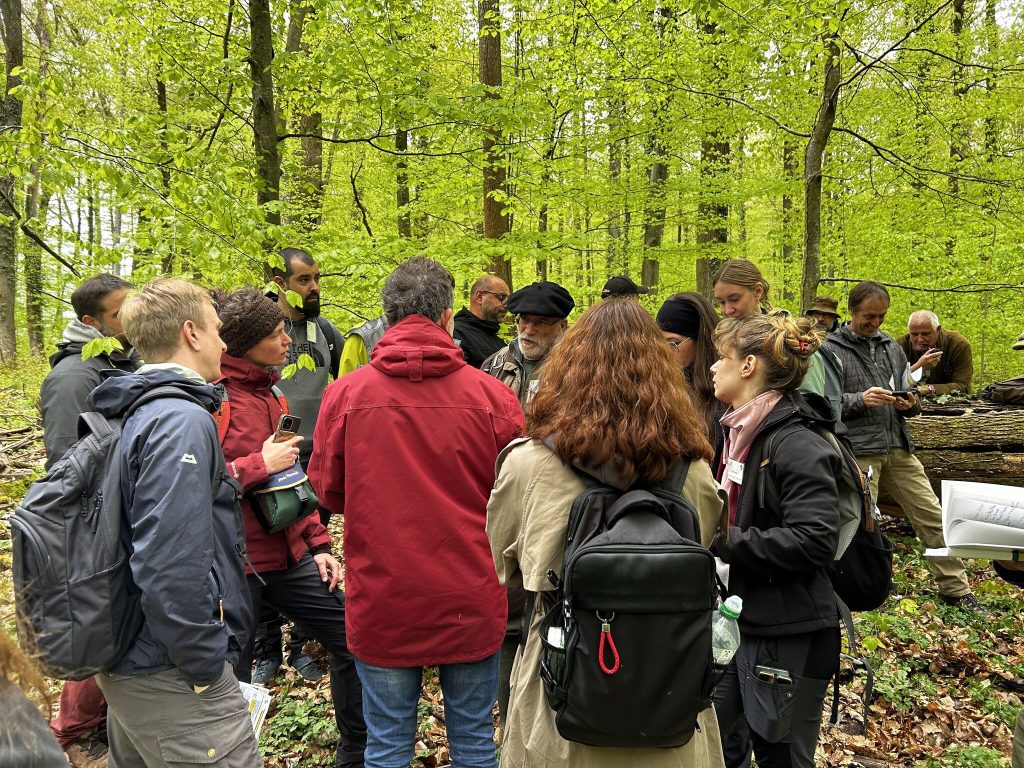
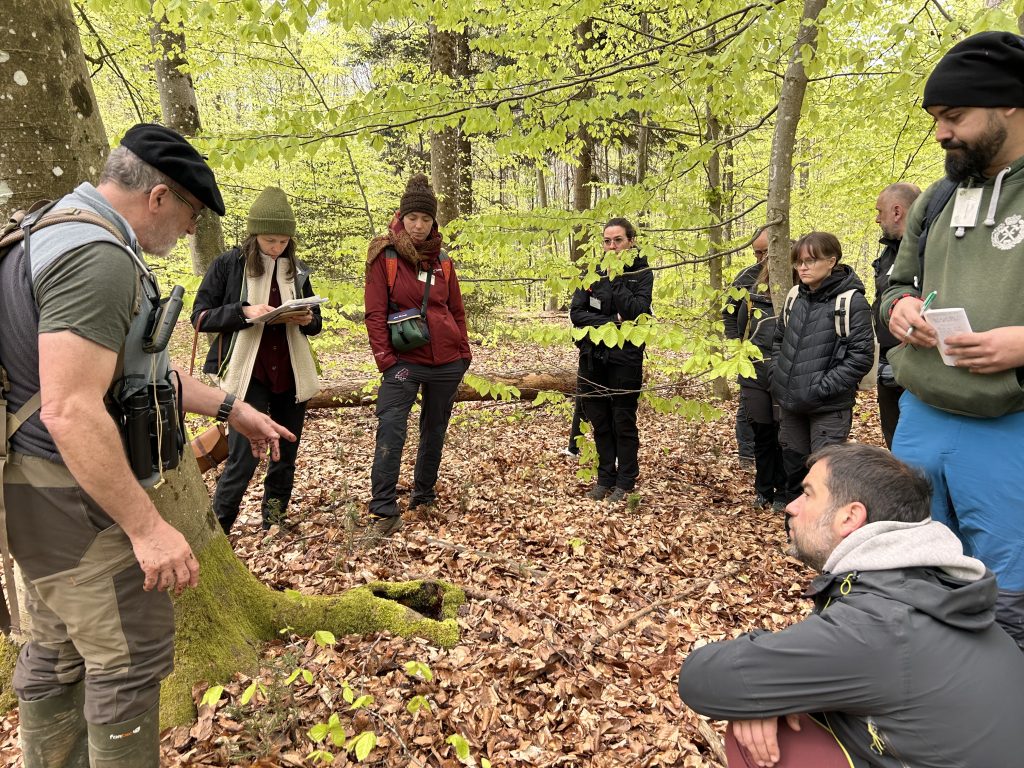
We stopped at a large oak tree. Laurent turns to the group and says: “So, flowers are nice, deadwood is nice, but TreMs are way nicer! I wish TreMs could be higher than 5 in the score, but my colleague Pierre said no, all the factors need to capped at 5”. Everyone laughed! Laurent showed us why he likes this tree, pointing at the loose bark. “This is a bark shelter. It’s loose hanging bark that can serve as a shelter along the trunk with an opening at the bottom; an important feature, e.g. for bats or birds. We then took a look inside and, “voilà”, we could see a nest! Pauline then presented us with a special case, where we saw a combination of both a deadwood log and a snag. While the tree broke down, the lower stem (snag) was still attached to the upper stem that became a log. Such a tree can thus be counted as both lying and standing deadwood.
When we walked further, we came across an atypical kind of pond, a skidding trail, with an aquatic habitat that hosts different species. While this sounds great for biodiversity, skidding trails are caused by harvesting machinery, thus damaging the soil of the forest. This is one of the main reasons why, according to the IBP framework, it is not counted as an ‘aquatic habitat’ and therefore not recorded within the survey. This was the final stop before wrapping up our walk, now having a much better understanding of each IBP factor and ready to soon put the knowledge into practice the next day.
As a final stop we partook in a guided tour through Frank’s farm in Binzen, learned about the local wine culture, and got a small taste of the wine and liquor he makes from his own grapes and cultivated fruit trees.
Walking a plotline
On the second day, we headed out to the Kandern Community Forest, which is part of the foothills of the Black Forest. We met at the natural monument “Beheleneiche”, an old oak tree that has an estimated age of more than 300 years. It only died and fell over around a year ago. Its tree trunk remains, as lying deadwood, offering food and habitat for many organisms – a haven for biodiversity!
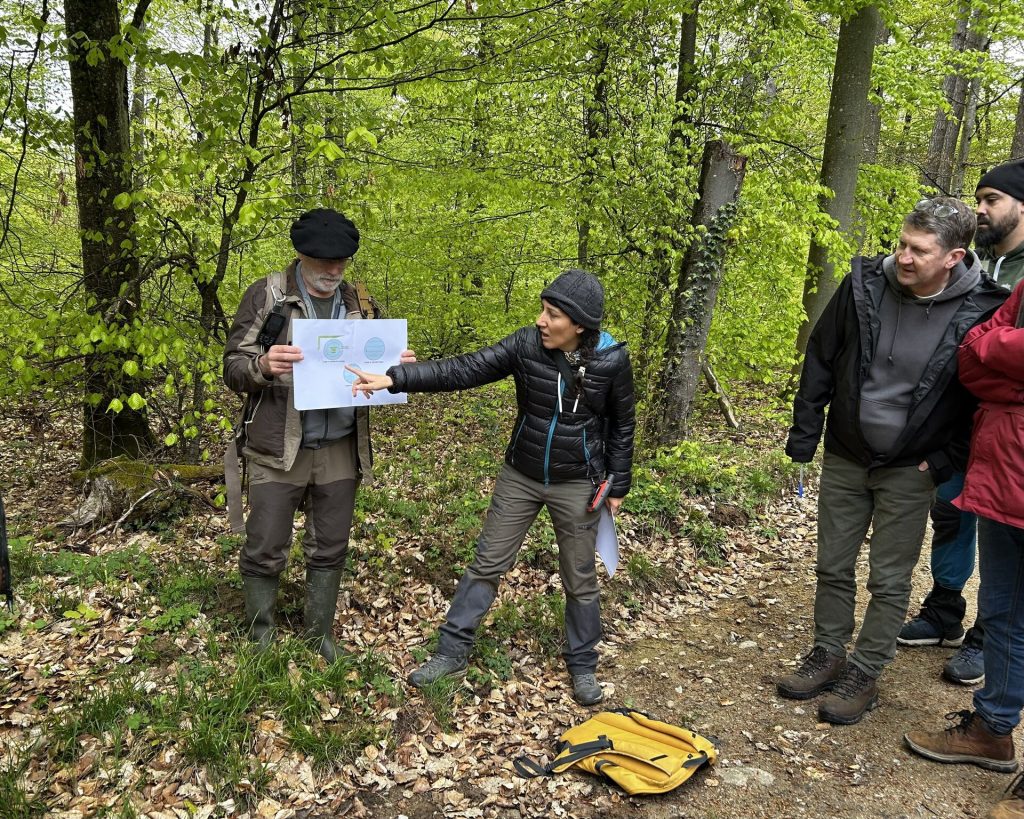
So, what was waiting for us that day? With the hope of putting our newly acquired knowledge into action and completing an IBP survey, we divided into small groups. Not sure where to start, Pauline and Laurent helped us by introducing diverse inventory approaches, including 3 possible methods: a route in a) concentric circles, b) a star shape or c) parallel lines. Each group got to pick one method, with our group choosing the concentric circle one.
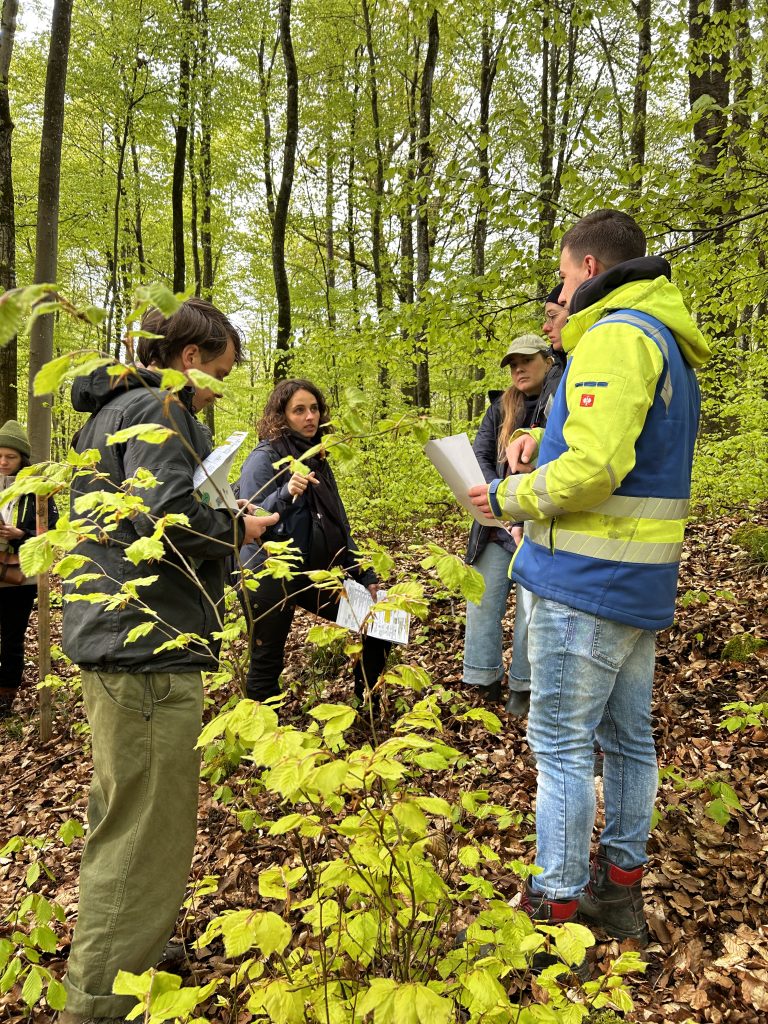
We then started our survey in the Behleneiche marteloscope, named after the monumental oak tree. To save time, we learned to check the factors as much as possible from one location, as some required much more discussion or detailed observations. Native tree genera were an easy exercise: we spotted beech, maple, oak, wild cherry, and pine… check, 5 points! We then marked the broken tree as a snag, but … wait … another participant noticed that the tree was still alive! Still important for the IBP survey, as it may bear microhabitats. We then were able to count some medium-sized logs as lying deadwood. We also used a TreMs field guide and identified a split fork in a wild cherry.
After the inventory of the inner circle we went on to survey the circular route. We paid particular attention to the factor of ‘vertical structure’, while identifying a few very large trees that were checked for additional TreMs. We then wrapped up our survey : 5 points for native tree species, standing deadwood, living trees bearing microhabitats, very large trees, 2 points for large lying deadwood and vertical structure. The factors with no score were flower-rich open areas, forest continuity, aquatic and rocky habitats, as there were simply none present.
We then started to gather at the Behleneiche, to exchange on what we had surveyed. The local forester, Otto-Jesko von Schröder, joined and shared some insights on the Kandern Community Forest and its management. He highlighted the aim of ensuring a large number of different tree species in stands, emphasising those that can best cope with climate change impacts. One important detail we learned from Otto-Jesko was that formerly these sites were used for mining, which means that in the past, parts of these forests were cleared. For the IBP score this means 0 points for forest continuity over time.
Back in the classroom, the final afternoon sessions gave participants the opportunity to reflect on the IBP survey and place them into a broader operational context, learning about special cases (e.g., the uncapped version of the IBP). They also offered a glimpse into the future development of the IBP, including digital tools and applications designed to support field inventories and data collection more efficiently. By the end of the workshop, the IBP no longer felt like a simple scoring system, but rather like a practical framework that truly connects ecological understanding. Quite a few participants already announced that they will initiate training events in their home countries. Thus, it seems, the mission of training “future” trainers was already accomplished in Binzen! In any case, a memorable workshop for all – one that will hopefully continue to bear its fruits in many forests across Europe.
“Indicators should be implementable, measurable, and aligned with other standards so they can ultimately support forest restoration and Integrative Forest Management across Europe,” said Gesche Schifferdecker as she wrapped up the webinar.
Co-organized with the Integrate Network, our webinar “From Indicators to Action – Bridging Science, Policy and Practice in Forest Restoration and Integrative Forest Management” brought together more than 90 participants from research, policy, and practice to explore how forest indicators can help ambitious restoration policies, particularly the EU Nature Restoration Regulation (NRR), to be effectively translated into action on the ground.
After Gergely Zagyvai, Integrate Network Chair 2026, opened the session with a welcome address, Stefanie Linser (University of Natural Resources and Life Sciences, Vienna (BOKU)) delivered a keynote presentation on the development of Integrative Forest Management indicators within the TRANSFORMIT project.
This was followed by a rich panel discussion, moderated by Gesche Schifferdecker, featuring José I. Barredo (JRC – European Commission), Bernhard Wolfslehner (European Forest Institute), Teresa Baiges Zapater (Centre De La Propietat Forestal), and Stefanie Linser (BOKU). Together, they explored how diverse forest-related indicators can support decision-making across different governance levels, the practical challenges of monitoring and reporting, and ways to bridge the gap between policy ambitions and practical implementation.
The panel ultimately agreed on one objective: we have to support our forests to become more resilient – and this can only be done if scientists, policy makers, practitioners, and communication experts work collaboratively.
Many thanks to our outstanding moderator, speakers and panelists, and to everyone who joined, asked questions, and shared their experiences!
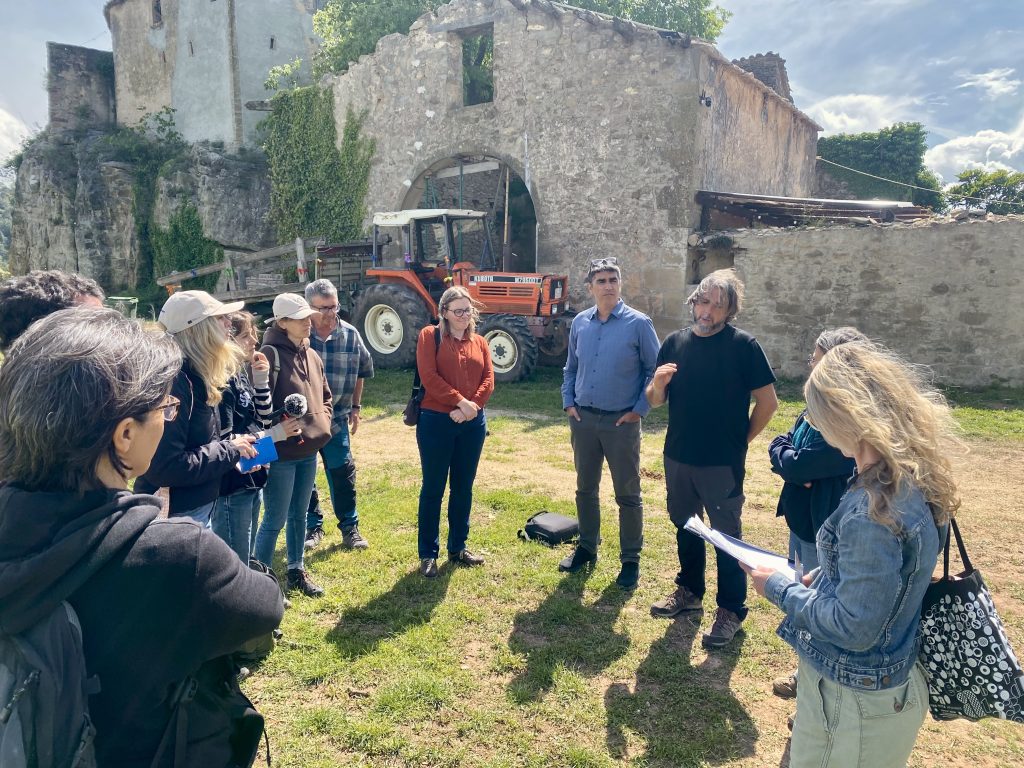
Local and international journalists interviewing Catalan forest owner Antoni Masferrer
In Catalonia a combination of ecological pressures and weakened forest stewardship is increasing fire risks and raising a key question: how can these forests remain resilient and viable?
To respond to this, Catalonia’s Moianès region is emerging as a testing ground for inclusive and place-based innovations. Here, integrative forest management approaches are being developed that combine wildfire prevention, biodiversity conservation, biomass use, and rural development – alongside new forms of collective governance adapted to fragmented ownership.
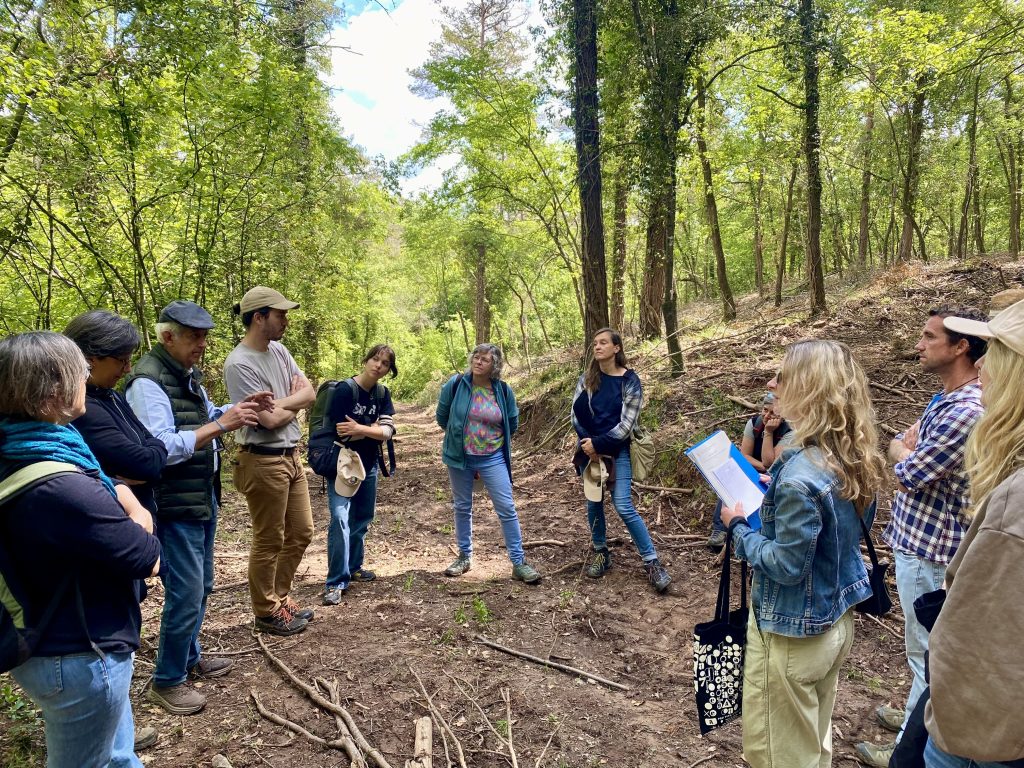
Together with our local Living Lab partners, we invited a small group of journalists to an immersive, on-site workshop in Moianès to explore these developments first-hand. Through exchanges with forest owners, researchers, NGO representatives, and local authorities, journalists gained grounded insights into how such approaches can work in practice.
Beyond showcasing these initiatives to journalists, the workshop was designed as a two-way dialogue – creating space to reflect on which narratives resonate, and how science and practice can better connect with media storytelling.
Over the coming weeks, we’ll share more insights from the workshop and highlight some of the innovative approaches stewarded within Catalonia’s Moianès region. Stay tuned!
The recent “Train the Trainers” event in Binzen, Germany, jointly organised by TRANSFORMIT project and the Integrate Network, and attended by Jonathan Spazzi (Teagasc) and Dermot Dunphy (DAFM), was instrumental to further bring the IBP survey methodology front and centre as part of the Irish Marteloscope workshops. As fully booked events, these workshop series showcase the current interest in Ireland to learn more about the integration of biodiversity conservation into management practices and, in particular, the Index on Biodiversity Potential. Here a blend of forest owners, practitioners and students are coming together to take part in frank and meaningful discussions.
So far, the feedback received is excellent, says Irish Integrate Network member representative Jonathan Spazzi. The organizers expect around 80 participants to be trained this spring with more planned to attend trainings in Autumn.
Through the Integrate Network and a range of research and development projects, including SimInForest and the TRANSFORMIT project, collaboration across Europe between educators and researchers is ongoing on how best to best promote and communicate new, integrative, and closer-to-nature management solutions and ensure that forest health and productivity can continue to provide essential services to society’s collective well-being.
From 15–16 April, 30 forest practitioners, researchers, and representatives from 12 European countries gathered in Binzen, Germany, for a very special two-day workshop – the first-ever “Train the Trainers” event on IBP, organised by the Integrate Network in collaboration with the EU Horizon TRANSFORMIT Project. We specifically invited a small group of participants to allow for a real hands-on and interactive experience.
On the morning of the 15th, Laurent Larrieu (INRAE) and Pauline Marty (CNPF – Centre national de la propriété forestière) gave us in-depth insights into the science and development of the tool and its ten key factors of biodiversity. In the afternoon, theory was brought to life. In the forest, participants reviewed what had been discussed with real stands and conditions.
Our second day started in a marteloscope in Kandern – participants were split into four groups to test their knowledge and conduct the IBP survey at the forest site. Laurent and Pauline provided hands-on support throughout the exercise, and the local forest manager joined to share the history and management of the forest we were standing in.
Rich Q&As, deep group discussions, and diverse reflections from various national contexts and forest types across Europe – all of these made the exchange valuable, not only with the two trainers but also between participants.
Over the past two days, various participants shared with us their perspectives on the IBP, why the tool is relevant to their local context, and how they are hoping to bring the knowledge from the training back to their colleagues and forests.
With their commitment to bring the knowledge and application of the “Index of Biodiversity Potential” home, we’re grateful for the success of this first iteration of an IBP “Train the Trainers” event!
You could watch the afterevent video on the right to learn more about this event.
Curious to know more about the IBP? Dive into the topic through EFI’s “What is” series and stay tuned for our upcoming articles regarding the IBP, its potential applications, and our IBP “Train the Trainers” participants’ reflections on our two days together.
After 3 days of insightful presentations, vivid discussions and interactive outdoor sessions, the Integrate Network workshop in Zurich, Switzerland, has come to an end.
More than 50 participants from diverse national and international networks and projects, including the SwissForestLab, NFZ.forestnet, SUPERB, TRANSFORMIT, Wildcard and more, came together to discuss how Integrative Forest Management may respond to new challenges posed by climate change and biodiversity loss, as well as how to promote more resilient and species-rich forests in Switzerland and beyond.
🌳 Adaptive silviculture and the role of Close-to-Nature Forest Management in climate change adaptation
🌱 Forest restoration in a climate-change context
🪵 Maintenance of forest ecosystem services when converting or transforming forest stands
The second day was marked by diverse outdoor sessions at the Waldlabor Zürich – a “Forest Laboratory” that functions as a demonstration- and research site for Integrative Forest Management, connecting researchers, forest owners and the general public.
The final day served to discuss both challenges and opportunities between urban forestry and close-to-nature forestry, merging networks with the European Forum on Urban Forestry (EFUF).
Can we integrate online training formats with in-forest marteloscope workshops?
Article by Jonathan Spazzi
New integrated forest management systems seek to combine the profitable production of quality timber with the enhancement and protection of biodiversity and ecosystem services. To date, lack of knowledge and expertise of management options have been one of the main hurdles to enabling such systems. Teagasc collaborated with Irish stakeholders and three European forest agencies in Belgium, France and Germany in a new and ambitious Erasmus+ project to develop ‘ForestMoocForChange’ – the first free Massive Open Online Course (MOOC) on continuous cover forest management (CCF).
This new interactive educational tool went live in October 2023, aiming to facilitate transformation of forests towards integrated management systems, promoting production of quality wood, biodiversity and ecosystem services. The eight-week course was offered in three languages (French, German and English), self-paced and includes 74 tutorial videos, online quizzes and exercises to carry out in the forest. During the project, running between 2023 and 2024, each fortnight a live session allowed participants to ask questions regarding topics covered.
Example of the filming process and video tutorial where we meet private forest owners in Ireland and we share on the progress of their family forest transformation journey form plantation to multipurpose close-to-nature forest.
After viewing the videos and on successful completion of quizzes and exercises, participants received a certificate and approved a ‘charter of commitment’, to use and further develop their knowledge and understanding of CCF. Over 12.000 learners took the training course in 2023/2024, with over 2,500 certificates achieved.
By demonstrating how forest transformation practices and management tools can be applied, the course provides innovative ways to enhance forest owners’ and managers’ capacity to adopt integrated management systems in their forests and thereby initiate long-term societal change. The course supports National and EU forest policies, which increasingly promote integrated management to enhance resilience, sustain production and deliver ecosystem services to society.
This project was also recently selected and included in Teagasc annual “Research Impact Highlights” publication, showcasing research dissemination projects that show significant impact.
The ‘ForestMoocForChange’ online training has come to an end in June 2024 but with a new Catalan partner, the MOOC team has expanded and recently applied for further funding to secure continued access to the original MOOC, as well as develop a new online training facility that focuses on research and best practice for adaptive forest management to counter the impact of climatic changes to European forests.
Linking the MOOC with marteloscope workshops
During the course of this project a link emerged between this new online training facility on integrated management and Teagasc’s ongoing marteloscope training workshops: Learners from ForestMoocForChange seemed to progress to marteloscope workshops and marteloscope workshops attendees to the ForestMoocForChange programme. This revealed the opportunity to further integrate online training formats with in-forest marteloscope workshops.
This year Teagasc has so far completed 6 marteloscope workshop events at its facility in Oak Park, where a total of almost 100 participants came to a 1 day intensive workshop: mostly forest owners but also foresters, contractors, students and general public. Read more about it here.
Layout of the marteloscope training facility in Oak Park, main Teagasc National Research Centre.
The Teagasc foresters team (in orange) assisting owners (in yellow) with setting up the tablets and initial discussion ahead of marteloscope group exercises.
These workshops adopt a facilitation-style format and encourage participants to learn by doing, leading to group discussions and valuable peer-to-peer learning. The main aims of these workshops are:
to consider different forest management scenarios
to practise the key skill of selecting trees by their quality, vigour and biodiversity value
to demonstrate in practice how management can help integrate production with biodiversity and other important services that forests can provide
Forest owners in a smaller group carrying out a tree selection exercise to be presented to the rest of the groups. The aim of the exercise is to stimulate discussion on how to achieve balance between timber production and biodiversity enhancement, leading to peer-to-peer learning.
On July 3rd, nearly 200 participants gathered online to explore the relation between forest resilience and biodiversity at the Integrate Network webinar hosted in collaboration with TRANSFORMIT project. The aim was to better understand how diverse actors, whether in science, policy or practice, can better support forest ecosystems in coping with current and future climatic changes.
After the welcoming words of Georg Frank, chair of the Integrate Network in 2024, Marcus Lindner, Head of Resilience Programme at EFI, held a keynote speech explaining different ways of characterizing forest resilience as well as introducing diverse management practices that can help enhance it. He reminded us that the enhancement of forest resilience in response to climate change and increasing disturbances is not only important in forest management but also in forest value chains. Overall, many stakeholders also advocate for increasing the share of mixed species and uneven aged forests, making biodiversity at multiple levels crucial for ensuring forest resilience.
The webinar then moved into an engaging panel discussion featuring Olive Leavy, National Coordinator at Irish Forest Owners and Administrator at ProSilva Ireland, Serena Buscarini, Forester at DREAm Italia who works on LIFE GoProFor Med projects, and Jurij Diaci, Head of Chair of Silviculture at the Department of Forestry at the University of Ljubljana.
Jurij Diaci, for instance, shared some valuable insights and lessons about forest resilience based on his research on primary forests. Serena Buscarini talked about her experience applying integrative forest management approaches in the Mediterranean context, as well as shared best practices from diverse LIFE projects. As a representative of forest owners in Ireland, Olive Leavy reminded us of the financial risks forest owners face by planting a broader mix of species. Not only does this mean that adaptation measures should be better supported, but that the system in which economic return is only linked to timber production needs to shift towards financially rewarding a broader range of ecosystem services. The Q&A therefore also covered how policy and research can best support forest practitioners in improving forest resilience.
Did you miss attending the webinar? Re-watch the full discussion and Q&A here.
We are pleased to announce this year’s Integrate Webinar titled “Forest Ecosystem Resilience through Biodiversity – Nature’s Insurance Policy in a Changing World”. The webinar is organized in collaboration with TRANFORMIT project and will take place online on 3rd of July from 16.00 – 17.30CEST via Zoom.
With this webinar, we would like to reflect upon how we can support forest ecosystems to better cope with current and future climate change impacts:
To improve the resilience of our forests, is it enough to rely on an existing set of tree species or to introduce those that we hope will be better adapted to future climatic conditions? Do we sufficiently consider forest ecosystem functioning as a whole, including biodiversity above and below ground? How can we respond to unforeseeable climatic phenomena in forest management?
After introducing how forest resilience can be defined and operationalized, we will investigate the role of biodiversity in the forests, what potential trade-offs are, and what forest decision-makers and practitioners can do to increase forest ecosystems resilience. This will be done through the help of our keynote speaker Marcus Lindner (EFI), as well as our 3 panellists from diverse implementation fields: Jurij Diaci (Slovenia), Serena Buscarini (Italy) and Olive Leavy (Ireland).