Forest Dialogue 2026: Biodiversity as a key to resilient forests 

How can biodiversity increase the adaptation capacity and resilience of forests that are also managed for wood production? At WaldDialog – Forest Dialogue – Dialogue Forestier 2026, this question brought together forest scientists, practitioners, policymakers, forest owners, communicators and administrators from Switzerland, Germany, France and beyond. On 10 September 2026, we all gathered at the University of Basel to explore what this means for forests facing increasingly uncertain conditions.

The event, organised by the TriNational ForestLab, SwissForestLab, the Conference of Cantonal Foresters (KOK) and the Swiss Federal Office for the Environment (BAFU), created a space for something our forests – and we as well – increasingly need: dialogue across disciplines, institutions and borders.

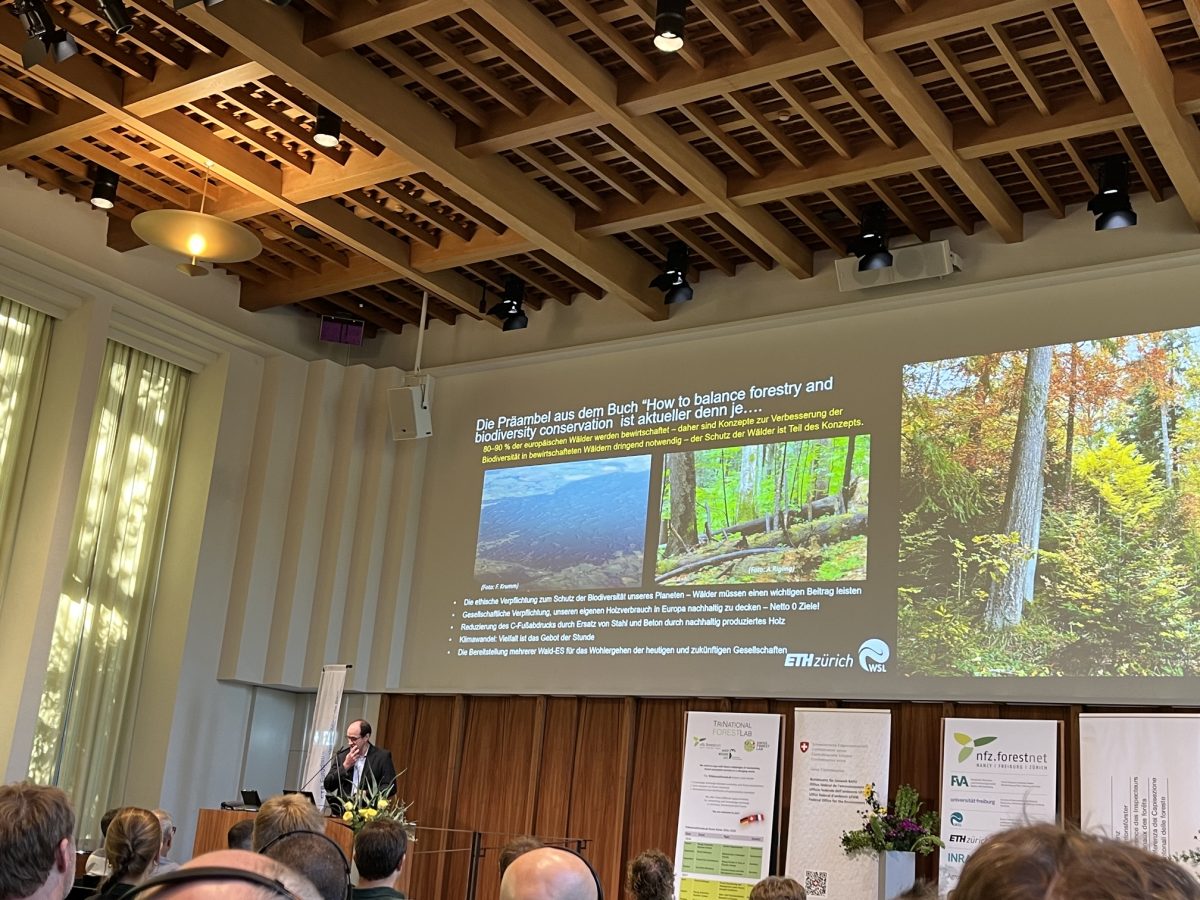
I felt that the urgency of this question was made tangible from the very beginning. As Arthur Gessler (WSL/ETH) emphasized, 2026 marks a turning point. Extreme heat and drought are increasingly visible in forests, with trees such as beech already showing severe stress early in the growing season. Across the Basel region, monitoring indicates that rainfall has been reduced in almost every month, leaving forests under considerable pressure, Gessler emphasized.

A strong argument for diversity

A recurring theme throughout the presentations was that diverse forests are better equipped to cope with climate change and uncertainty. Research presented by Hervé Jactel (INRAE) showed that mixed forests tend to be more resilient to drought, fire and wind disturbance than monocultures. They can also be more productive: mixtures of coniferous and broadleaved species can benefit from complementary traits such as different rooting depths and patterns of water use. However, a specific mixture of broadleaved and conifer species is needed for both forest resilience and productivity, and that mixture needs to be identified. Still, the results are promising, highlighting the potential of diversity to strengthen forests in a changing climate.

Diversity, however, is about more than simply planting several tree species. Genetic diversity within species can provide the basis for adaptation to changing conditions, as Jörg Kleinschmit (FVA) highlighted. The choice of tree species — and potentially the use of assisted migration — therefore needs to be considered alongside the genetic resources available to forests.

At the same time, biodiversity conservation cannot be reduced to tree diversity. Frank Krumm and Martin Gossner (both WSL) highlighted the importance of habitat trees, microhabitats and deadwood. Microhabitats are small, specialised structures such as tree cavities, cracks, loose bark or dead branches that provide food, shelter or breeding sites for many species. Many of these valuable structures are found in or develop from deadwood, making it an important element of forest biodiversity. Around a quarter of forest species are closely dependent on it, while many more benefit from it. Natural forest reserves therefore remain an essential component of biodiversity conservation, particularly for species requiring specialised deadwood structures, Gossner emphasized.

Potential of biodiversity in managed forests

But managed forests also offer opportunities, and this event mainly aimed at exploring these. Instead of viewing biodiversity conservation and forest management as separate worlds, foresters can actively create microhabitats and make use of structures generated by natural disturbances. This is where the concept of “close-to-nature forestry” becomes particularly relevant: working with natural processes rather than against them, while maintaining the multifunctionality of forests.
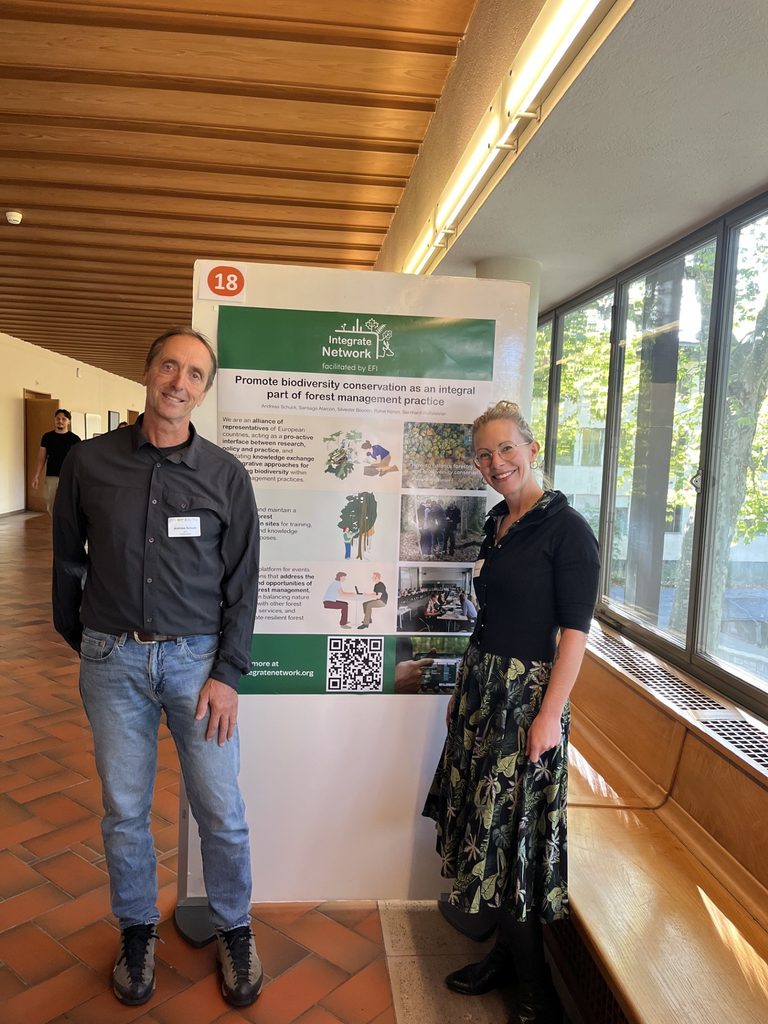
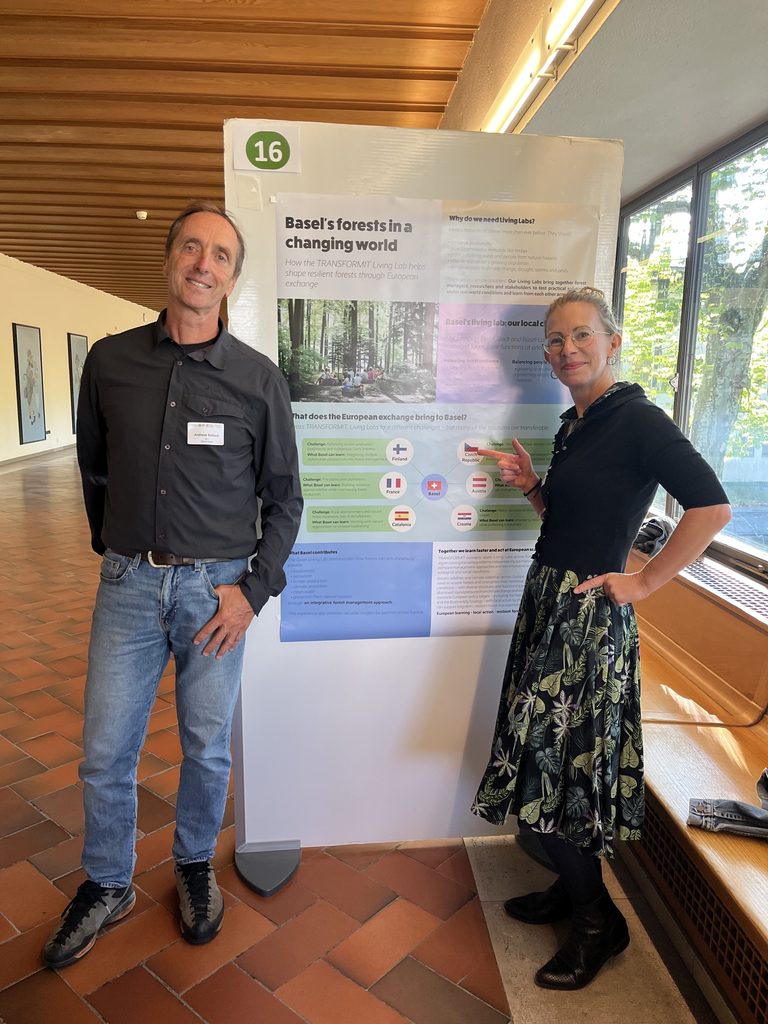
The practical examples presented during the afternoon demonstrated that these ideas are already being put into practice. Case studies from Switzerland included a presentation by our Living Lab partner Amt für Wald beider Basel, Switzerland, represented by the coordinator of the Living Lab Ueli Meier. Examples from Baden-Württemberg (Germany) and Alsace (France) showed how natural regeneration, species diversification, habitat trees and the retention of surviving trees after disturbances can gradually transform forest composition. In Baden AG, for example, the proportion of broadleaved trees increased substantially over 25 years, supported by a strong focus on natural regeneration.

The discussions also made clear that there are no simple or one-fits-all solutions. Increasing deadwood can create safety challenges for forest workers. Changing tree species can involve economic and ecological uncertainties. Continuous-cover forestry offers structural and species diversity but also faces questions around economic risks and social acceptance. And local conditions matter enormously.

From local conditions to European approaches

This is precisely why this cross-border dimension of Forest Dialogue was so valuable. Drought, heat, pests, biodiversity loss and changing societal expectations do not stop at national borders. Forests may be managed locally, but the challenges they face are European.

The direction of European policy reflects this reality. The EU Biodiversity Strategy for 2030 and the Nature Restoration Law place increasing emphasis on restoring ecosystems, improving biodiversity and strengthening resilience. Yet this does not mean that Europe needs one standardised model of forest management. Instead, European objectives must be translated into approaches that work under different ecological, economic and social conditions.
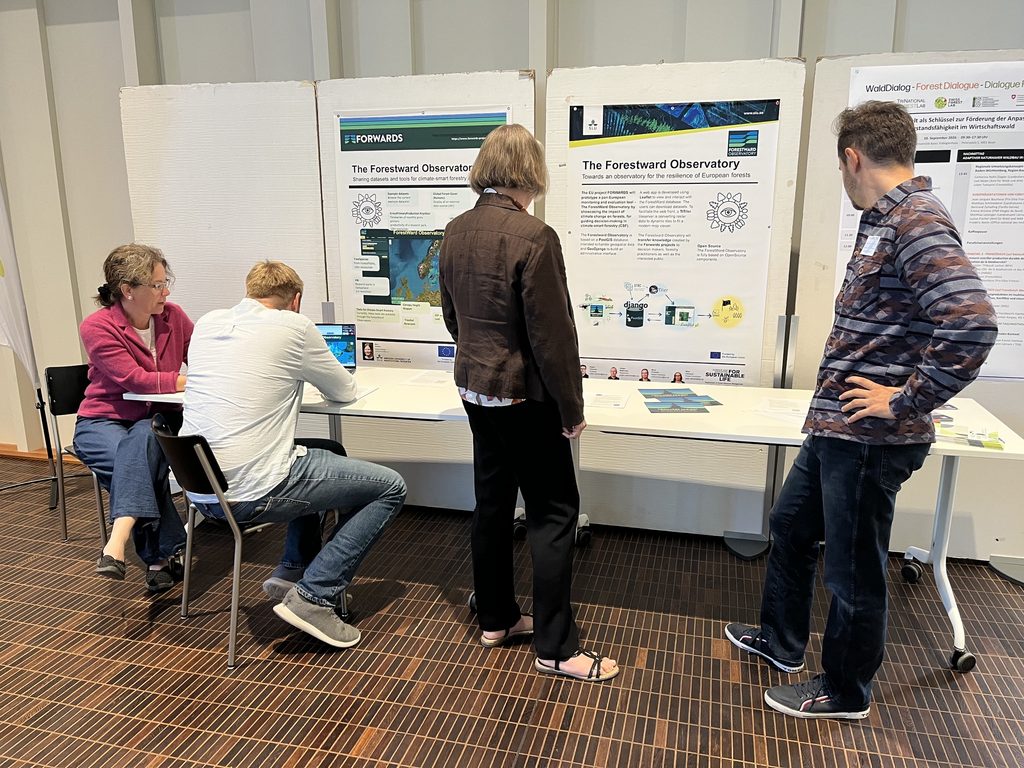

FORWARDS presentation by Barbara Mihok

For me, one of the strongest messages from Forest Dialogue was therefore the importance of knowledge transfer as a three-way process. Science needs to inform practice, but researchers also need to learn from the experience of those working in forests every day. The role of policy makers is to provide the interface between science and practice: translating evidence and practical experience into effective policy, while also ensuring that the realities and lessons from the field feed back into policy development. In this way, policy can become not simply an end point for knowledge, but a bridge that connects research, practice and decision-making. Projects such as TRANSFORMIT and FORWARDS as well as an established collaboration like the European Network Integrate (all presented there by my colleagues and me in sessions, via posters and talks) demonstrate different ways of connecting research, policy, and practice. TRANSFORMIT, for example, brings these communities together through Living Labs, stakeholder engagement and the development of practical, evidence-based guidance for Integrative Forest Management. FORWARDS connects scientific monitoring, modelling and data with the needs of forest managers and policy makers, with its ForestWard Observatory designed to support decisions on climate resilience and forest adaptation. The European Network Integrate provides a longer-term interface between the three, combining scientific evidence with demonstration sites, practical experience and policy exchange across countries.

The Forest Knowledge Gateway offers a practical platform to bring these different strands of knowledge together. It makes scientific findings, practical experience, tools and other resources easier to discover and access, helping users find relevant knowledge for the challenges they face in their own forests. In this way, the Gateway can help bridge the gap between knowledge being produced and knowledge being used.
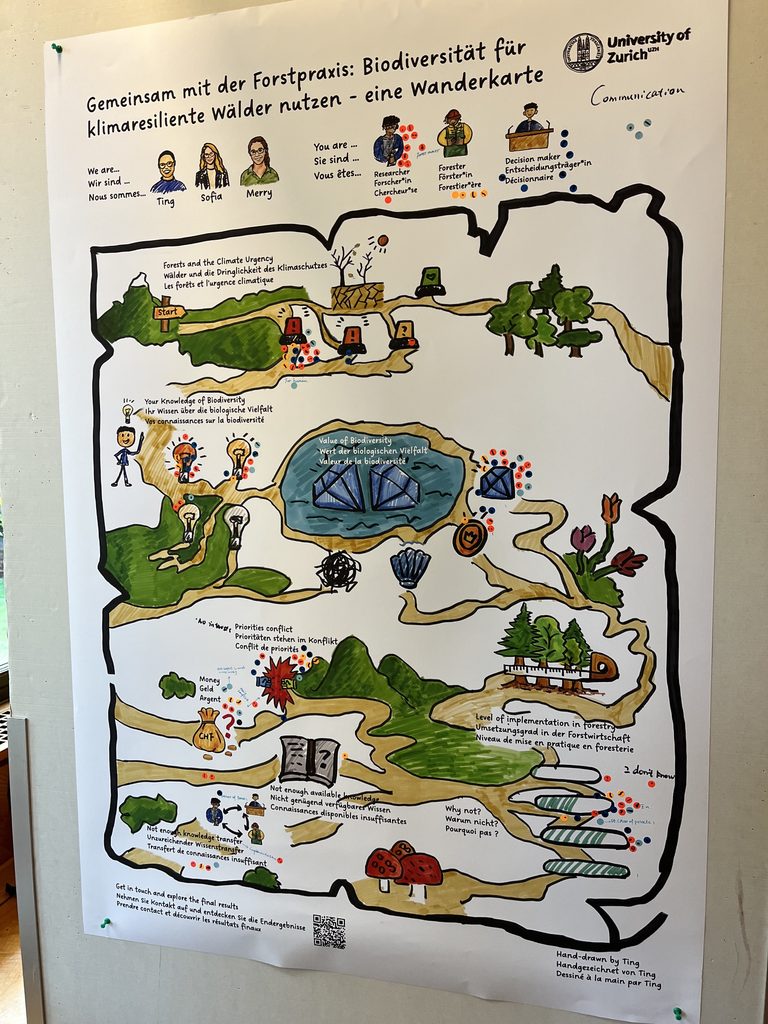
What a nice resilient forest game developed by Ting Tang (ETH Zürich)

Ultimately, knowledge only becomes valuable when it helps someone to make a better decision in the forest – this is why I also very much enjoyed the presentations by forestry practitioners, who shared what answers they need from research and thus made the exchange more fruitful.

That is what made the Forest Dialogue 2026 particularly encouraging. Despite different perspectives and some smaller controversies, there was a shared recognition that biodiversity, climate adaptation and forest management must be considered together. Bringing different perspectives into the conversation is essential to understand the challenges from all sides, identify solutions that work in practice, and build the trust needed to put them into action. Dialogue and meaningful stakeholder engagement are therefore not just a way of exchanging knowledge – they are part of the process of finding a way forward for resilient forests.

Webinar Recording Out Now! – From Indicators to Action: Bridging Science, Policy and Practice in Forest Restoration and Integrative Forest Management

“Indicators should be implementable, measurable, and aligned with other standards so they can ultimately support forest restoration and Integrative Forest Management across Europe,” said Gesche Schifferdecker as she wrapped up the webinar.

Co-organized with the Integrate Network, our webinar “From Indicators to Action – Bridging Science, Policy and Practice in Forest Restoration and Integrative Forest Management” brought together more than 90 participants from research, policy, and practice to explore how forest indicators can help ambitious restoration policies, particularly the EU Nature Restoration Regulation (NRR), to be effectively translated into action on the ground.


After Gergely Zagyvai, Integrate Network Chair 2026, opened the session with a welcome address, Stefanie Linser (University of Natural Resources and Life Sciences, Vienna (BOKU)) delivered a keynote presentation on the development of Integrative Forest Management indicators within the TRANSFORMIT project.

This was followed by a rich panel discussion, moderated by Gesche Schifferdecker, featuring José I. Barredo (JRC – European Commission), Bernhard Wolfslehner (European Forest Institute), Teresa Baiges Zapater (Centre De La Propietat Forestal), and Stefanie Linser (BOKU). Together, they explored how diverse forest-related indicators can support decision-making across different governance levels, the practical challenges of monitoring and reporting, and ways to bridge the gap between policy ambitions and practical implementation.

The panel ultimately agreed on one objective: we have to support our forests to become more resilient – and this can only be done if scientists, policy makers, practitioners, and communication experts work collaboratively.

Many thanks to our outstanding moderator, speakers and panelists, and to everyone who joined, asked questions, and shared their experiences!

WEBINAR: Beyond Boundaries: Linking Science, Policy, and Practice in Forest Knowledge Systems

Join us for a 1.5–2-hour interactive webinar that brings together scientists, policymakers, practitioners, and civil society to explore how knowledge on forests and biodiversity can be better connected, communicated, and put into action. Rather than a series of presentations, this event will emphasize open dialogue and active engagement among all participants.

We’ll kick off with short, insightful inputs from our diverse panelists – representatives from science, policy, practice, indigenous communities, and NGOs – who will share how they prepare and exchange knowledge in their work.

A lively panel discussion will then dive into key questions:

  • How can scientific, practical, indigenous, and policy knowledge be made more accessible and actionable?
  • How can we bridge these different knowledge systems to strengthen biodiversity conservation and sustainable forest management in a changing climate?

Participants are warmly invited to join the conversation before and during the event via this Padlet board – submit your questions, share your experiences, and help shape the discussion.

The webinar will also spotlight where to find reliable and tailored knowledge on forest management and biodiversity under climate change, including an introduction to the newly launched Forest Knowledge Gateway.

The panel session, moderated by Jo O’Hara, aims to strengthen knowledge exchange networks and inspire more inclusive, effective collaboration across forest-related communities.

Panelists:

  • Gesche Schifferdecker, Manager of the Forest Knowledge Gateway, European Forest Institute
  • Jonathan Spazzi, Forestry Development Officer, Teagasc
  • Karin Nutti Pilflykt, EU-Advisor, The Saami Council
  • Martin Belcher, Director of Impact, Climate, Environment and Natural Capital, The Palladium Group 
  • Kelsey Perlman, European Forest Campaigner, FERN
  • Marie Vandewalle, Senior Scientist and leader of the Biodiversity Science Policy Interface Research Group at UFZ, Co-coordinator of BioAgora

Date and time: 26th November 2025, 4:00 pm – 5:30 pm CET

Register here

New study highlights shift towards participatory forest policy and conservation in Europe

A comprehensive new study Integrating nature and people in European forest management: what is the state of nature conservation and role of participation? spanning twelve European countries reveals a significant shift in forest management: societal demands are increasingly favoring conservation and participatory policymaking. The research was conducted by TRANSFORMIT researchers Agata Konczal and Georg Winkel (both University of Wageningen) together with scientists from all over Europe. The work combined natural and social science perspectives, and explored how integrating nature conservation into forest management is becoming the dominant approach across Europe.

The study found that European countries are dedicating more forest areas to conservation, while also carefully managing how much wood is harvested compared to how much the forest grows. This shows a thoughtful approach to balancing the use of forest resources with protecting nature. Additionally, forest policies are paying much more attention to conservation issues than before.

However, the relationship between public participation in policy development and the integration of conservation measures is complex. While participatory decision-making is on the rise, its direct impact on conservation outcomes varies across regions.

The authors call for further research to better understand these dynamics and to support the ongoing evolution of forest management practices. This study offers valuable insights for policymakers, forest managers, and communities aiming to harmonize ecological, economic, and social goals in Europe’s forests.

Full reference: Konczal, A.A.; De Koning, J.H.C.; Larsen, J.B.; Felton, A.; Lawrence, A.; Ammer, CH.; Angelstam, P.; De Arano, I.Martinez; Bjärstig, T.; Blondet, M.; Calviño-Cancela, M.; De Vreese, R.; Dolriis, C.; Jaroszewicz, B.; Johansson, J.; Lexer, M.J.; Nichiforel, L.; Niedziakowski, K.; Paillet, Y.; Rozylowicz, L.; Sotirov, M.; Stokes, V.; Thorsen, B. Jellesmark; Vandekerkhove, K.; Wallin, I.; Weiss, G.; Schulz, T.; Wohlgemuth, T.; Zlatanov, T.; Winkel, G. (2025): Integrating nature and people in European forest management: what is the state of nature conservation and role of participation? International Forestry Review. https://doi.org/10.1505/146554825840319564

After the Storm: Pathways to forest recovery and restoration in Ireland and beyond – now online!

The Forest Restoration Talks returned on June 11 with a timely and pressing question: what happens after a severe windstorm in the forest? With storm Éowyn leaving a clear mark on Irish forests in spring 2025 – uprooted trees, fragmented canopies, and policy gaps laid bare – experts and practitioners came together to exchange knowledge on what recovery and restoration should look like. 

Hosted in collaboration with the Integrate Network, the TRANSFORMIT project, the SUPERB project, and FoRISK – the Pan-European Forest Risk Facility, the webinar focused on how to respond to extreme disturbance events, strengthen forest resilience, and adapt forestry practices and management for the future. 

What happened during Storm Éowyn? 

Storm Éowyn was the strongest storm ever recorded in Ireland, with wind speeds topping 184 km/h. The impact was severe: around 26,000 hectares of forest were damaged. Much of the damage occurred in mature conifer stands growing on wet mineral and peat soils. Sitka spruce was by far the most affected species. Forest structure and management history played a clear role in vulnerability – about half of the damaged area had been thinned at least once, raising questions about how timing and intensity of thinning influence resilience. As discussed in the webinar, factors like mixed species, varied age classes, and selective thinning can strengthen forest resilience, though no forest is entirely immune to disturbance. 

What can we learn from other countries’ experience? 

In North Rhine-Westphalia (NRW), one of Germany’s most forested regions, storms, droughts, and bark beetle outbreaks have left a visible mark. In response, the region developed a comprehensive reforestation strategy focused on resilience. Instead of replanting the same vulnerable species, forests are being rebuilt with a mix of four or more tree species, carefully selected to suit local soil and climate conditions. These “forest development types” also account for different forestry goals – from biodiversity and water retention to recreation and timber production. 

Support for forest owners goes beyond written guidelines – which is particularly important because more than half of NRWs forests is privately owned, with many small-scale owners. On-site advice, workshops, and even online courses help owners make informed decisions. A key digital tool, Waldinfo.NRW (in German), offers site-specific guidance, including climate scenario projections and tree suitability maps. This approach puts long-term forest health first – with a focus on climate stability, provision of diverse ecosystem services, and forest vitality. 

Policy and the power of networks 

One recurring theme was the need for policies that don’t slow down action, but help respond quickly and effectively when disturbances hit. Another important factor highlighted was the role of expert networks and coordinated planning. These networks are essential to ensure that knowledge and lessons learned from past disturbances are not lost between events. Initiatives like the Forest Risk Facility and the Integrate Network are seen as essential platforms to ensure cross-border learning and coordinated action. 

Storms like Éowyn expose weaknesses – but also reveal where we can improve. By rethinking planting strategies, improving management transparency, and giving forest owners the tools to both better prevent and respond, the sector can transform storm recovery into long-term resilience. While extreme events may be inevitable, the way we prepare and react is very much in our hands. 

Missed the webinar? Watch the full recording here. 

Bridging science, policy and practice with Integrative Forest Management

On 19 September, the European Forest Institute (EFI) hosted the EFI Scientific Seminar in Bonn, where the concept of Integrative Forest Management (IFM) was explored in depth. This approach is central to our TRANSFORMIT project, focusing on balancing forests’ roles as vital resources for a climate-neutral bioeconomy and providers of essential ecosystem services. Several members from our project, including our project coordinator, Bernhard Wolfslehner, participated in the seminar.

Prof. Dr. Jürgen Bauhus from the University of Freiburg highlighted IFM’s potential to safeguard biodiversity by combining natural, multifunctional, and plantation forests. He noted that IFM fosters dialogue and cooperation among diverse stakeholders, echoing our TRANSFORMIT’s mission to promote cross-sectoral collaboration.

The first panel discussion addressed IFM’s role in mitigating forest disturbances, noting that while disturbances can’t be avoided, diverse forest structures across scales can reduce the risk of large-scale failure. The panel also emphasized the value of Europe’s diverse forest management traditions and the need to learn from different regions, aligning with our TRANSFORMIT’s commitment to knowledge sharing.

In the second panel, Maria Patek, former Austrian Minister for Agriculture and Forestry, stressed the importance of engaging forest owners and other stakeholders in policy discussions. The panelists called for coherent policies and collaboration with often-overlooked stakeholders, including rural businesses and industry, and stressed the need for incentives to shift forest management practices.

The afternoon sessions focused on practice, starting with a “Couch Talk” featuring artist Evgenia Emets, who explored how collaboration between forest art, science, and practice can enhance engagement, especially with younger generations. The panel discussion afterwards brought together practices examples from across Europe, reflecting the need for interaction between practitioners, science, and policy, which is key to creating a shared vision and a “community of change”.

The final panel discussed networks for knowledge exchange, such as the Integrate network and ProSilva. Panelists, echoing conclusions from our Network of the Networks meeting on 18 September, agreed that these networks are crucial for sharing experiences and motivating active forest management in uncertain times. Building a family of biodiversity-friendly concepts was seen as more important than creating individual bubbles.

Watch the recording of the EFI Scientific Seminar here:

This article is adapted from the European Forest Institute’s (EFI)’s news report Bridging science, policy and practice with Integrative Forest Management.

Photos: Rosa Castañeda, EFI

Integrate Network Webinar 2024 – now available to watch online! 

On July 3rd, nearly 200 participants gathered online to explore the relation between forest resilience and biodiversity at the Integrate Network webinar hosted in collaboration with TRANSFORMIT project. The aim was to better understand how diverse actors, whether in science, policy or practice, can better support forest ecosystems in coping with current and future climatic changes. 

After the welcoming words of Georg Frank, chair of the Integrate Network in 2024, Marcus Lindner, Head of Resilience Programme at EFI, held a keynote speech explaining different ways of characterizing forest resilience as well as introducing diverse management practices that can help enhance it. He reminded us that the enhancement of forest resilience in response to climate change and increasing disturbances is not only important in forest management but also in forest value chains. Overall, many stakeholders also advocate for increasing the share of mixed species and uneven aged forests, making biodiversity at multiple levels crucial for ensuring forest resilience.  

The webinar then moved into an engaging panel discussion featuring Olive Leavy, National Coordinator at Irish Forest Owners and Administrator at ProSilva Ireland, Serena Buscarini, Forester at DREAm Italia who works on LIFE GoProFor Med projects, and Jurij Diaci, Head of Chair of Silviculture at the Department of Forestry at the University of Ljubljana.  

Jurij Diaci, for instance, shared some valuable insights and lessons about forest resilience based on his research on primary forests. Serena Buscarini talked about her experience applying integrative forest management approaches in the Mediterranean context, as well as shared best practices from diverse LIFE projects. As a representative of forest owners in Ireland, Olive Leavy reminded us of the financial risks forest owners face by planting a broader mix of species. Not only does this mean that adaptation measures should be better supported, but that the system in which economic return is only linked to timber production needs to shift towards financially rewarding a broader range of ecosystem services. The Q&A therefore also covered how policy and research can best support forest practitioners in improving forest resilience.  

Did you miss attending the webinar? Re-watch the full discussion and Q&A here

“Network of Networks” meeting upcoming

Invite only: World Café on “How to adapt Forest Management to integrate multiple objectives” on 18 September from 2pm to 5pm at Universitätsclub Bonn, Germany.

As part of our new Horizon Europe project TRANSFORMIT, we will provide a platform for both international and regional networks and people to engage in dialogue on different approaches to sustainable forest management. Titled “Network of Networks” meeting and centered around “how to adapt Forest Management to integrate multiple objectives”, we will bring together diverse stakeholders from policy, practice, science, media and civil society to discuss different needs and possible pathways for the future of what we call “Integrative Forest Management”. The workshop takes place on September 18th from 14:00–17:00 CEST and is organized back-to-back with European Forest Institute’s Annual Conference in Bonn.

Why attend? What’s in it for you?

  • Explore New Perspectives: Engage with a wide array of professionals from policy, practice, science, media, and civil society, expanding your professional network and fostering future collaborations.
  • Expand your Network: Discover diverse approaches to sustainable forest management and nature conservation and connect with stakeholders from and beyond Europe to gain global perspectives on integrative forest management.
  • Engage in Co-Creation: Participate in the development of a Stakeholder Engagement Platform designed for intensive collaboration, mutual learning, and knowledge sharing.
  • Drive Impact: Be part of a World Café session that contributes to impactful discussions on current framework conditions, potential conflicts and synergies, the coherence of political instruments and funding potential for integrative approaches.
  • Build New Synergies: Join the envisioning of a Stakeholder Engagement Platform that aims to break down silos, foster deeper discussions on forest management, and create opportunities for future collaborations, including the sharing of best practices and innovative solutions through future workshops, webinars, and events.

Don’t miss this opportunity & join us in discussing current barriers, enablers and new opportunities for future collaborations in the field of sustainable forest management and conservation!

————————

World Café – Table Topics & Hosts

Table I – Policy

Host: Steven Dörr, European and International Forest Policy, Federal Ministry of Food and Agriculture (BMEL)

Table II – Nature Conservation

Host: Zoltan Kun, Head of Conservation at WildEurope

Table III – Media & Society

Host: Monika Seynsche, Science Journalist and Moderator

Table IV – Science

Host: Bernhard Wolfslehner, Head of Governance Programme at EFI

Tabel V – Forest Owners

Host: Lucas Freiherr von Fürstenberg, Freiherr von Fürstenberg’sche Forstverwaltung