Forest Dialogue 2026: Biodiversity as a key to resilient forests 

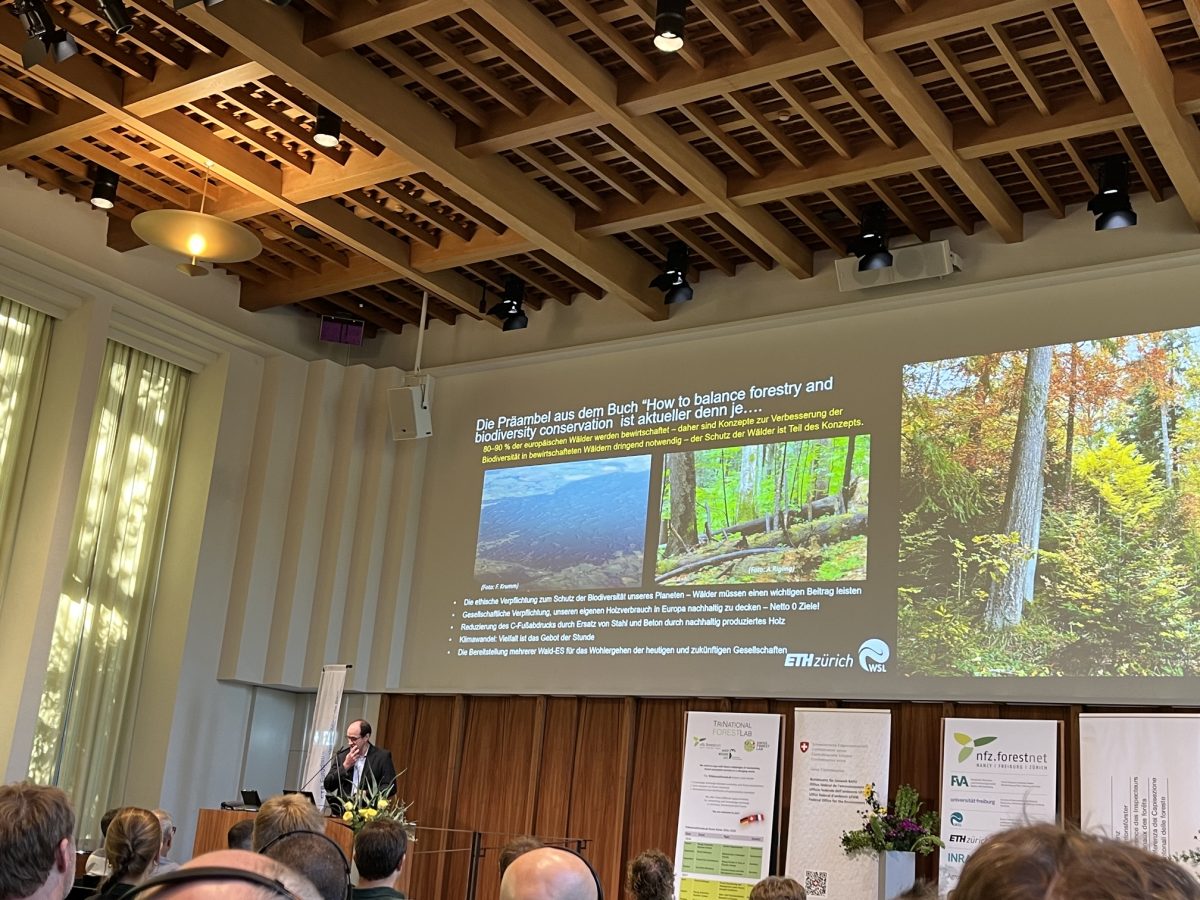
How can biodiversity increase the adaptation capacity and resilience of forests that are also managed for wood production? At WaldDialog – Forest Dialogue – Dialogue Forestier 2026, this question brought together forest scientists, practitioners, policymakers, forest owners, communicators and administrators from Switzerland, Germany, France and beyond. On 10 September 2026, we all gathered at the University of Basel to explore what this means for forests facing increasingly uncertain conditions.

The event, organised by the TriNational ForestLab, SwissForestLab, the Conference of Cantonal Foresters (KOK) and the Swiss Federal Office for the Environment (BAFU), created a space for something our forests – and we as well – increasingly need: dialogue across disciplines, institutions and borders.

I felt that the urgency of this question was made tangible from the very beginning. As Arthur Gessler (WSL/ETH) emphasized, 2026 marks a turning point. Extreme heat and drought are increasingly visible in forests, with trees such as beech already showing severe stress early in the growing season. Across the Basel region, monitoring indicates that rainfall has been reduced in almost every month, leaving forests under considerable pressure, Gessler emphasized.

A strong argument for diversity

A recurring theme throughout the presentations was that diverse forests are better equipped to cope with climate change and uncertainty. Research presented by Hervé Jactel (INRAE) showed that mixed forests tend to be more resilient to drought, fire and wind disturbance than monocultures. They can also be more productive: mixtures of coniferous and broadleaved species can benefit from complementary traits such as different rooting depths and patterns of water use. However, a specific mixture of broadleaved and conifer species is needed for both forest resilience and productivity, and that mixture needs to be identified. Still, the results are promising, highlighting the potential of diversity to strengthen forests in a changing climate.

Diversity, however, is about more than simply planting several tree species. Genetic diversity within species can provide the basis for adaptation to changing conditions, as Jörg Kleinschmit (FVA) highlighted. The choice of tree species — and potentially the use of assisted migration — therefore needs to be considered alongside the genetic resources available to forests.

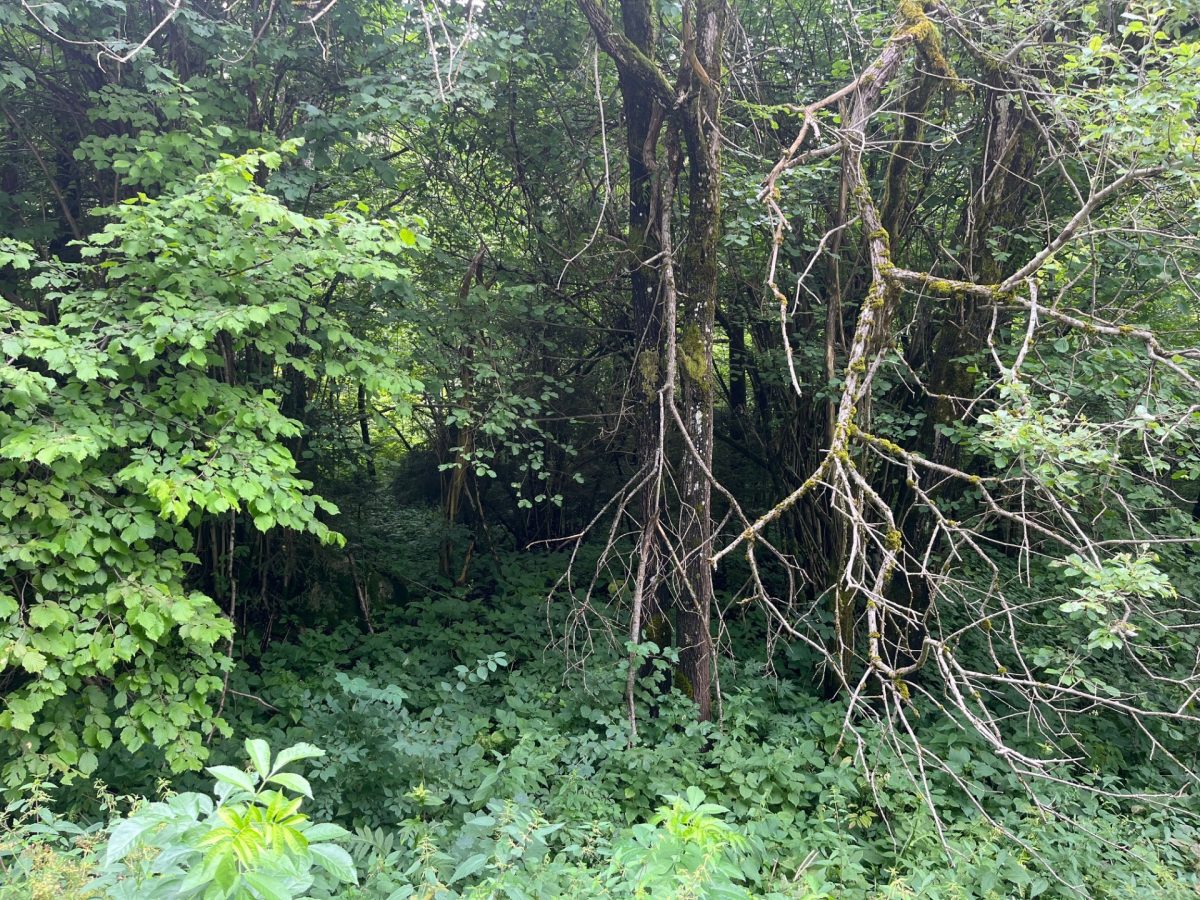
At the same time, biodiversity conservation cannot be reduced to tree diversity. Frank Krumm and Martin Gossner (both WSL) highlighted the importance of habitat trees, microhabitats and deadwood. Microhabitats are small, specialised structures such as tree cavities, cracks, loose bark or dead branches that provide food, shelter or breeding sites for many species. Many of these valuable structures are found in or develop from deadwood, making it an important element of forest biodiversity. Around a quarter of forest species are closely dependent on it, while many more benefit from it. Natural forest reserves therefore remain an essential component of biodiversity conservation, particularly for species requiring specialised deadwood structures, Gossner emphasized.

Potential of biodiversity in managed forests

But managed forests also offer opportunities, and this event mainly aimed at exploring these. Instead of viewing biodiversity conservation and forest management as separate worlds, foresters can actively create microhabitats and make use of structures generated by natural disturbances. This is where the concept of “close-to-nature forestry” becomes particularly relevant: working with natural processes rather than against them, while maintaining the multifunctionality of forests.
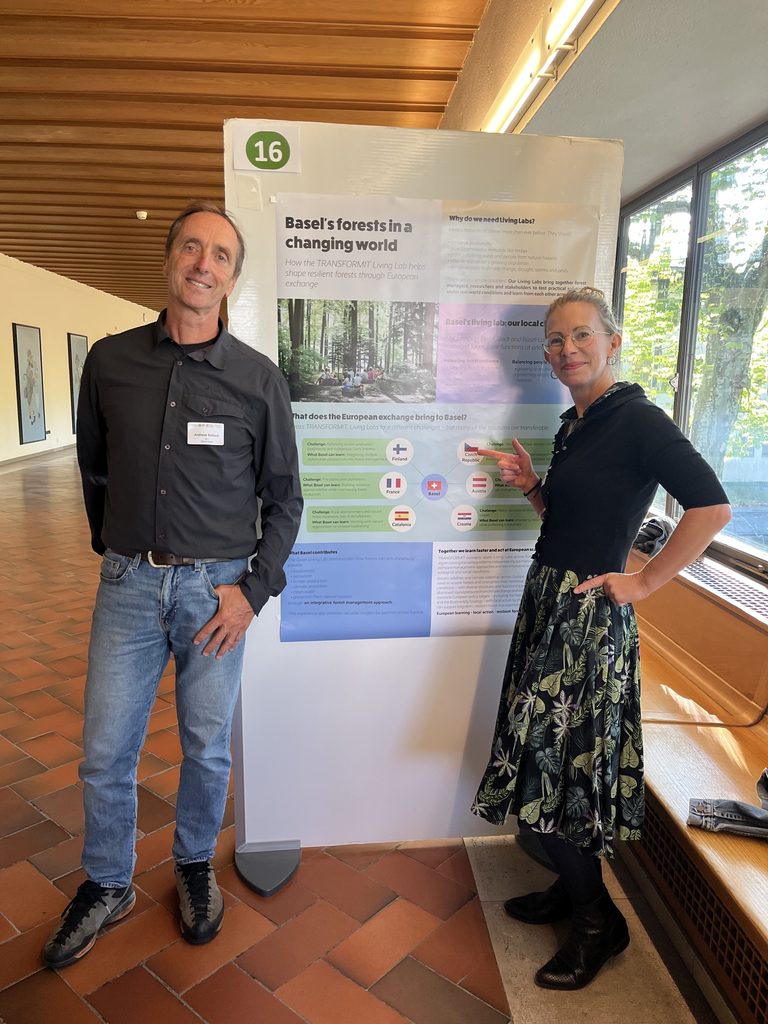
The practical examples presented during the afternoon demonstrated that these ideas are already being put into practice. Case studies from Switzerland included a presentation by our Living Lab partner Amt für Wald beider Basel, Switzerland, represented by the coordinator of the Living Lab Ueli Meier. Examples from Baden-Württemberg (Germany) and Alsace (France) showed how natural regeneration, species diversification, habitat trees and the retention of surviving trees after disturbances can gradually transform forest composition. In Baden AG, for example, the proportion of broadleaved trees increased substantially over 25 years, supported by a strong focus on natural regeneration.

The discussions also made clear that there are no simple or one-fits-all solutions. Increasing deadwood can create safety challenges for forest workers. Changing tree species can involve economic and ecological uncertainties. Continuous-cover forestry offers structural and species diversity but also faces questions around economic risks and social acceptance. And local conditions matter enormously.

From local conditions to European approaches

This is precisely why this cross-border dimension of Forest Dialogue was so valuable. Drought, heat, pests, biodiversity loss and changing societal expectations do not stop at national borders. Forests may be managed locally, but the challenges they face are European.

The direction of European policy reflects this reality. The EU Biodiversity Strategy for 2030 and the Nature Restoration Law place increasing emphasis on restoring ecosystems, improving biodiversity and strengthening resilience. Yet this does not mean that Europe needs one standardised model of forest management. Instead, European objectives must be translated into approaches that work under different ecological, economic and social conditions.
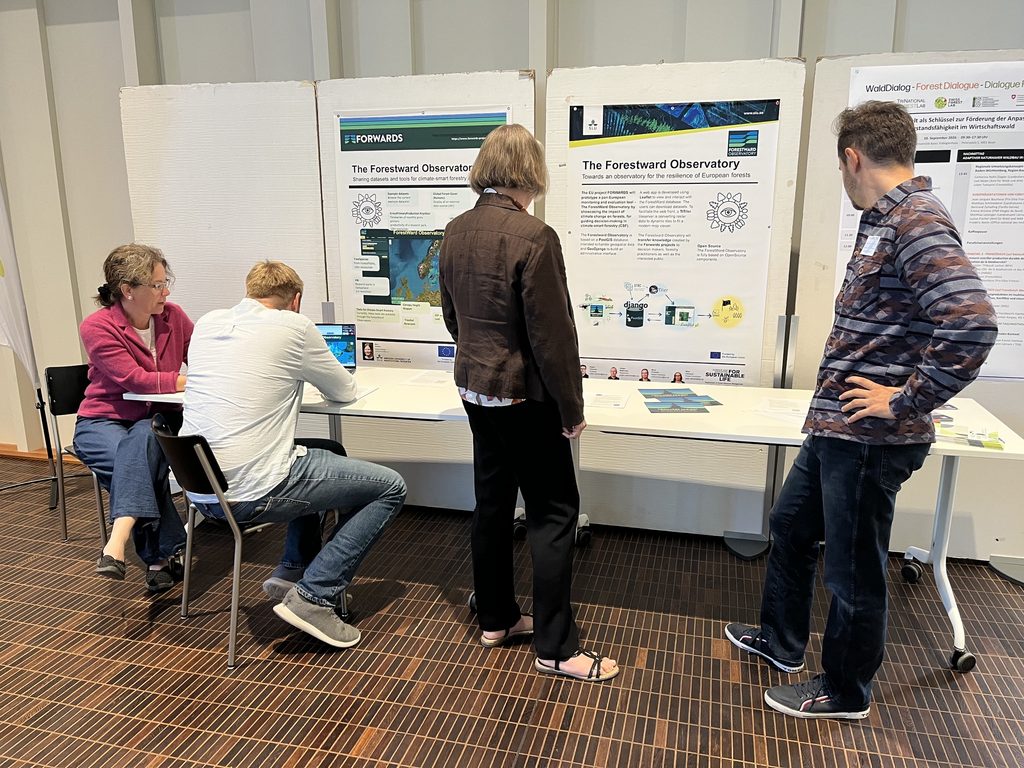

FORWARDS presentation by Barbara Mihok

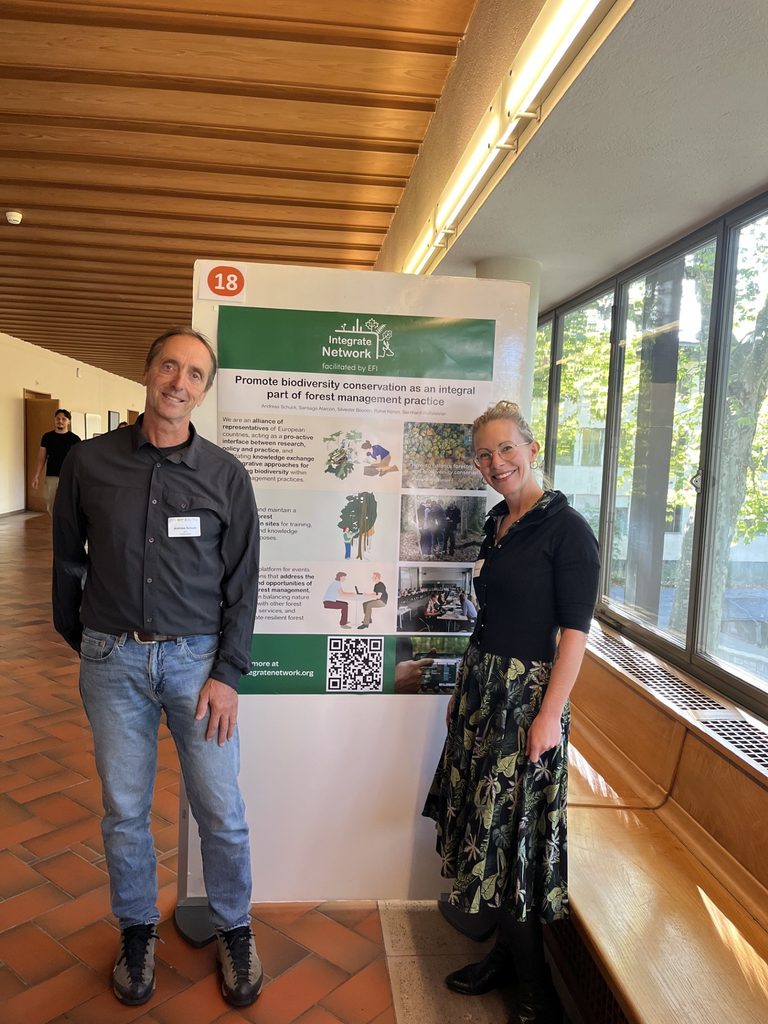
For me, one of the strongest messages from Forest Dialogue was therefore the importance of knowledge transfer as a three-way process. Science needs to inform practice, but researchers also need to learn from the experience of those working in forests every day. The role of policy makers is to provide the interface between science and practice: translating evidence and practical experience into effective policy, while also ensuring that the realities and lessons from the field feed back into policy development. In this way, policy can become not simply an end point for knowledge, but a bridge that connects research, practice and decision-making. Projects such as TRANSFORMIT and FORWARDS as well as an established collaboration like the European Network Integrate (all presented there by my colleagues and me in sessions, via posters and talks) demonstrate different ways of connecting research, policy, and practice. TRANSFORMIT, for example, brings these communities together through Living Labs, stakeholder engagement and the development of practical, evidence-based guidance for Integrative Forest Management. FORWARDS connects scientific monitoring, modelling and data with the needs of forest managers and policy makers, with its ForestWard Observatory designed to support decisions on climate resilience and forest adaptation. The European Network Integrate provides a longer-term interface between the three, combining scientific evidence with demonstration sites, practical experience and policy exchange across countries.

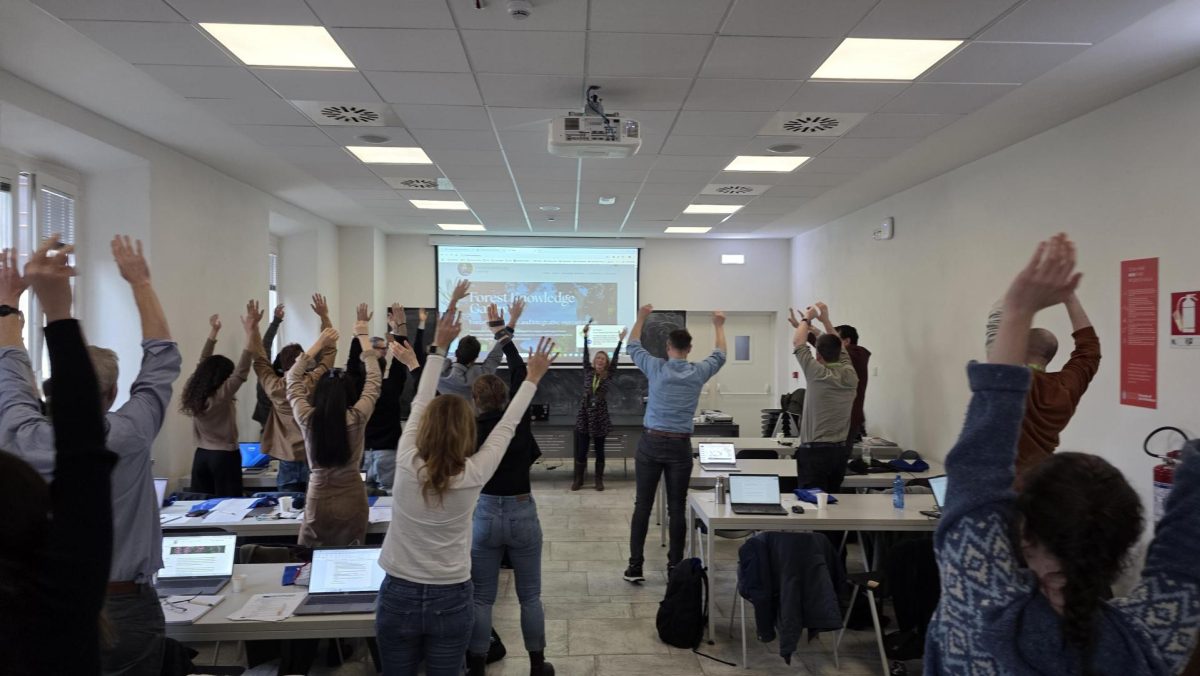
The Forest Knowledge Gateway offers a practical platform to bring these different strands of knowledge together. It makes scientific findings, practical experience, tools and other resources easier to discover and access, helping users find relevant knowledge for the challenges they face in their own forests. In this way, the Gateway can help bridge the gap between knowledge being produced and knowledge being used.
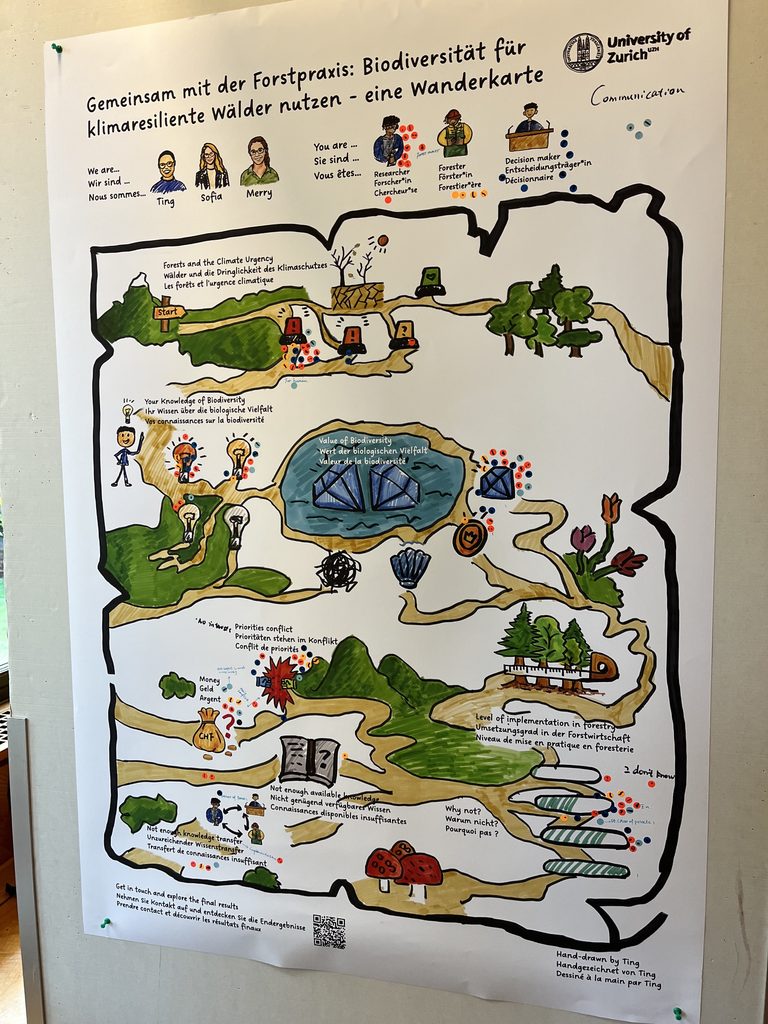
What a nice resilient forest game developed by Ting Tang (ETH Zürich)

Ultimately, knowledge only becomes valuable when it helps someone to make a better decision in the forest – this is why I also very much enjoyed the presentations by forestry practitioners, who shared what answers they need from research and thus made the exchange more fruitful.

That is what made the Forest Dialogue 2026 particularly encouraging. Despite different perspectives and some smaller controversies, there was a shared recognition that biodiversity, climate adaptation and forest management must be considered together. Bringing different perspectives into the conversation is essential to understand the challenges from all sides, identify solutions that work in practice, and build the trust needed to put them into action. Dialogue and meaningful stakeholder engagement are therefore not just a way of exchanging knowledge – they are part of the process of finding a way forward for resilient forests.

New Article on Integrative Forest Management Indicators Published in Irish Practitioner’s Magazine

Key Indicators for Integrative Forest Management (IFM) developed within TRANSFORMIT project

A new article featuring TRANSFORMIT has been published in Forestry & Energy, Ireland’s practitioner magazine for the forestry and energy sectors. Authored by Stefanie Linser (Senior Researcher, BOKU University, Vienna) and Gesche Schifferdecker (Communications Manager, European Forest Institute), the article explores how Integrative Forest Management can help forests meet multiple, often competing demands.

The article also highlights one of TRANSFORMIT’s key outputs: a set of 17 scalable indicators, developed through a bottom-up, participatory process, to help translate the principles of integrative, multifunctional forest management into practice. These indicators give forest managers a practical way to monitor forest conditions, assess management effectiveness, and apply IFM principles across different scales. You can check here for the factsheets of the 17 indicators.

📖 Read the full article in Forestry & Energy here!

IBP “Train the Trainers” event is bearing first fruits: Ireland to host multiple outdoor workshops this Spring

During April and May various Marteloscope workshops are already taking place in Ireland, organised by Teagasc Forestry Development Department (National Forest Extension Agency) in collaboration with the Forestry Division of the Department of Agriculture Food and the Marine (DAFM). Those are outdoor in-forest workshops, which aim to promote and facilitate discussions on integrative forest management options and approaches, together with forest owners, practitioners, and forestry students.

Credits: Jonathan Spazzi

The recent “Train the Trainers” event in Binzen, Germany, jointly organised by TRANSFORMIT project and the Integrate Network, and attended by Jonathan Spazzi (Teagasc) and Dermot Dunphy (DAFM), was instrumental to further bring the IBP survey methodology front and centre as part of the Irish Marteloscope workshops. As fully booked events, these workshop series showcase the current interest in Ireland to learn more about the integration of biodiversity conservation into management practices and, in particular, the Index on Biodiversity Potential. Here a blend of forest owners, practitioners and students are coming together to take part in frank and meaningful discussions.

So far, the feedback received is excellent, says Irish Integrate Network member representative Jonathan Spazzi. The organizers expect around 80 participants to be trained this spring with more planned to attend trainings in Autumn.

Through the Integrate Network and a range of research and development projects, including SimInForest and the TRANSFORMIT project, collaboration across Europe between educators and researchers is ongoing on how best to best promote and communicate new, integrative, and closer-to-nature management solutions and ensure that forest health and productivity can continue to provide essential services to society’s collective well-being.

Integrative Forest Management indicators in Italian practice magazine

A new contribution in the Italian forestry practice magazine Sheerwood is spotlighting the TRANSFORMIT project’s work as a promising step toward more measurable and integrative forest management. Presented by Silvia Bruschini, the article focuses on the set of 17 key indicators designed by TRANSFORMIT experts to help translate complex ecological processes into practical tools for decision-making.

Indicators play a crucial role in forestry, offering measurable insights into biodiversity, forest resources, and socio-economic benefits. According to the publication, our TRANSFORMIT framework provides both quantitative and qualitative parameters that allow managers to monitor forest conditions, assess the impact of human activities, and guide sustainable practices over time.

Developed through a participatory process, these indicators are scalable from stand to landscape level and aligned with EU policy goals such as the European Green Deal. The article highlights their potential as a valuable reference for forest planning in Italy, offering a shared, science-based foundation for managing increasingly complex forest systems.

Read the article (in Italian) here: Gestione forestale integrata: gli indicatori TRANSFORMIT – Rivistasherwood.it

One framework, many forests: Integrative Forest Management as a shared language for Europe? 

by Shanqing Gao & Valentina Vitali

Forests in Europe are at a crossroads. Climate change is reshaping disturbance regimes, biodiversity is declining, and societies are demanding more from forests than ever before: timber, carbon storage, clean water, recreation and habitat for wildlife, all at once. Against this backdrop, forest managers are navigating a crowded landscape of concepts, frameworks and acronyms, each offering a different answer to the same fundamental question: What does it actually mean in practice to manage a forest well – that is, to provide the services societies need while at the same time strengthening the forests’ resilience and preparing them for the future? 

A new paper “Perspective: Managing European forests for biodiversity conservation and global change adaptation: An assessment of current management concepts” published in Forest Ecology and Management by Valentina Vitali and colleagues (2026), developed within the TRANSFORMIT project, takes a step back to make sense of this complexity and offers a structured way forward. 

Spruce forest affected by bark beetles. Bohemian Paradise, Czech Republic.

What has been missing? 

Forest management concepts have multiplied over the past decades. Some of these names you might have heard before: Close-to-Nature Forest Management, Continuous Cover Forestry, Climate-Smart Forestry, Retention Forestry… But as noted in the paper, many of these approaches have remained “largely at the stand scale, even for ecosystem services that inherently depend on landscape-level processes”. Biodiversity elements, such as deadwood, habitat trees and rare species were frequently overlooked. Landscape connectivity was rarely part of the conversation. 

Today, the pressures are sharper, and the expectations are higher. EU policies on climate, biodiversity and the bioeconomy pull forests in multiple directions at once. Intensive management can reduce adaptive capacity by simplifying stand structures and shortening rotation lengths. Meanwhile, research consistently shows that structurally diverse, species-rich forests are far better buffered against the more frequent and more severe natural disturbances caused by climate change. 

What has been missing is not more concepts but more operational clarity. Many existing frameworks “articulate clear aspirations and guiding principles but lack fully developed, standardized operational guidelines”. Without that clarity, forest management approaches face the risk of remaining theoretical but having limited real-world impact on forests. 

What is Integrative Forest Management (IFM)? 

IFM is not a new idea. First conceptualized by Daniel Kraus and Frank Krumm in 2013 and further developed since, it has long been understood as a holistic approach that aims to integrate nature conservation and adaptation to global change into sustainable forest management. Within TRANSFORMIT, we refined and operationalized it into a working definition: 

“Integrative Forest Management aims at integrating biodiversity conservation and global change adaptation into forest management for the sustainable provision of multiple ecosystem services. It is guided by natural and diverse forest structures, compositions, and dynamics to support ecosystem functioning and resilience. Its management practices consistently consider the tree, stand, and landscape scale and employ different silvicultural intensities, including intentionally unmanaged forest patches.” 

In short, IFM is not a prescription for what a forest must look like. It is a framework that can be adapted to local ecological realities, management traditions and governance contexts, while keeping biodiversity and resilience at the center. 

In practical terms, this definition is structured around 8 guiding principles: 

 Principle What it means in practice 
Retention of habitat trees, special habitats, and deadwood Actively identifying, mapping, and retaining old trees, deadwood, and valuable habitats, not just what regulation requires, but beyond it 
Promoting site-adapted native tree species Prioritising native species suited to local conditions, while allowing climate-adapted non-native species in minority shares 
Promoting natural tree regeneration Favouring natural regeneration where possible, monitoring herbivore pressure, and protecting pioneer species in the landscape 
Partial harvest and structural heterogeneity Favouring selection harvesting over clear felling to maintain complex, uneven-aged stand structures 
Promoting tree species variation and genetic diversity Actively managing for diverse species mixtures aiming for a minimum of three tree species per stand and diverse provenances 
Avoidance of intensive management operations Limiting agrochemical use, constraining machine traffic to fixed extraction networks, retaining deadwood after salvage logging, and protecting watercourses 
Supporting landscape heterogeneity and functioning Planning explicitly for habitat connectivity, protection of rare habitats, and linkages between forested and non-forested areas at the landscape scale 
Managing factors that hinder ecosystem functioning Actively controlling invasive species and integrating natural disturbance processes, such as fire, storms, pest outbreaks, into management planning to build resilience 

How do existing concepts measure up? 

With this framework established, the paper undertakes a structured comparison of eight widely used European forest management concepts: Continuous Cover Forestry (CCF), Close-to-Nature Forest Management (CNFM), ProSilva, the Stepping Stone Concept (SSC), Retention Forestry (RF), TRIAD, Climate-Smart Forestry (CSF), and Closer-to-Nature Forest Management (CerNFM). 

Figure 1: Overview of IFM-related concepts investigated. Each cell presents the concept’s abbreviation and a brief description. (Vitali et al., 2026) 

As shown in the graph below, all eight concepts show some degree of alignment with IFM principles, at the level of broad principles, most cover at least half. But when assessed against the more specific operational attributes – the how, not just the what – the picture shifts considerably: existing concepts cover less than 40% of IFM’s desired attributes overall. 

Figure 2: Spider-grams showing how each management concept aligns with the principles of IFM. (Vitali et al., 2026) 

It is worth noting that this is not a ranking. Each concept has strengths that reflect its own origins and context. The more productive insight is that these concepts are complementary. IFM, as a common framework, makes that complementarity visible and actionable. As the paper puts it, by using IFM as a benchmark, the study helps “close gaps between high-level management goals and their practical implementation” through “a transparent dialogue between science, practice, and policy”. 

To show what IFM implementation can look like over time, the paper includes an illustrative transition pathway for disturbance-prone Norway spruce monocultures affected by drought and bark beetles. It emphasizes that some benefits (e.g., using existing deadwood as habitat) can start immediately, while others (e.g., developing habitat trees or achieving structurally diverse mixed stands) take decades, requiring staged planning across short-, medium-, and long-term horizons (Figure 3). 

Figure 3: From spruce monoculture to resilient forest: the timeline shows how Integrative Forest Management (IFM) actions unfold over decades through short-, mid-, and long-term actions that strengthen biodiversity, climate resilience, and ecosystem services

A common framework for a shared challenge 

Integrative Forest Management will not manage the beech forests in central Europe and the boreal pinewoods in Scandinavia with the same approaches. Regional conditions, traditions, ownership structures and governance frameworks all shape what is possible. This context-sensitivity is exactly the key feature of the framework. IFM is, as the paper describes it, “a unifying but non-prescriptive concept that is capable of integrating diverse forest management objectives”. 

What it offers, above all, is a shared language: a structured way to have better conversations about forest management across scientific, policy and practitioner communities, and to identify honestly where existing approaches are strong and where the gaps remain. 

Within TRANSFORMIT, we are building on this foundation by developing indicators for IFM, testing implementation pathways via 7 Living Labs and over 30 Satellite Demonstration Areas across Europe, and working through networks like the Integrate Network, with its more than 200 demonstration sites across Europe, to connect science and practice in ways that can scale.  

The forests of Europe are facing pressures that will not wait. But with clearer thinking about what we are managing them for, and better tools for translating that thinking into action, we can manage them considerably better. 


Read more: Valentina Vitali (lead-author), Frank Krumm, Andreea Spinu, Florian Schnabel, Jürgen Bauhus, Agata Konczal, Lorenz Schimetka, Sebastian Schwegmann, Georg Winkel, & Andreas Rigling. (2026). Managing European forests for biodiversity conservation and global change adaptation: An assessment of current management concepts. Forest Ecology and Management, 611, 123698. https://doi.org/10.1016/j.foreco.2026.123698  

Index on Biodiversity Potential (IBP) “Train the Trainers” Workshop

An upcoming 2-day field workshop on the “Index of Biodiversity Potential”, short IBP, with Laurent Larrieu (INRAE/CNPF) and Pauline Marty (CNPF-IDF).

In collaboration with the Integrate Network, the EU-Horizon TRANSFORMIT project is organising a 2-day field workshop on the “Index of Biodiversity Potential”, short IBP. It will take place from 15th to 16th of April 2026 in Binzen and Kandern, Germany located near the city of Basel (Switzerland).

The idea for a “train the trainers” workshop emerged at the Integrate Network Annual Meeting held in October 2025 in Ireland, where the IBP was introduced by Laurent Larrieu and Pierre Gonin (INRAE/CNPF). Interest arose from participants to organise a training event in the near future on how to apply the IBP. As the IBP was instrumentally developed by Laurent and Pierre over the past decades, we would like to take the opportunity to have the training with Laurent who is retiring in the course of 2026 (Pierre will already retire in March this year).

What is the IBP and how can it be applied?

The IBP is a simple diagnostic tool designed to help forest managers practise biodiversity-friendly forest management. The index is based on a rapid assessment of ten features (or key factors) that influence the capacity of forest stands to support animal, plant, and fungal species. These 10 key factors consider the most common structural drivers of forest biodiversity and include native tree species, vertical structure of vegetation, standing and lying deadwood, large living trees, living trees bearing microhabitats, flower-rich open areas and three factors related to site history and site conditions. The key factors can be quite easily recorded in the field using a well-designed protocol by Laurent and Pierre. For recording no additional equipment or special taxonomic expertise is required to assess the IBP score. The application of the IBP has great potential, e.g. for forest/nature conservation managers, forest owners, consultants, forest training centres, educational institutions in practical work or education. The index can also be used by science as a rapid stand description protocol for example to analyse biodiversity patterns for example in different types of managed forest and such not being managed.

This workshop will provide theoretical insights to the IBP, the science behind it, and its application in the field. Further the participants will be introduced to good practices to implement training events at their own enterprises, institutions, or administrations. You will also have the chance learn more about both the Integrate Network and TRANSFORMIT project, as well as meet new people working in the field of integrative forest management and forest biodiversity.

FORWARDS to boost the Forest Knowledge Gateway

FORWARDS is set to contributing to the future of the TRANSFORMIT-led Forest Knowledge Gateway, bringing in a wealth of scientific insights, practical tools, and policy‑relevant outputs generated across its work packages. With a growing body of content for integration – including scientific papers, and eventually good practice guides, tools and stories – FORWARDS is preparing to make the Gateway an even more powerful hub for forestry practitioners, policymakers, and scientists. This was discussed after a Gateway presentation as part of the FORWARDS project’s annual meeting in Florence.

A key opportunity lies in the project’s diverse digital outputs. These range from interactive applications developed within the ForestWards Observatory (WP5) to modelling tools for disturbances, carbon dynamics, and climate‑smart forestry. The intention to publish good‑practice guidance and multilingual materials directly onto the Gateway will further enhance accessibility and support its role as a European reference point.
FORWARDS’ commitment to sharing scientific publications and storytelling-based lessons learned adds to its value proposition, reinforcing the Gateway as a platform not just for data, but for knowledge exchange, engagement, and narrative‑driven impact.


Strengthening Synergies: TRANSFORMIT & FORWARDS

The collaboration potential between TRANSFORMIT and FORWARDS is emerging as a promising avenue for cross-project enrichment. Both projects emphasise practitioner-oriented engagement and communication, data-driven insights, and innovative digital outputs – making joint dissemination not only strategic, but mutually reinforcing. As FORWARDS moves into a crucial phase of shaping its policy messages, the collaboration with TRANSFORMIT offers a chance to amplify shared lessons, align outreach efforts, and strengthen Europe’s capacity to support climate‑smart and resilient forest management.

Featured image: performing trees before the Gateway presentation with the FORWARDS Consortium (photo: Katharina Freund)

Wegscheid’s Living Lab: where woodpeckers and forest managers find their place 

High up in the Styrian hills of Austria, where spruce crowns shimmer like scales in shifting light, a quiet transformation is underway. It began with a growing realization: forests can be managed and alive at the same time. 

© ÖBf/Thomas Pfatschbacher

How it all began: A forest rethinks its future 

The Austrian Federal Forests had long recognized their responsibility as caretakers of some of the country’s most precious natural areas. This commitment continuous today, extending not only to the management of protected areas but also to the integration of conservation ideas and guidelines into the management of commercially used forest across the country. Gradually, approximately half of the forest districts have now been equipped with an Ecological Landscape Management concept, ensuring that biodiversity is increasingly woven into everyday forest operations. 

The Ecological Landscape Management isn’t just an add-on. It became a new way of thinking:  forest plans now include not only economic but also ecological data, every decade-long operational plan accounts for habitats, and every stand is seen through the dual lens of use and nature conservation. 

This same shift lies at the heart of TRANSFORMIT’s mission of Integrated Forest Management.  

And so, when a Living Lab was to be established in Austria, the choice felt obvious: the 8,155-hectare forest district of Wegscheid. A region where the four pillars of Ecological Landscape Management, namely conservation and renaturation, habitat connectivity, process protection, and a conservation areas register are already invented. 

The TRANSFORMIT Living Lab would focus on one of these pillars: creating a net of habitat stepping stones through the forest for specific umbrella-species. 

A defining moment: When crisis becomes catalyst 

If there is a single snapshot that captures the spirit of Wegscheid, it may be the moment local foresters walked through stands devastated by bark beetles. Spruce – when planted decades ago outside its natural range – often had fallen victim to increasing temperatures, drought, storms, and pests. The landscape partly looked raw, wounded. Yet instead of discouragement, something else took root: determination. 

Foresters, researchers, and partners understood that this painful transformation was also an opportunity. As bark beetle outbreaks now slowly decline, conversations in Wegscheid have shifted. How can forests be rebuilt to withstand climate change? How can biodiversity become the foundation of resilience? 

In that moment, the spirit of the Living Lab crystallized: experimenting boldly, learning continuously, and working together for forests that can face an uncertain future.  

© ÖBf

The heart of the Living Lab 

Imagine a woodpecker. A black woodpecker perhaps, or a three-toed one, flying across a patchwork of forest stands. Not every piece of forest is equally suitable as a habitat for the bird. Some are young, some uniform, some still healing from storms or bark beetle attacks. What this bird needs is a network of stepping stones: pockets rich in habitat trees, deadwood, shelter, and food. 

In 2022, foresters in Wegscheid began mapping exactly that. Around 512 hectares were selected as habitat connectivity stepping stones: old stands, naturally regenerating patches, areas rich in deadwood and microhabitats. Across these areas, management was redesigned: 

  • No clear-cuts 
  • Multi-stage interventions instead of single harvests 
  • Habitat trees retained 
  • Deadwood deliberately left to decay 
  • Forest edges shaped in gentle, irregular forms 
  • Regeneration encouraged with ecologically valuable tree species 

The goal? To ensure that woodpeckers, and with them countless other species, find suitable habitats and can move safely and thrive across the forest landscape via these “stepping stones”. 

From science to practice 

As part of TRANSFORMIT, three Marteloscope training sites were created. These sites give stakeholders a hands-on way to experience forest decision-making: 

  1. A mature stepping-stone stand, rich in habitats for woodpeckers
  2. A naturally regenerated, yet unmanaged stand full of tree diversity  
  3. A young spruce stand, marked by heavy bark peeling damage; an honest reflection of the challenges the region faces 

Visitors stepping into these Marteloscopes literally walk into the questions the Living Lab is trying to answer. 

Working in the Wegscheid Living Lab is many things at once 

Working in the Wegscheid Living Lab is an experience shaped by contrasts. On the one hand, it is deeply experimental: new methods are tested directly in real forest stands, where every decision has visible consequences. At the same time, it is fundamentally community-driven, bringing together foresters, scientists, and local stakeholders who learn from each other and share responsibility for the landscape they shape. The work can be challenging, especially in an environment marked by extreme weather events, past calamities, and the legacy of outdated stand structures. Yet it is also profoundly inspiring. Every habitat tree that remains standing, every piece of deadwood deliberately left to decay, and every young, diverse stand growing toward maturity symbolizes a step toward greater resilience. Above all, the Living Lab is a place where hope meets pragmatism. A space where vision and hands-on action come together. 

What changes do we expect? 

Within the TRANSFORMIT framework, the Wegscheid Living Lab examines how effectively the concept of habitat-connectivity stepping stones can be implemented under real-world conditions. It explores where challenges emerge during this process, how these ecologically valuable areas can be secured and maintained over the long term, and how integrated forest management can move from theory into daily practice. The findings from Wegscheid are intended to do more than support local decision-making; they will contribute to a broader mission. By generating evidence-based insights and practical principles, the Living Lab helps pave the way for scaling up Integrated Forest Management across Europe and supports the ambitious goals embedded in current EU forest and biodiversity policies. 

TRANSFORMIT aims to support the goals of the EU Green Deal, the Biodiversity Strategy, and the EU Forest Strategy 2030. The lessons from Wegscheid (on connectivity, resilience, and the integration of conservation into forest use) will help shape these European ambitions. 

Because in the end, the story of Wegscheid is not just a local one. It is part of a much larger narrative: learning how forests can adapt, recover, and thrive, while still providing the resources and services society depends on. 

And in a quiet corner of Styria, the forest is beginning to show how IFM can foster biodiversity at the same time – a small but promising step.  

Transforming Forests into Futures along 17 Key Indicators

Article by Dr. Stefanie Linser (BOKU)

Across Europe, forests are expected to do more than ever: protect wildlife, cope with climate change, provide many benefits to people, and stay healthy in a rapidly changing environment. Meeting all these demands means working with the natural complexity of forests rather than trying to simplify it.

In the TRANSFORMIT project, Integrative Forest Management (IFM) is understood as a way of managing forests that brings together biodiversity conservation and climate adaptation, while still allowing forests to provide a wide range of ecosystem services. IFM takes inspiration from natural forest structures and processes and is applied at different scales – from individual trees to whole landscapes. It also uses a mix of management levels, including places that are intentionally left unmanaged, to help forests function well and remain resilient.

Turning this vision into practice, however, demands something essential: a way to measure progress, monitor outcomes, and report results consistently across regions and policy levels. This is where the TRANSFORMIT project’s 17 indicators come in. 

A management approach built for a changing world 

IFM moves beyond single-objective forestry. It recognises forests as dynamic systems whose resilience depends on forest’s diversity (e.g. mix of tree, shrub, and wildlife species), structural complexity (e.g. layered canopies and fallen logs that create varied habitats), and natural processes (e.g. decay, nutrient recycling, and natural regeneration after disturbance). By weaving together ecological and social perspectives, IFM aims to balance the provision of wood and non-wood products with biodiversity conservation, carbon storage, water regulation, and climate adaptation. 

Yet even a well-defined concept must be made operational. Without measurable indicators, IFM risks remaining an ambition rather than shaping real decision-making. 

Forest visit as part of stakeholder co-creation workshop in Zagreb, spring 2025

From 80 candidates to 17 key indicators: A collaborative journey 

Developing the indicator system began with a broad exploration of around 80 potential indicators identified through international frameworks, earlier projects, and existing certification schemes. But selecting the right ones required local knowledge and hands-on experience. 

Across seven Living Labs, stakeholders – from forest managers to policymakers, researchers, conservationists, and community representatives – worked together in iterative workshops. They debated feasibility, relevance, trade-offs, regional differences and thresholds. Through this multi-stage, co-creative process, the long list steadily refined into a focused set of 17 meaningful, measurable, and usable indicators. These indicators reflect not just scientific priorities, but the day-to-day realities of forest management across Europe. 

Stakeholder excursion with LL experts in Zagreb, spring 2025

Indicators designed for practice and policy 

Each IFM indicator we finally agreed upon is supported by a detailed factsheet explaining its rationale, characteristics, and relevance. The factsheets outline measurement units at stand and national levels, point to data sources, identify targets and thresholds, and highlight potential trade-offs or regional considerations. 

This ensures the indicators are not just theoretically robust but rather operational tools that forestry professionals can use in practice. 

The system also stands out for its integration and scalability. Together, the indicators address ecosystem services, biodiversity, resilience, and climate adaptation while aligning directly with major policy frameworks including the EU Green Deal, the EU Biodiversity Strategy, and the New EU Forest Strategy 2030. This alignment strengthens dialogue between practitioners on the ground and policymakers, shaping Europe’s environmental agenda. 

Looking ahead: Indicators for the future 

The role of the indicators does not end with monitoring. In the next phase of TRANSFORMIT, they will feed into Decision Support Tools, modelling approaches, and interactive digital twins of forests. This means the indicators will become more than descriptive. They allow managers to explore scenarios, weigh decisions, and plan for climate and biodiversity challenges, and help to further bridge the gap between understanding the present and shaping a resilient future. 

Why the co-creation process matters 

The strength of this indicator system lies not only in its technical design but in how it was created. By embedding stakeholder participation throughout and grounding the work in seven real-world Living Labs across Europe, the indicators reflect practical constraints, local priorities, and diverse ecological conditions. 

Stakeholder workshop with LLs in Zagreb, spring 2025

This approach builds trust, relevance, and ownership, which are key ingredients for successful implementation across regions and management intensities. 

The backbone of Integrative Forest Management 

These 17 indicators form a shared foundation for understanding whether IFM measures are achieving their aims. They offer transparency, support evidence-based decision making, and provide a common reference for both local action and European-level reporting. Most importantly, they offer a reliable way to connect policy ambitions with on-the-ground practice. They form the backbone of Integrative Forest Management: Measurable. Meaningful. Mission-driven. 

And they help ensure that the forests supporting our societies today remain resilient, diverse, and full of biodiversity for generations to come. 

If you’d like to explore the indicators in detail, our website hosts all 17 factsheets in an accessible, practical format. 

WEBINAR: Beyond Boundaries: Linking Science, Policy, and Practice in Forest Knowledge Systems

Join us for a 1.5–2-hour interactive webinar that brings together scientists, policymakers, practitioners, and civil society to explore how knowledge on forests and biodiversity can be better connected, communicated, and put into action. Rather than a series of presentations, this event will emphasize open dialogue and active engagement among all participants.

We’ll kick off with short, insightful inputs from our diverse panelists – representatives from science, policy, practice, indigenous communities, and NGOs – who will share how they prepare and exchange knowledge in their work.

A lively panel discussion will then dive into key questions:

  • How can scientific, practical, indigenous, and policy knowledge be made more accessible and actionable?
  • How can we bridge these different knowledge systems to strengthen biodiversity conservation and sustainable forest management in a changing climate?

Participants are warmly invited to join the conversation before and during the event via this Padlet board – submit your questions, share your experiences, and help shape the discussion.

The webinar will also spotlight where to find reliable and tailored knowledge on forest management and biodiversity under climate change, including an introduction to the newly launched Forest Knowledge Gateway.

The panel session, moderated by Jo O’Hara, aims to strengthen knowledge exchange networks and inspire more inclusive, effective collaboration across forest-related communities.

Panelists:

  • Gesche Schifferdecker, Manager of the Forest Knowledge Gateway, European Forest Institute
  • Jonathan Spazzi, Forestry Development Officer, Teagasc
  • Karin Nutti Pilflykt, EU-Advisor, The Saami Council
  • Martin Belcher, Director of Impact, Climate, Environment and Natural Capital, The Palladium Group 
  • Kelsey Perlman, European Forest Campaigner, FERN
  • Marie Vandewalle, Senior Scientist and leader of the Biodiversity Science Policy Interface Research Group at UFZ, Co-coordinator of BioAgora

Date and time: 26th November 2025, 4:00 pm – 5:30 pm CET

Register here