Roots of resilience: Insights from the Integrate Network World Café in Dublin

In early October, the Integrate Network representatives gathered in Dublin, Ireland, for their annual meeting – a few autumn days brought together forest owners, researchers, policymakers, and practitioners from across Europe. They came with a shared mission: to learn from each other’s successes and challenges in Integrative Forest Management (IFM) practices.

Among the many productive sessions and exchanges, one captured the collaborative spirit of the gathering – an interactive World Café. This participatory method invites people to rotate between small discussion tables, sharing perspectives and building on one another’s ideas as they go. It turns a meeting into a living dialogue, where every voice adds a piece to the bigger picture.

We had five tables, three questions, and one goal: to reflect together on why IFM is needed, what barriers stand in the way of its wider adoption, and how collaboration can help drive progress.

Why – The roots of resilience

When the first question was asked – Why do we apply integrative forest management? – the answer came as a series of insights that rooted back to one word: resilience.

Participants spoke of forests that must endure uncertainty – storms, pests, changing climates, and shifting societal expectations. To strengthen resilience, they agreed, is to ensure that forests can provide multiple goods and services – timber, biodiversity, recreation, clean water – without losing their vitality.

One participant captured it simply: “It’s about balancing production with diversity and all the other ecosystem services society depends on.” Another added that IFM is “a means of compromise” – between societal interests, biodiversity conservation, and the needs of forest owners.

Stories emerged from practice too. A forest owner had started planting oak, “just to do something different,” his peers recounted. This small spark of curiosity became a symbol of innovation – a forest that is more diverse and resilient. It showed how change often begins quietly, with one decision that ripples outward.

And as others noted, IFM is also an act of education: “It’s not just on paper. Everybody can see how it looks outside in the forest.”

What – Between vision and reality

As the conversation turned to practice, the tone grew more grounded. Implementing IFM, the groups agreed, is demanding, held back by limited training, a shortage of skilled contractors, and insufficient financial incentives. The forestry systems in many countries are still “set up for big machines,” which makes closer-to-nature approaches harder to apply. Some raised issues like deer pressure, fragmented ownership, or the need to better adapt IFM to regional contexts where conditions and traditions differ.

“Integrative forest management is more complex to manage,” as the conversation went. “There are more things you have to take into account – and for that reason it’s more costly.”

Yet behind each challenge lies persistence. In smaller forests where hiring a professional was unaffordable, owners learned by doing, guided by peer exchange and shared experience. Participants also discussed the importance of valuing the benefits of IFM – not just timber, but carbon, water, biodiversity, and the social value of healthy forests.

How – Growing together

The final question – How can we collaborate better? – explored the potential of working side by side to support a widespread adoption of IFM.

Forest demonstrations and peer learning were seen as powerful catalysts for change. “If one forest owner plants differently, a neighbour might follow. It takes one person to break the ice,” as one reflection captured.

The conversation grew into a reflection on networks – the need for “champions” who inspire others, and for meetings that bring people together not just professionally, but as a community. Collaboration, participants noted, requires translation – not just between countries and professions, but also for society. “Foresters talk to each other in the same language,” one participant observed. “But society needs to understand us too so that we can show improvements and gain acceptance.”

Inclusion was another key theme: being mindful of local customs, power dynamics, and the ways policies align across EU and national levels. The discussion closed with a clear takeaway: investing in collaboration and education today builds resilience and understanding for tomorrow, avoiding the higher costs of restoration later.

A living conversation

The World Café in Dublin ended with a sense of shared direction. “Why Integrative Forest Management?” one participant reflected aloud. “Because we can. Because it’s possible – and our skills keep growing. We can do it, and that’s exactly why we do it.”

This message lingered in the room long after the discussions ended – as an affirmation of what unites the Integrate Network: the belief that forests, like communities, grow stronger through diversity, dialogue, and care.

And in that shared space – between the forest and the meeting room, between policy and practice – something continued to grow: understanding, trust, and the quiet confidence that IFM remains a living practice, strengthened by dialogue, tested by challenges, and carried forward together.

TRANSFORMIT project and stakeholder meeting in Prague: advancing IFM through dialogue and practice

From 22–24 September 2025, our 2nd TRANSFORMIT project meeting brought together experts from research, forestry practice and stakeholder organisations across Europe and China at the Czech University of Life Sciences in Prague. The gathering highlighted the project’s collaborative spirit: to exchange knowledge, test tools in practice, and explore new pathways for Integrative Forest Management.

The meeting opened with an excursion to the Samechov Living Lab, where participants experienced ecological forestry tools in action. Mixed-species stands, biodiversity hotspots, and innovative management practices provided a hands-on learning environment. Icebreaker activities and field discussions encouraged open dialogue, allowing participants to connect local challenges with broader European and international perspectives.

The following days featured interactive workshops and group sessions on decision-support tools, stakeholder engagement, and communication strategies. These dynamic exchanges shed light on practical solutions for biodiversity conservation, climate resilience, and sustainable forestry practices.

The Prague meeting reinforced the importance of international collaboration in addressing today’s forest challenges. By bringing together such diverse expertise and perspectives, TRANSFORMIT continues to build a strong foundation for more resilient and multifunctional forests.

👉 A detailed blog post with key insights and outcomes will follow soon – stay tuned!

Waldlabor – A forest laboratory for experimental research, discovery and education

Credits: Rahel Könen

How can we better communicate forest management issues to the public? How can we reconnect forests and people in times of increased alienation? These two questions lie at the heart of Switzerland’s first outdoor Forest Lab called “Waldlabor” – a place for forest research and experiential learning.


It’s a misty Tuesday afternoon in June at the ETH Hönggerberg Campus in Zurich. Participants of our Swiss Integrate Network workshop have geared up in waterproof clothes and are ready for a few more hours of outdoor fun at the so-called “Waldlabor” – a unique forest area on the outskirts of the city. Diverse learning sessions at this 150-hectare mixed broadleaved forest already lie behind us, and we await in anticipation the second round of educational activities.

Zurich’s “Waldlabor”, or Forest Lab, functions as an innovative demonstration and research site – a prototype for public engagement and science communication that we get to experience as part of a full-day programme at the Integrate Network workshop. Together with Martin Brüllhardt, managing director of the Forest Lab, we walk towards one of the entrances of the forest area. He explains that the initiative to bring this project to life originated with WaldZürich, a local association of forest owners.


“There was a need to create a space where forest owners could communicate about managed forests and forest ecosystem services. A place that could offer more exchange between the public, practice, and research”, explains Martin Brüllhardt.


The vision was to create an open classroom, a place for exploration, recreation and research – where visitors can come to, be immersed in the forest, and learn about different types of forest management practices, including historical, current and future ones.


“The Waldlabor is designed as an open research and communication forest – anybody that wants to contribute or tackle a research question is invited to do so”, mentions the managing director.


In 2019, after a year of envisioning and planning, six entities – including ETH Zurich, the Swiss Federal Institute for Forest, Snow and Landscape Research, Green City Zurich, the Office of Landscape and Nature of the Canton of Zurich, and the Association of Zurich Foresters – came together to launch the Waldlabor association. As an initiative, it’s unique in that it is the first real-life laboratory for immersive education and experiential forest research in all of Switzerland.

Open to diverse kinds of research questions, Martin Brüllhardt explains that one aspect the initiative is investing into is the overall designability of landscapes and forests. Asking, how can we better shape forests? And how can we create and showcase respective forest ecosystem services?


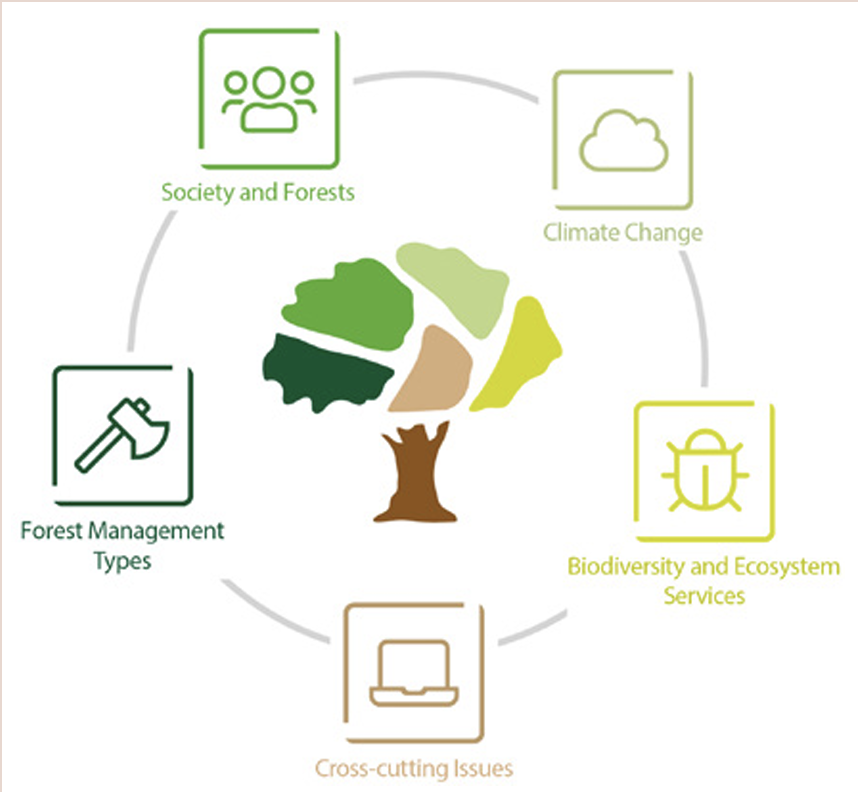
The Waldlabor’s five main themes as featured on Fig. 2 in chapter ‘Box C 10 Waldlabor Zürich – the Zürich Forest Lab’ (pp.380-383) of the book How to balance forestry and biodiversity conservation – A view across Europe (2020). 


“The idea is to become better at communicating about these issues with real-life examples, both visible to the public as well as other forest managers and owners”, says the managing director of the initiative.


As we visit the forest site, it becomes clear that the Forest Lab hosts many kinds of research projects. Some focus on gaining new insights on climate change and biodiversity, while others explore integrative approaches related to managing habitat trees or deadwood islands.

Trying to connect different disciplines, one project currently aims to analyse a huge dataset to better understand how forest ecosystems interact and function. This is called “ecological macroscoping” – a way to study the complexity of ecological systems and the diverse factors that interrelate to shape its whole.

Other projects are of more educational nature and integrate different teaching pedagogies. One example here is a project showcasing species diversity within a collection of mid-European woody species. Other on-the-ground activities highlight the diversity of management schemes and their impact on forests.


“We have this idea to become a kind of dynamic museum of different forest structures as a result of different interventions,” explains Martin Brüllhardt.


Martin Brüllhardt (left) on an interactive excursion through the “Waldlabor”. Credits: Rahel Könen

In general, the idea is to continuously increase the number of projects hosted at the forest plot and remain open to new ideas from forest managers, researchers and the public. 

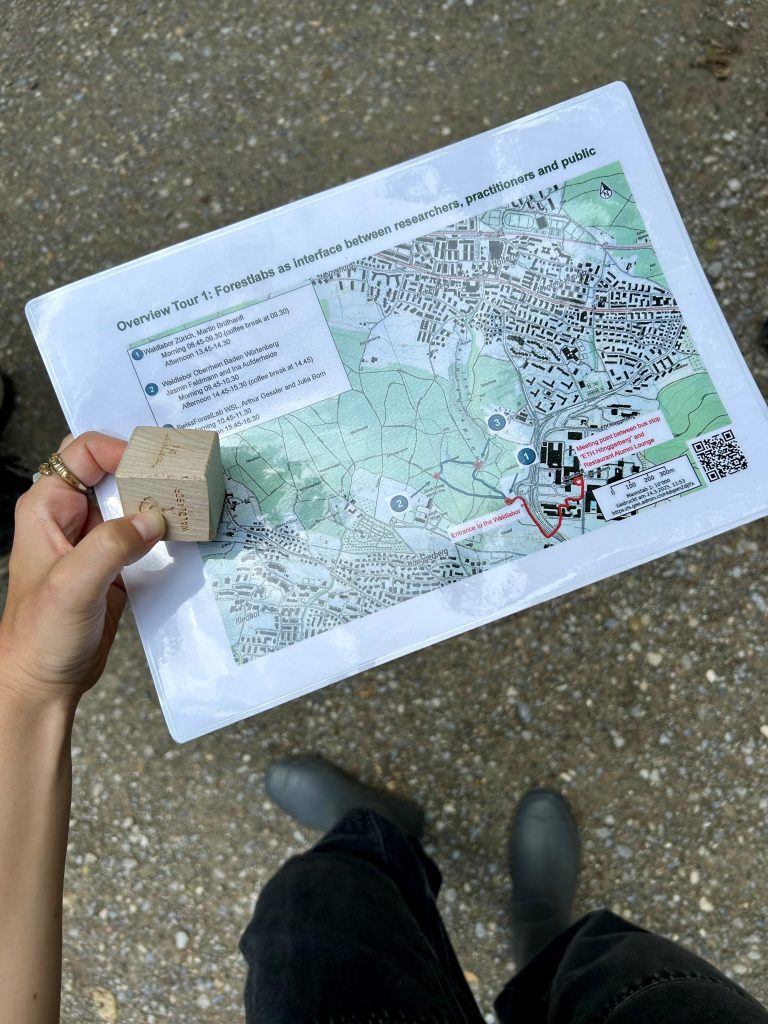
With the support of volunteers, the Forest Lab also offers guided tours to both experts and lay audiences. An interactive map is accessible in the Waldlabor-App and makes it easy for visitors to explore the forest area on their own.  

Towards the end of the tour, Martin Brüllhardt notes that, as a forest plot that connects both forest production and protection, they only ever cut the amount that annually can also regrow. As such, they hope to ensure and showcase the sustainability of wood production.


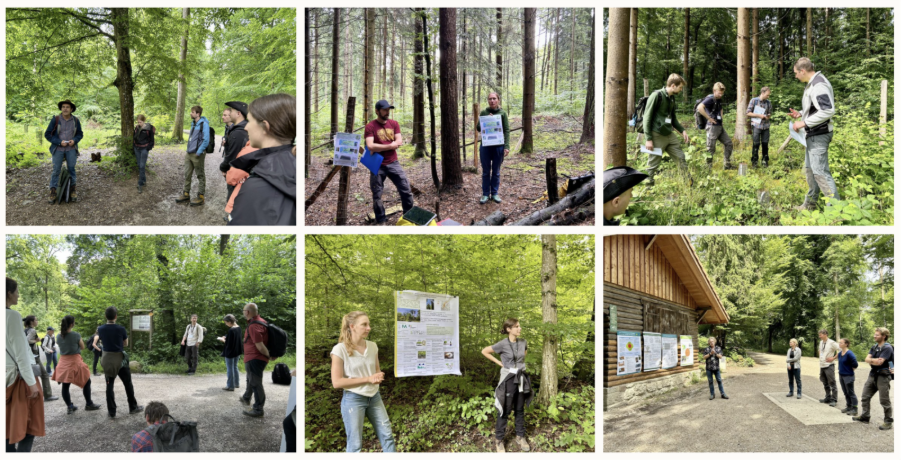
Diverse learning activities that took place at the Waldlabor Zurich as part of our Integrate Network workshop in Switzerland. Credits: Rahel Könen

Visiting Zurich’s Forest Lab was part of a larger Integrate Network workshop, organized by the Federal Office for the Environment FOEN, ETH Zürich and the Swiss Federal Institute for Forest, Snow and Landscape Research WSL. Read more about the workshop here.

WEBINAR: After the Storm: Pathways to Forest Recovery and Restoration in Ireland and Beyond

In the wake of Storm Eowyn – which occurred on 24 January 2025, bringing unprecedented wind speeds and widespread disruption across Ireland – forest landscapes have suffered significant damage across the country.

This webinar, organized under the “Forest Restoration Talks” series in collaboration with the European Integrate Network, TRANSFORMIT project and FoRISK facility, brings together forestry professionals, environmental scientists, policymakers, and a landowner to examine the extent and nature of the storm-related damage in Ireland as well as look at other European examples of major forest disturbances.

Together, we’ll explore the immediate impacts, assess longer-term ecological and economic implications, and discuss practices for recovery, resilience planning and climate adaptation measures.

Key Themes and Questions: 

  • How can we better deal with future disturbances across European forests?
  • How do we transform / adapt our forests to make them more climate resilient?
  • What can we learn from past experiences to recover and restore forests in an integrative way?
  • What are current preliminary findings on storm damage across different forest types and regions? 
  • What are strategies to salvage logging, replant and protect biodiversity after storm damage?
  • How can policy and funding from government and EU support recovery?

Date and time: 11 June 2025, 4:00 PM CET

Platform: Zoom, register here

Speakers:

– Noel Kelly, Irish forest owner majorly affected by storm Éowyn

– Christophe Orazio from IEFC (Aquitaine, France) brings in knowledge and expertise on forest risk management and climate change adaptation

– Jo O’Hara is a professional Chartered Forester, director of FutureArk Ltd and a non-executive board member of Forestry and Land Scotland. She brings in policy and strategy expertise in relation to change management

–  Fergus Moore, Head of the Forest Sector Development Division at the Department of Agriculture, Food and Marine, Ireland

– Carolin Stiehl from Wald & Holz NRW brings in expertise in forest management and restoration implications after major forest disturbance.

Global discussions for local solutions – Integrative Forest Management across the world

Article written by Rahel Könen and Louisa Bouri-Saouter

To strengthen international scientific exchange on the topic of Integrative Forest Management, the TRANSFORMIT project recently organized a ‘Global Scoping Workshop’ that brought together 35 participants from Australia and Asia, Europe and Africa, and the Americas. The overall objective was to support the conceptualization, co-creation and writing process around how to consolidate biodiversity conservation and wood production in managed forests across the globe. 

The hybrid workshop was hosted by Wageningen University’s Forest and Nature Conservation Policy Group with the aim to translate the outcome of the discussions into a co-authored paper that will present the current state of the art, convergences and differences on the topic of Integrative Forest Management (IFM). 

Visual harvesting by Visuality

Widening the research scope on integrative approaches, practices and drivers 

A major aim of the gathering was to clarify the diversity of practices in the field of forest management and biodiversity conservation, as well as how various scholars from across the world conceptualize the main drivers of integrative approaches across the world. 

Such international exchange helps expand on research insights from the book chapter ‘Driving factors for integrated forest management in Europe’ in How to balance forestry and biodiversity conservation: A view across Europe (2020), where co-authors Agata Konczal, Jakob Derks (Wageningen University) and Johannes H.C. de Koning (University of Copenhagen) investigated how and why nature conservation is being integrated into forest management practices across different European forest units and enterprises. By mapping current and future social, economic, political, technological and ecological drivers across 9 European case studies they came across various regional differences around what facilitates or hinders the application of IFM.  

By opening space for academic exchange between scholars from various regions of the world, the Global Scoping Workshop was an attempt to widen the scope – and as such, introducing more complexity and diverse perspectives into the study of IFM-related drivers. 

Interactive discussion sessions on regional and conceptual difference 

The workshop day was marked by 3 main interactive sessions and discussions, each centred on regions of the world. The first session focused on Asia & Australia, the second on Europe & Africa, and the third zoomed-in on the Americas. Within each session, the aim was to keep in mind important themes – including the overall concept of biodiversity, of scales (meaning the different levels at which we look at forests, from individual trees to forest stands to entire landscapes), the many different factors that influence biodiversity, the unpredictability of climate effects, the political, economic and social uncertainties, and the important question of which kinds of knowledge and information we should rely on. 

The last hour was then dedicated to the mapping of key insights, core concepts and contrasting views, in addition to new research questions and insights that could inform the paper.

Integrating biodiversity into the global conservation agenda  

While the term biodiversity is widely used to shape the global conservation agenda, it became obvious that its definitions and concerns vary.  

Addressing biodiversity conservation globally involves a wide range of community priorities and ethical considerations. Consequently, Integrative Forest Management practices need to be adapted to local needs and informed by local knowledge. The workshop participants also discussed the relevance of biocultural diversity, a concept that acknowledges the co-evolution and interdependence of biological and cultural diversity, and its integration into conservation efforts. 

Defining biodiversity comes with defining the biodiversity of concern to protect. Therefore, the definition of “natural forest” varies.  In tropical regions, the goal is to preserve the full spectrum of biodiversity, whereas in the EU, conservation efforts involve trade-offs. The discussion also emphasized the importance of specifying the type of biodiversity to be conserved (e.g., functional, heritage, or evolutionary diversity). This  again took place in light of local perspectives, as this choice can determine Integrative Forest Management practices in the field. The importance of the types of biodiversity to target may differ spatially and temporally. 

Diverse management approaches are certainly essential to ensure the provision of varied habitats across different biomes and regions worldwide, as overly harmonized conservation and management strategies may pose significant risks to achieving targeted conservation results. This also relates to the challenge of measuring the success of conservation approaches. For example, during the session focused on Asia and Europe, participants highlighted a lack of knowledge about tree biodiversity, from genes to species, which makes monitoring efforts difficult for them. In this context, the group brought attention to the fact that biodiversity should be an important aspect of forestry education – and this way making foresters being biodiversity experts. More generally, participants suggested that we need proxies, or other indirect ways, to measure how using biomass affects biodiversity. 

Sustaining biodiversity under biomass utilization  

Another major part of the discussion focused on how to maintain the financial viability of forests while integrating biodiversity conservation. If defining biodiversity turned out to be a key challenge, identifying productivity trade-offs was another. Participants agreed on the need for accurate quantification of ecosystem services to support the integration of biodiversity into economic valuation.  

The group also addressed the land sparing-land sharing debate in forest management, through the lens of EU, tropical, and Asian approaches. The choice between these approaches depends on context, scale, and governance structures. It also depends on the aspects of biodiversity that are deemed worthy and needed to conserve. While land sparing is more feasible at the state level and beneficial for rare species, land sharing is more practical in fragmented ownership systems and can maintain productive forests with some biodiversity. 

However, participants cautioned against a strict binary view. Instead, they suggested a more flexible framework such as a continuum of approaches based on scientific evidence and local conditions. They also emphasized a triad approach combining strict conservation, intensive forestry, and mixed-use areas as an interesting alternative. 

The discussion also highlighted a lack of scientific knowledge on what approaches are most effective. Participants concluded that future research should focus on baselines for biodiversity, long-term forest resilience, and integrated solutions that balance conservation and productivity. While policy decisions are often driven by economic and political interests, participants emphasized the importance of evidence-based management. 

Concluding reflection on IFM 

While the concept of Integrative Forest Management becomes too ambiguous if we try to apply its principles across all forest types and regions, it remains a valuable approach on a global scale. Strengthening the approach would require a greater inclusion of social, cultural, and political dimensions. By actively acknowledging and managing economic, political, and ecological uncertainties, IFM can evolve into a resilient and adaptive framework for sustainable forest management. 

In-person Workshop: Increasing biodiversity to promote adaptation and resilience of European forests by using close-to-nature forestry

SAVE THE DATE – Upcoming Integrate Network Workshop from 2.–4. June in Zurich, Switzerland!

Are you curious to learn more about the application of close-to-nature forest management in Switzerland and beyond? Do you want to discuss silvicultural concepts that can support forests in becoming more diverse and resilient to future disturbances and extreme climatic events? 

This upcoming workshop aims to bring together diverse networks, including the Integrate Network, NFZ.forestnet, SwissForestLab, the TriNationalFORESTLab, and various EU-funded projects such as TRANSFORMIT, FORWARDS, Wildcard, Richforests, INFORMA, and SUPERB to discuss and assess integrative, climate-smart forest management in promoting more resilient and species-rich forests. The workshop also includes an excursion and an exercise in a Swiss marteloscope.

More information you will find in the agenda, and in the flyer!

Feel free to already register here. 

Zagreb city forests Living Lab kicks off with first in-person meeting 

November 8, 2024 | Branch Forest Office Zagreb, Grmoščica Park Forest

The first in-person meeting of the Zagreb City Forests Living Lab brought together key stakeholders to explore Integrative Forest Management in urban and peri-urban areas. Organized by the Croatian Forest Research Institute and hosted by Croatian Forests Ltd, the meeting introduced participants to the Living Lab (LL) approach of the TRANSFORMIT project. 

Discussions focused on the role of Living Labs as a core element of the project, addressing the unique challenges and opportunities of managing Zagreb’s forests to balance recreation, conservation, and sustainable wood production. 

Zagreb City Forests LL: A collaborative approach 

The Zagreb City Forests LL is built on a strong foundation of cooperation between five key stakeholders. These forests, valued primarily for recreation and well-being, also contribute to the city’s environmental quality. While many are protected areas, they remain actively managed under an integrative approach that combines conservation with sustainable wood production. 

The next major discussion on this approach will take place at the all-LL in-person meeting in April 2025, where Zagreb City Forests LL will host fellow TRANSFORMIT partners. 

Field visit to the Grmoščica Park Forest (one of many Park Forests in Zagreb City Forests LL) 

As part of the event, participants visited Grmoščica Park Forest, one of many urban forests within the Zagreb City Forests LL. This hads-on experience provided valuable insights into real-world management practices and the challenges of balancing nature conservation, public use, and resource sustainability. 

Open Living Labs Day 2024: A Hub for Innovation and Collaboration

The 2024 edition of Open Living Lab Days (OLLD24), the flagship annual event organized by the European Network of Living Labs (ENoLL), brought together diverse audiences from living labs, public administration, corporations, small and medium businesses, academia, and many innovators worldwide. The event offers a unique platform for networking, exchanging best practices, collaborating on cutting-edge projects, and reflecting on the latest trends and how to shape the future.

This year’s OLLD24 was held in Timisoara, Romania, from 24-27 September 2024, in collaboration with the West University of Timisoara. Throughout the conference, attendees engaged in various interactive and research sessions, workshops, and site visits. They explored how Living Labs tackle major societal challenges and play a vital role in shaping policymaking and governance within innovation ecosystems. 

Our Dijana Vuletić, as one of the four panelists, presented the TRANSFORMIT project and our Living Labs network in one of the conference’s panel discussion named “One Year into the Mission Soil: achievements, Lessons Learned, and Future Opportunities for the Living Lab Community”. Dijana introduced our main project goals, with a focus on the importance of the Living Labs network in the scope of our project. She also expressed the desire to keep the network active after the project ends, emphasizing on potential synergies between the TRANSFORMIT Living Labs and the Mission Soil’s forest-focused Soil Health Living Labs. By combining the effort, there is an opportunity to enhance the effectiveness and growth of both networks. 

Check here the publication developed by SOILL and NATI00NS summarising the key insights from this session!

List of speakers (in order from left to the right)

Towards a Stakeholder Engagement Platform: Insights from our “Networks of Networks” Meeting

In today’s world, despite the vast amount of time we spend communicating—whether in meetings, emails, or social media— it often feels like we struggle to engage with different perspectives on a topic. We are also facing this challenge in forest management, where diverse stakeholders, each with unique backgrounds and priorities, must come together to find common ground to support biodiverse and resilient forests for the future.

At our recent “Network of Networks” meeting on 18 September 2024 in Bonn, we sought to bridge this gap through a World Café approach. This way, we created space for authentic dialogue on how we can integrate different forest ecosystem services like biodiversity, water provision and carbon storage into forest management. This format allowed stakeholders to engage in meaningful conversations, understand each other’s perspectives more deeply, and identify new avenues for collaboration. Together, we explored the barriers and enablers to working collectively across different sectors. Finally, we explored how we can continue this networking and keep the momentum.

Across five tables with different discussion topics (Policy, Nature Conservation, Media & Society, Science, Forest Owners), we synthesized key insights on stakeholders’ challenges, interests, and frameworks:

We clearly know that dialogues are only effective when they are closely linked to actions. Therefore, from here, we are moving forward to:

🌳 plan follow-up activities: connecting science, policy, and practice networks in further activities;

🌲 team up with partner projects and networks for common activities (back-to-back meetings, participation and representation in events) and identify synergies in approaches, test sites & living labs, and communication;

💬 strengthen a communication lane for networks on relevant information and involve networks for the design of the knowledge hub.

All of the valuable input will feed into the construction of TRANSFORMIT’s Stakeholder Engagement Hub – more updates and information will follow soon.

Visual Harvesting of the meeting was done by Visuality.

Bridging science, policy and practice with Integrative Forest Management

On 19 September, the European Forest Institute (EFI) hosted the EFI Scientific Seminar in Bonn, where the concept of Integrative Forest Management (IFM) was explored in depth. This approach is central to our TRANSFORMIT project, focusing on balancing forests’ roles as vital resources for a climate-neutral bioeconomy and providers of essential ecosystem services. Several members from our project, including our project coordinator, Bernhard Wolfslehner, participated in the seminar.

Prof. Dr. Jürgen Bauhus from the University of Freiburg highlighted IFM’s potential to safeguard biodiversity by combining natural, multifunctional, and plantation forests. He noted that IFM fosters dialogue and cooperation among diverse stakeholders, echoing our TRANSFORMIT’s mission to promote cross-sectoral collaboration.

The first panel discussion addressed IFM’s role in mitigating forest disturbances, noting that while disturbances can’t be avoided, diverse forest structures across scales can reduce the risk of large-scale failure. The panel also emphasized the value of Europe’s diverse forest management traditions and the need to learn from different regions, aligning with our TRANSFORMIT’s commitment to knowledge sharing.

In the second panel, Maria Patek, former Austrian Minister for Agriculture and Forestry, stressed the importance of engaging forest owners and other stakeholders in policy discussions. The panelists called for coherent policies and collaboration with often-overlooked stakeholders, including rural businesses and industry, and stressed the need for incentives to shift forest management practices.

The afternoon sessions focused on practice, starting with a “Couch Talk” featuring artist Evgenia Emets, who explored how collaboration between forest art, science, and practice can enhance engagement, especially with younger generations. The panel discussion afterwards brought together practices examples from across Europe, reflecting the need for interaction between practitioners, science, and policy, which is key to creating a shared vision and a “community of change”.

The final panel discussed networks for knowledge exchange, such as the Integrate network and ProSilva. Panelists, echoing conclusions from our Network of the Networks meeting on 18 September, agreed that these networks are crucial for sharing experiences and motivating active forest management in uncertain times. Building a family of biodiversity-friendly concepts was seen as more important than creating individual bubbles.

Watch the recording of the EFI Scientific Seminar here:

This article is adapted from the European Forest Institute’s (EFI)’s news report Bridging science, policy and practice with Integrative Forest Management.

Photos: Rosa Castañeda, EFI