“This is a fully automated machine translation. The quality and accuracy of machine translation can vary from one text to another and between different language pairs. TRANSFORMIT website admins do not guarantee the accuracy of the translation and accept no liability for possible errors. Please refer to the original text in its original English version if there is any doubt. Some content (such as images, videos, files, HTML links and acronyms) may not be translated or may be inaccurate due to the technical limitations of the system.”
“Indicators should be implementable, measurable, and aligned with other standards so they can ultimately support forest restoration and Integrative Forest Management across Europe,” said Gesche Schifferdecker as she wrapped up the webinar.
Co-organized with the Integrate Network, our webinar “From Indicators to Action – Bridging Science, Policy and Practice in Forest Restoration and Integrative Forest Management” brought together more than 90 participants from research, policy, and practice to explore how forest indicators can help ambitious restoration policies, particularly the EU Nature Restoration Regulation (NRR), to be effectively translated into action on the ground.
After Gergely Zagyvai, Integrate Network Chair 2026, opened the session with a welcome address, Stefanie Linser (University of Natural Resources and Life Sciences, Vienna (BOKU)) delivered a keynote presentation on the development of Integrative Forest Management indicators within the TRANSFORMIT project.
This was followed by a rich panel discussion, moderated by Gesche Schifferdecker, featuring José I. Barredo (JRC – European Commission), Bernhard Wolfslehner (European Forest Institute), Teresa Baiges Zapater (Centre De La Propietat Forestal), and Stefanie Linser (BOKU). Together, they explored how diverse forest-related indicators can support decision-making across different governance levels, the practical challenges of monitoring and reporting, and ways to bridge the gap between policy ambitions and practical implementation.
The panel ultimately agreed on one objective: we have to support our forests to become more resilient – and this can only be done if scientists, policy makers, practitioners, and communication experts work collaboratively.
Many thanks to our outstanding moderator, speakers and panelists, and to everyone who joined, asked questions, and shared their experiences!
On 26 June 2026, the FOREXT Fridays webinar series will bring together forest professionals, advisors, researchers, and stakeholders for an engaging webinar exploring how Marteloscopes can support integrative forest management and informed decision-making across Europe’s forests.
Organised in partnership with the EU-funded FORADVISE project, this edition of the FOREXT Fridays webinar series will showcase practical Marteloscope experiences from Ireland and Germany, demonstrating how these innovative learning and decision-support tools help balance ecological, social, and economic forest objectives.
A Marteloscope is a specially designated forest area where every tree is tagged, measured, and mapped. In addition to timber-related information such as wood quality and market value, detailed data are collected on biodiversity features including cavities, deadwood, fungi, lichens, nests, and other microhabitats. By bringing these different dimensions together, Marteloscopes provide a unique environment for training, stakeholder engagement, and testing management decisions in a realistic forest setting.
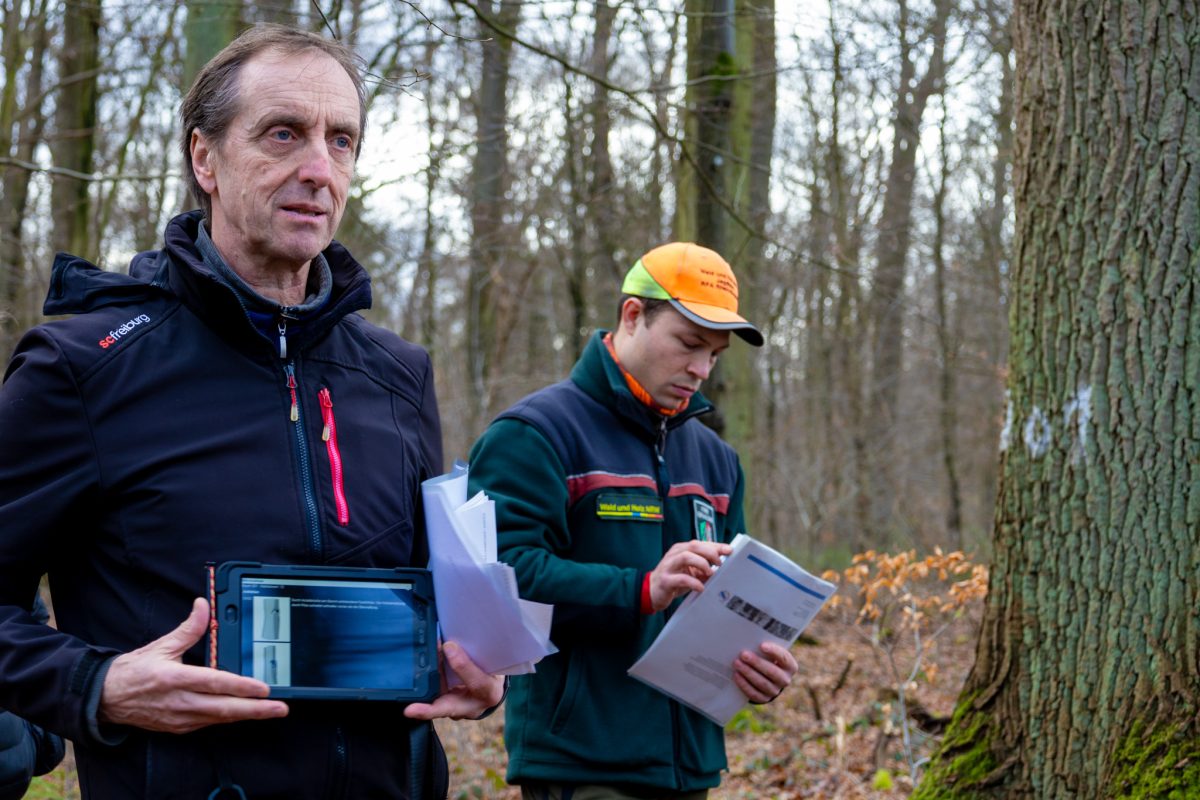
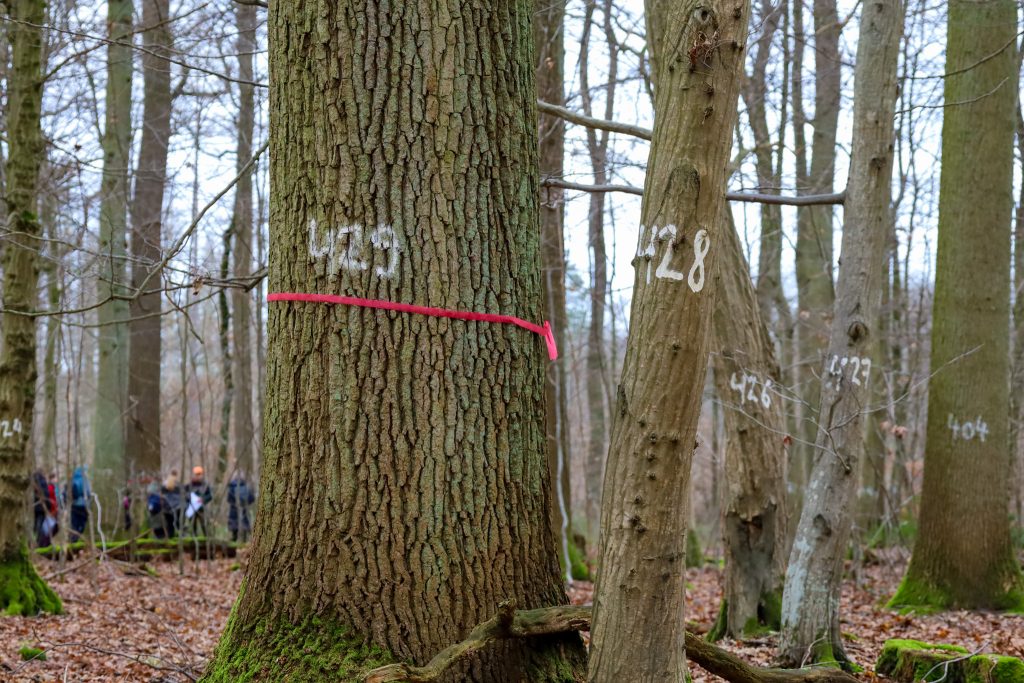
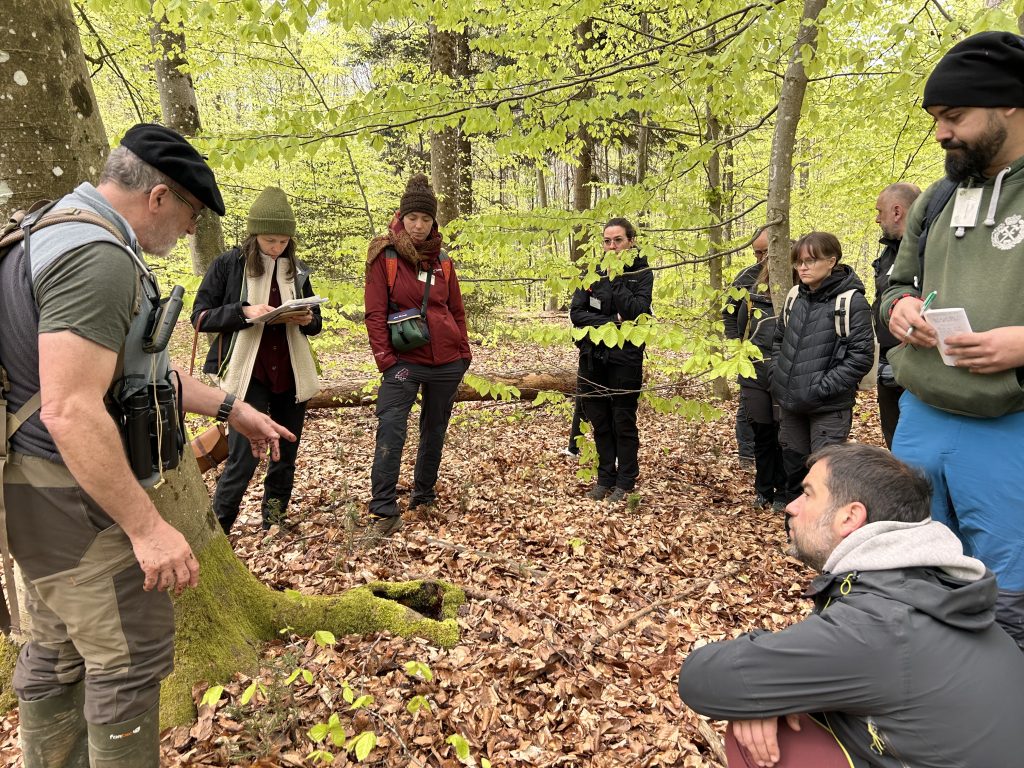
Marteloscope exercise in the Kottenforst, close to Bonn, Germany (photo: Rosa Castañeda)
As forests face growing demands related to climate resilience, biodiversity conservation, timber production, and recreation, integrative forest management has become increasingly important. Marteloscopes offer a practical way to visualise trade-offs, foster dialogue among stakeholders, and strengthen the capacity of forest advisors and managers to make balanced, evidence-based decisions.
The webinar programme will introduce the Marteloscope concept through the Integrate Network before presenting two case studies. Participants will learn about a Marteloscope initiative in Ireland and discover how Marteloscopes in North Rhine-Westphalia, Germany, are being used as effective tools for stakeholder engagement. The session will conclude with a discussion on how these approaches can support forest advisors in addressing complex management challenges.
The webinar will take place online on 26 June 2026 from 13:00 to 14:00 CEST. Participation is open to anyone interested in sustainable and multifunctional forest management.
Join FOREXT Fridays to explore how Marteloscopes are helping turn the principles of integrative forest management into practical action on the ground. Register here: FOREXT Fridays – FOREXT
by Gesche Schifferdecker (EFI), with editorial input from Teresa Baiges Zapater (CPF) and Rahel Könen (EFI)
What does it take to manage a forest in a world of increasing drought, wildfire risk, and uncertainty? Who decides what forests should provide – timber, biodiversity, climate protection, or recreation? How can so many different expectations be reconciled on the same piece of land? And what is the role of private forest owners in this complex environment?
These were some of the questions that framed our workshop on 7 May in the Moianès region of Catalonia, where we brought together journalists, researchers, forest owners, policy experts, conservationists, and practitioners. The event was organized by the European Forest Institute and the Forest Ownership Centre of Catalonia as part of the TRANSFORMIT project.
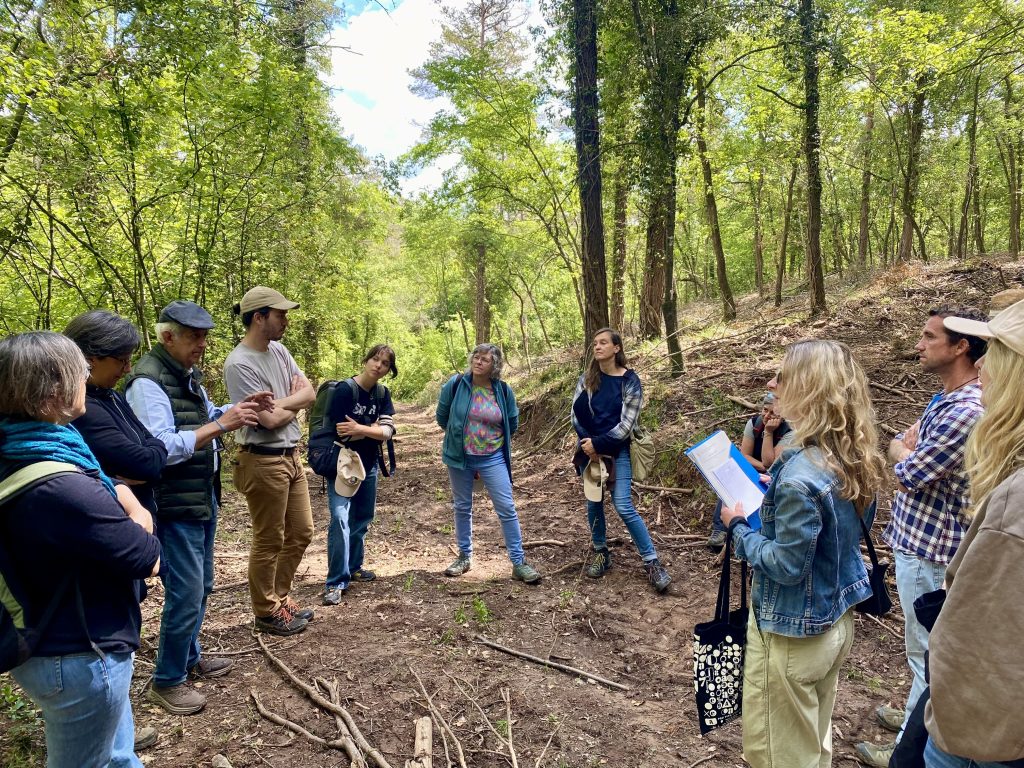
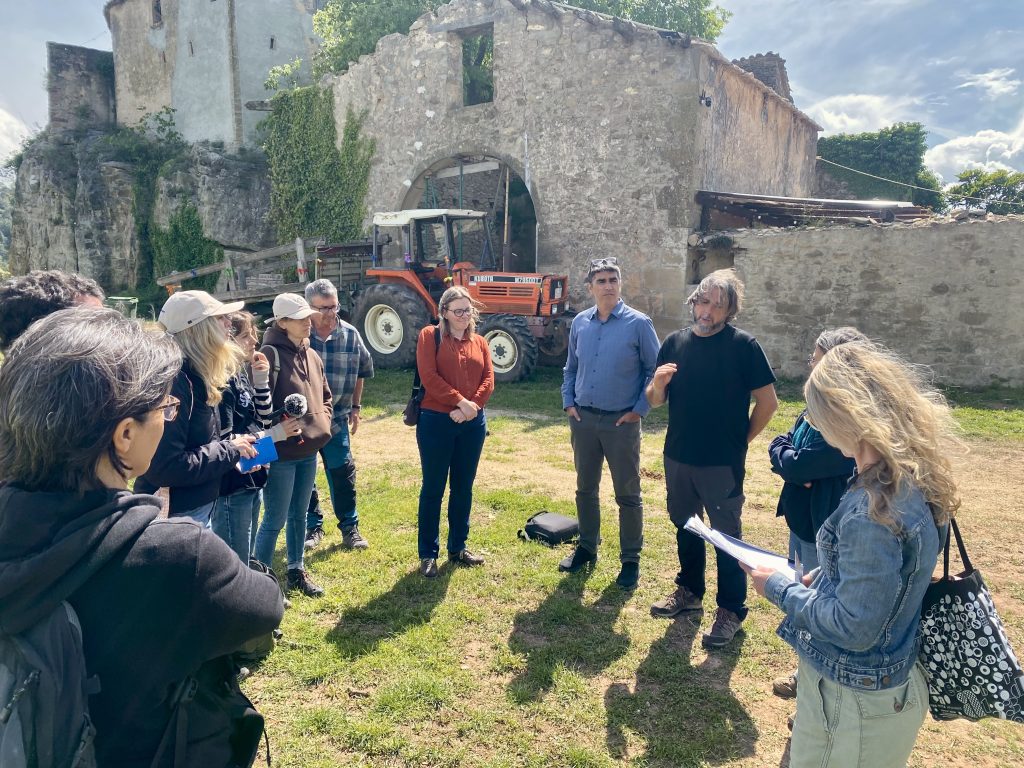
Crucially, this was not a conventional workshop. The Catalan region of Moianès is one of TRANSFORMIT project’s Living Labs – a landscape where different actors come together to test, observe, and co-develop new approaches to forest management in real time. Instead of staying in a conference room, we spent the day moving through the sites of the Living Lab: walking through forests, visiting farms and vineyards, and stopping in small villages – and speaking directly with the people who are dealing with these questions in practice.
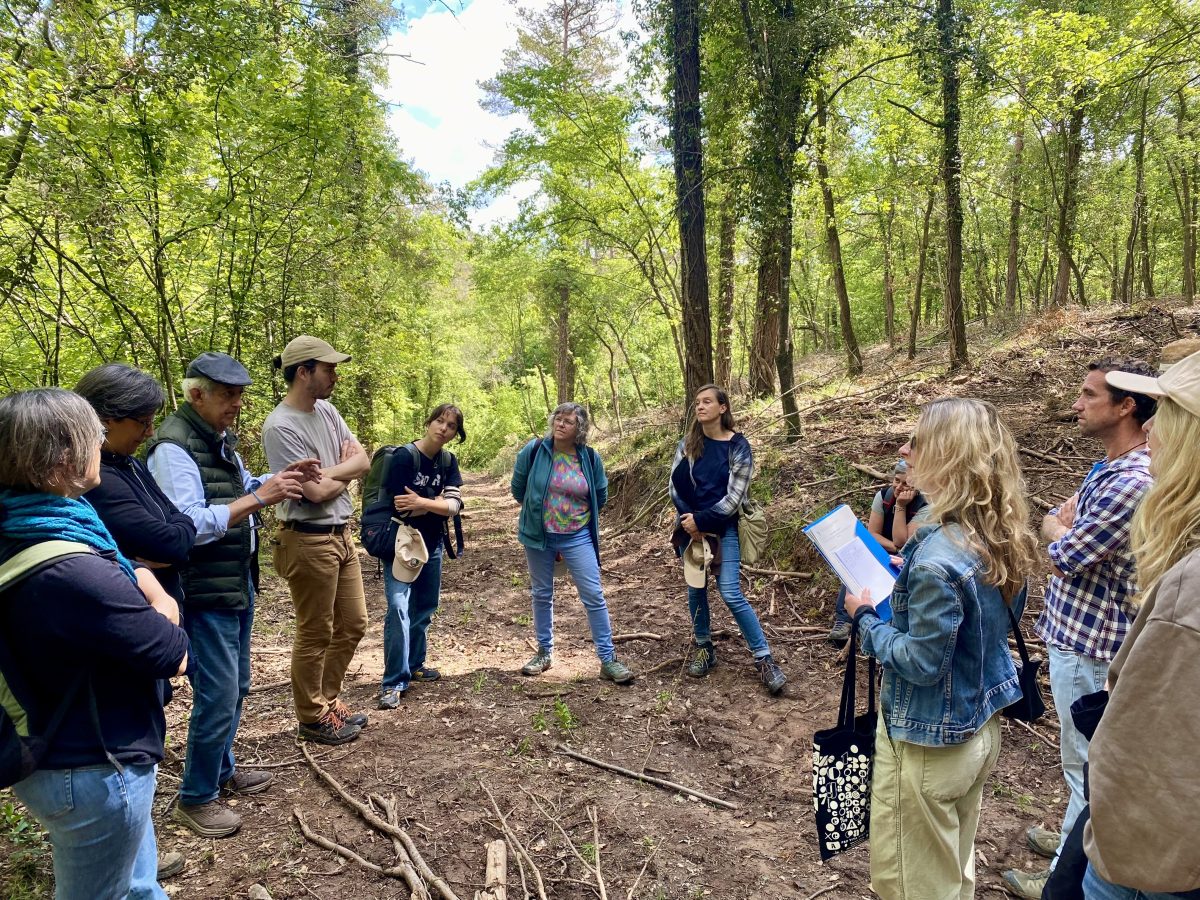
Group discussion at first field stop at La Noguera Farm near Castellterçol
The setting could not have been more relevant. In Catalonia, forests are everywhere. They stretch from the Mediterranean coast to the Pyrenees, covering nearly two thirds of the region. Yet despite this abundance, there is a striking paradox: only 1/3 of these forests are managed, often economically unprofitable, increasingly vulnerable to drought and wildfire, and frequently at the center of debate over what forests are actually most important for.
What emerged over the course of the day was not a single solution to Europe’s forest challenges, but something perhaps more important: a shared willingness in the Living Lab to experiment, collaborate, and rethink old divisions between conservation and production.
Integrative Forest Management – a more holistic approach?
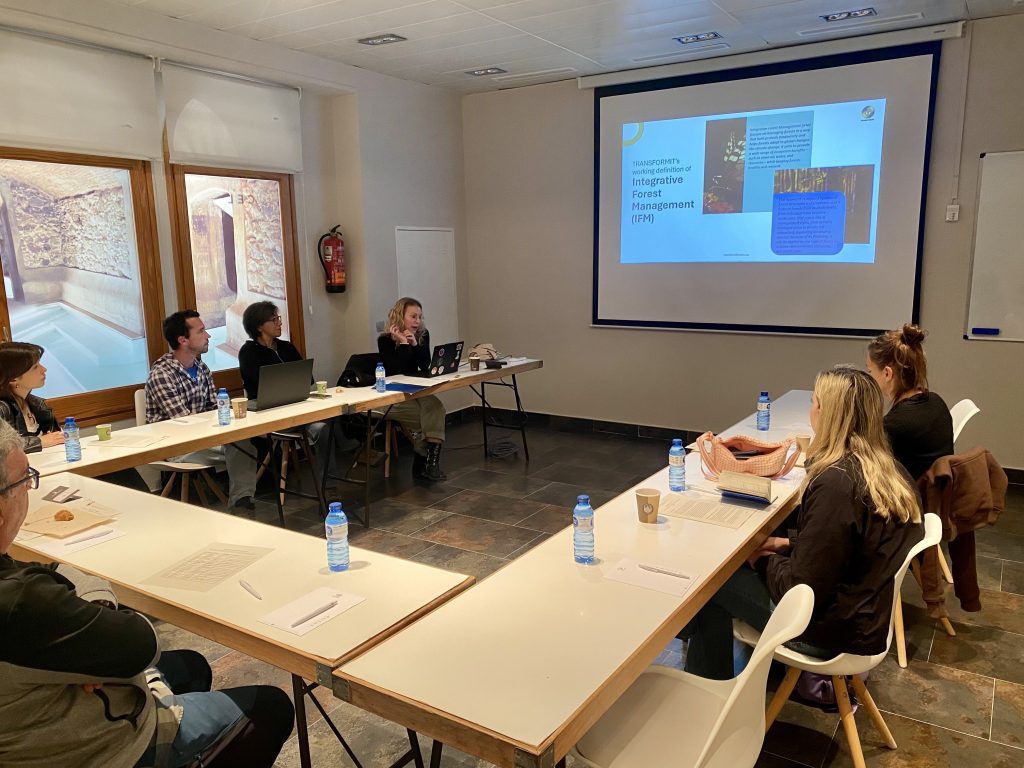
The morning began in Caldes with discussions around a term that would accompany us throughout the day: Integrative Forest Management (IFM). Unlike approaches that focus only on timber production or only on strict protection, IFM attempts to work across scales and interests. It recognizes forests as ecosystems that must simultaneously provide biodiversity, climate resilience, livelihoods, recreation, clean water, and raw materials. Compared to other areas in Europe, in the Mediterranean, forest management is already fulfilling many of the IFM criteria, then, what can IFM bring? What needs to be transformed?
Gesche Schifferdecker (EFI) introducing journalists to the vision behind Integrative Forest Management
One participant described IFM as a “landscape perspective” rather than a single management technique, using a broad understanding of landscape that also includes the people who live within it. Some areas may be actively managed, while others are left untouched. The key idea is flexibility: adapting management to local ecological and social conditions while trying to balance environmental, economic, and social objectives with the objectives of forest owners.
As the day unfolded, it became increasingly clear that small private forest owners – despite their diverse backgrounds and perspectives – are true stewards of forests. At the same time, the conversations showed that forestry is no longer discussed solely among foresters. Throughout the TRANSFORMIT project, partners have been working closely with forest owners, practitioners, policymakers, and conservation groups through workshops, trainings, webinars, and of course other Living Labs across Europe. The emphasis is on learning together rather than prescribing solutions from above.
That collaborative spirit felt particularly important in Catalonia, where forests are highly fragmented in terms of ownership, explained Teresa Baiges Zapater from the Forest Ownership Centre – Forestry administration of Catalonia (CPF). Around 78% of forests are privately owned, often by families with relatively small properties. Many owners inherited their land rather than actively choosing forestry as a profession, and forest management plans remain voluntary.
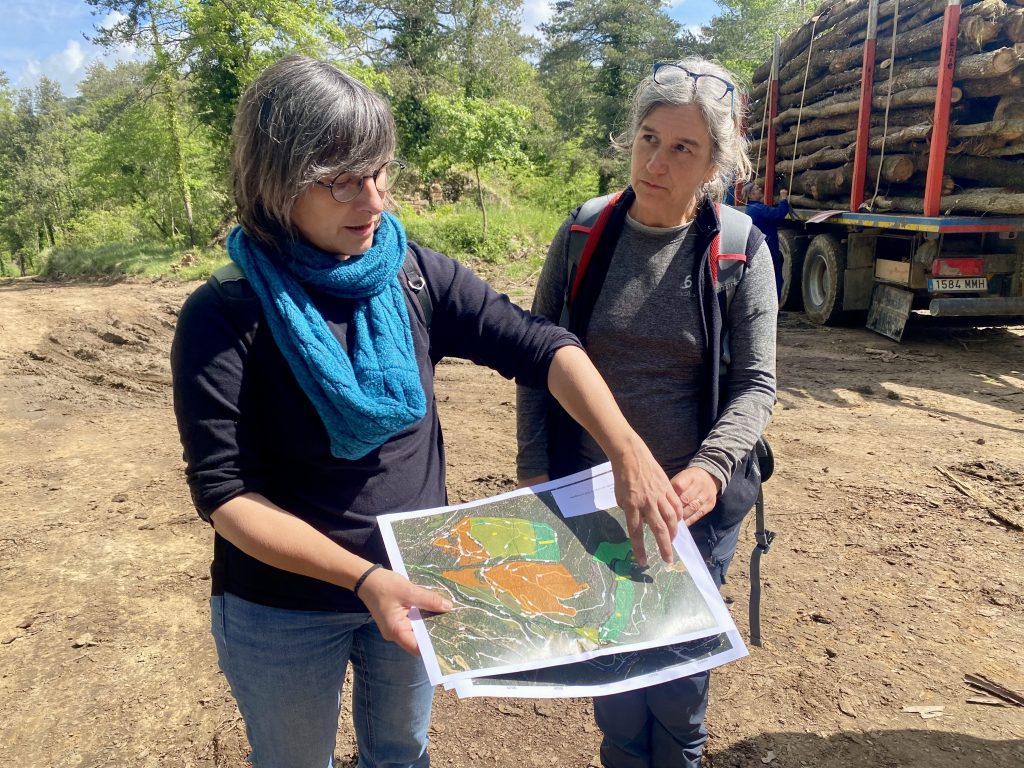
Teresa Baiges Zapater (CPF) and Mercè Vildardosa (CPF)
As we learned from the Forest Ownership Centre, Catalonia’s forests are also surprisingly young. Large areas of agricultural land were abandoned over the past century, allowing forests to regenerate naturally. While this reforestation has increased tree cover, it has also created dense, relatively uniform forests that are increasingly vulnerable to drought and wildfire.
Climate change and disturbances: changing realities for forest owners
The challenge is intensified by climate change. The years between 2012 and 2023 were described as the driest period in 200 years. During our first field stop at La Noguera Farm near Castellterçol, researcher Josep Maria Espelta from the Centre for Ecological Research and Forestry Applications (CREAF) explained that drought has already affected around 100,000 hectares of forest – an area comparable to the amount burned by fire in Catalonia since the 1980s.
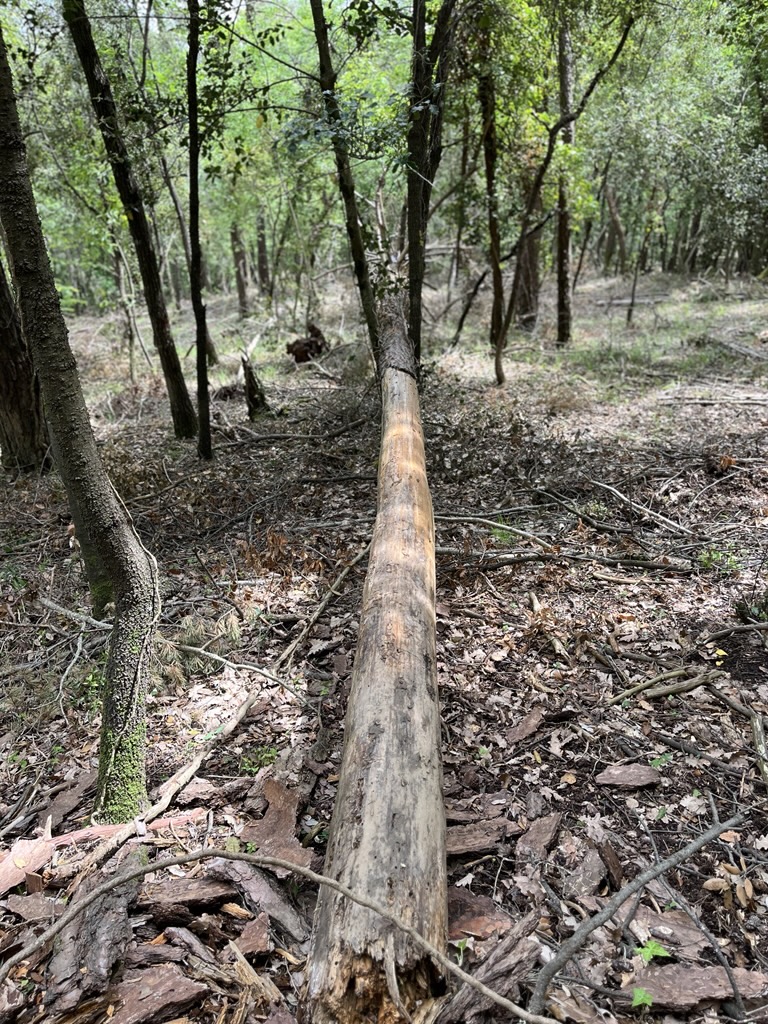
Standing among Scots pine forests, the consequences became tangible. Many trees were weakened or dead, competing for increasingly scarce water. As Josep Maria Espelta emphasized, drought is now becoming as important a disturbance as wildfire in Mediterranean forests.
This changing reality is forcing forest owners and managers to rethink old assumptions. One particularly interesting discussion focused on deadwood. Traditionally, removing dead trees has often been seen as necessary to reduce fire risk. Yet deadwood is also critical habitat for countless species and for forest resilience.
The Living Lab in Moianès is experimenting with different approaches: some plots have all deadwood removed, others retain 20%, while in some areas all deadwood remains, explained Eva Gabriel de Franscisco (CPF). Researchers are monitoring how biodiversity responds under these different scenarios, both at the forest stand and at the landscape scale. Rather than promoting one universal answer, the Living Lab approach allows stakeholders to test trade-offs together and adapt based on evidence and the local context.
How the Living Lab fosters collaboration
What made these discussions especially compelling was hearing not only from scientists, but also from local conservationists and forest owners.
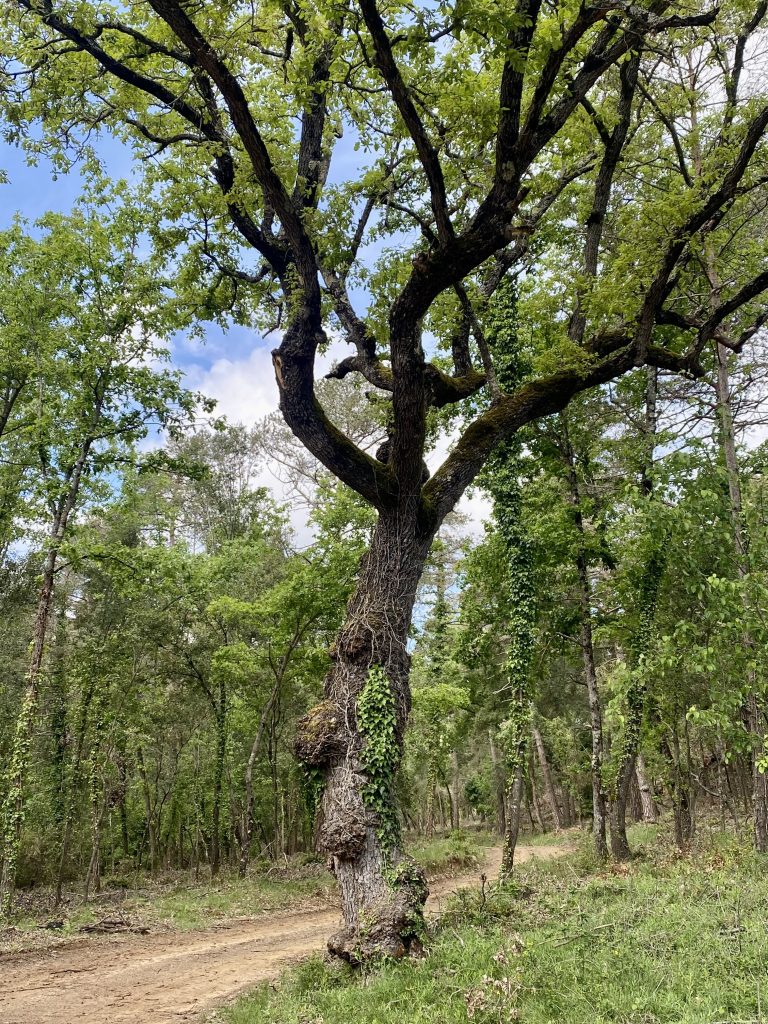
Pilar Clapers, a passionate birdwatcher and member of the local NGO El Fanal, spoke about why she joined the Living Lab. For her, collaboration between ecologists, forest owners, and managers is essential in a time of biodiversity decline. One story she shared stayed with many of us: after identifying a rare oak species for the region in the area where salvage logging was taken place, forest owner Antoni Masferrer agreed that these trees would remain untouched, even if their wood is valuable as firewood. A small decision perhaps, but one that symbolized the trust slowly being built between groups that are often portrayed as opponents.
Antoni Masferrer himself offered a perspective grounded in practicality and responsibility. His motivation for managing forests, he explained, is to leave them in a better condition for future generations while reducing fire risk and earning at least some modest income. At one point he compared forest management to going to the hairdresser: maintenance matters.
But his comments also revealed the economic fragility behind many privately owned forests. Timber prices remain low, much of the wood is used for pallets or pellets, and qualified labor is difficult to find and afford. Many forest owners are aging, while younger generations often have little interest in taking over management responsibilities.
“Forest owners don’t want to leave the forest as a burden,” he said.
And who should pay for this?
After lunch, discussions turned toward one of the central questions underlying the entire workshop: if society wants healthy, resilient, biodiverse forests, who should pay for them?
Catalonia’s Climate Credit System offers one possible answer. Presented by Teresa Baiges (CPF), the scheme aims to finance integrative forest management through payments for ecosystem services.
Unlike many carbon credit systems, the goal is not simply to maximize tree planting or carbon storage. Instead, the system focuses on maintaining healthy forests that are better adapted to climate change and less vulnerable to disturbances such as wildfire and drought.
One innovative aspect is that particularly forest owner associations – rather than individual owners – can apply. This encourages collaboration at landscape scale, which is crucial for addressing wildfire risk, and services related to water and ecological connectivity.
The credits are sold to both public and private actors, including companies interested in strengthening their environmental commitments or complying with emerging sustainability regulations. Because projects are local, buyers can visit the forests they support, creating a stronger connection between financing bodies and landscapes impacted by their sponsorship.
Importantly, the money is provided upfront rather than after management actions are completed, helping overcome one of the major barriers many forest owners face.
New landowners shaping transformation
In the afternoon, the focus shifted toward another transformation taking place in Catalonia’s forests: the changing profile of forest owners themselves.
One of the most inspiring conversations came from Dones de Bosc, the first association of female forest owners in Spain. Founded only in 2025, the network has already grown rapidly.
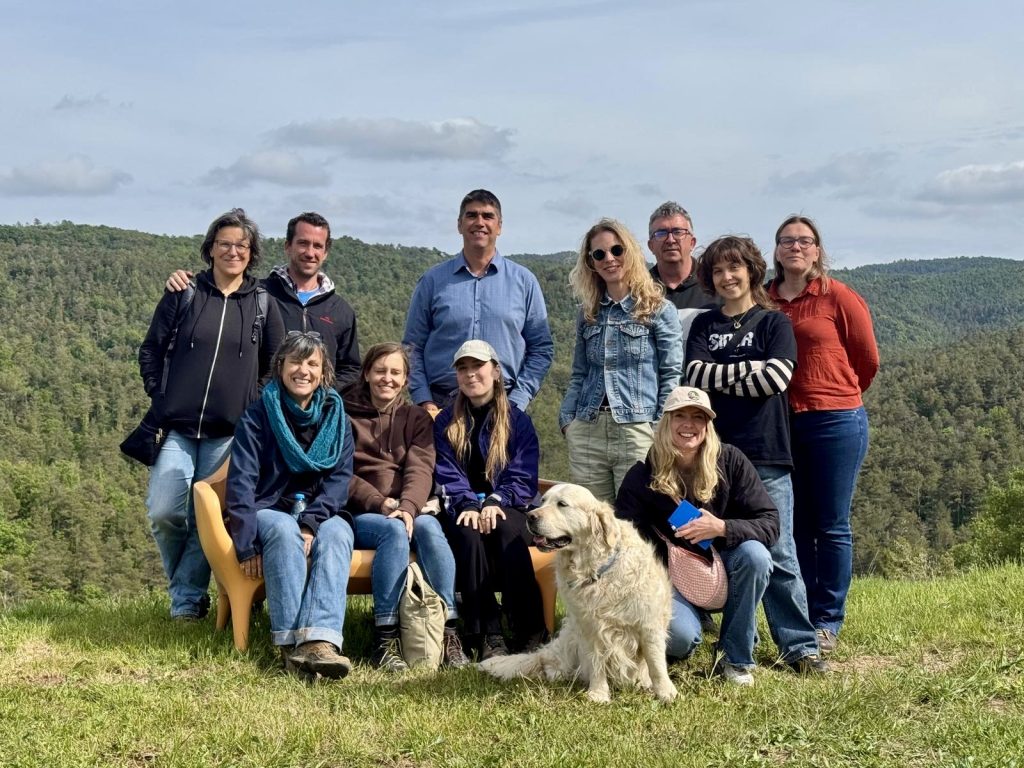
left to right (top row): Eva Gabriel (CPF), Pau Santeugini Ochoa de Aspuru (CPF), Jordi Tarradas (Boscat), Gesche Schifferdecker (EFI), Josep Maria Espelta (CREAF), Agatha Allain (Journalist), Solveig Andresen (Dones de Bosc); left to right (bottom row): Teresa Baiges Zapater (CPF), Linda Osusky (Journalist), Rahel Könen (EFI), Natalie Donback (Journalist)
One of its members, Solveig Andresen, explained that although many women own forests, they remain underrepresented in traditional forestry structures. The association aims not only to increase visibility and leadership, but also to create a supportive community for shared learning and collaboration.
During earlier training sessions organized by the Forest Ownership Centre, around 100 women attended workshops on developing forest management plans – a sign that interest and engagement are growing quickly. Several participants assumed that women may be more likely to approach forest ownership from perspectives centered around care, sustainability, and long-term stewardship rather than extractive models and principles.
At the same stop, Jordi Tarradas from the Federation of Forest Owners’ Associations Boscat highlighted the importance of local collaboration more broadly. For many small forest owners, individual management is economically impossible. Associations allow them to share knowledge, coordinate fire prevention efforts, and strengthen their political voice.
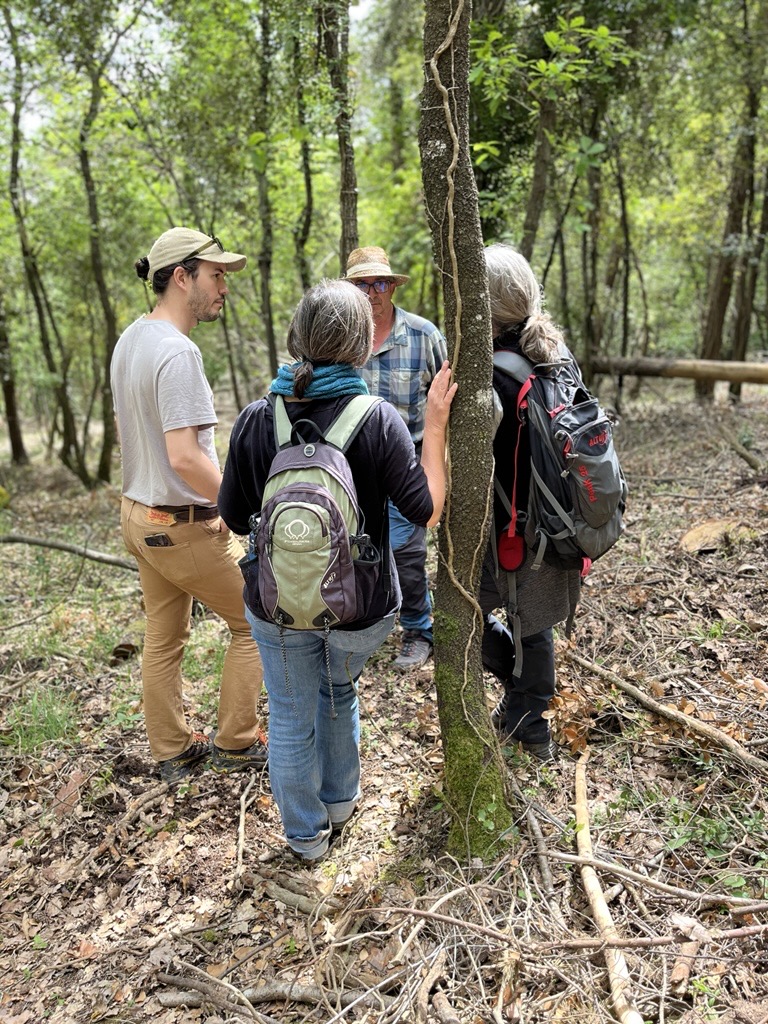
Third stop discussing various forest owners’ perspectives at Carlos Cortés’ land
New forest owner Carlos Cortés, who only recently bought a forest area of 120hectares, indicated that he is looking into different funding sources, and that he is grateful for the guidance of the Associations. His passion for his property became clear when he said: “I have heard a call from the land and that’s why I have bought it”. His primary goal is to increase the resilience of the forest and to maintain it for future generations, similar to the other forest owners who have joined our trip.
Managing land for production and fire prevention
Throughout the day, wildfire remained a recurring theme. In Mediterranean landscapes, fire prevention cannot rely only on what happens inside forests. It also depends on agriculture, grazing, and maintaining mosaic landscapes that slow the spread of fire.
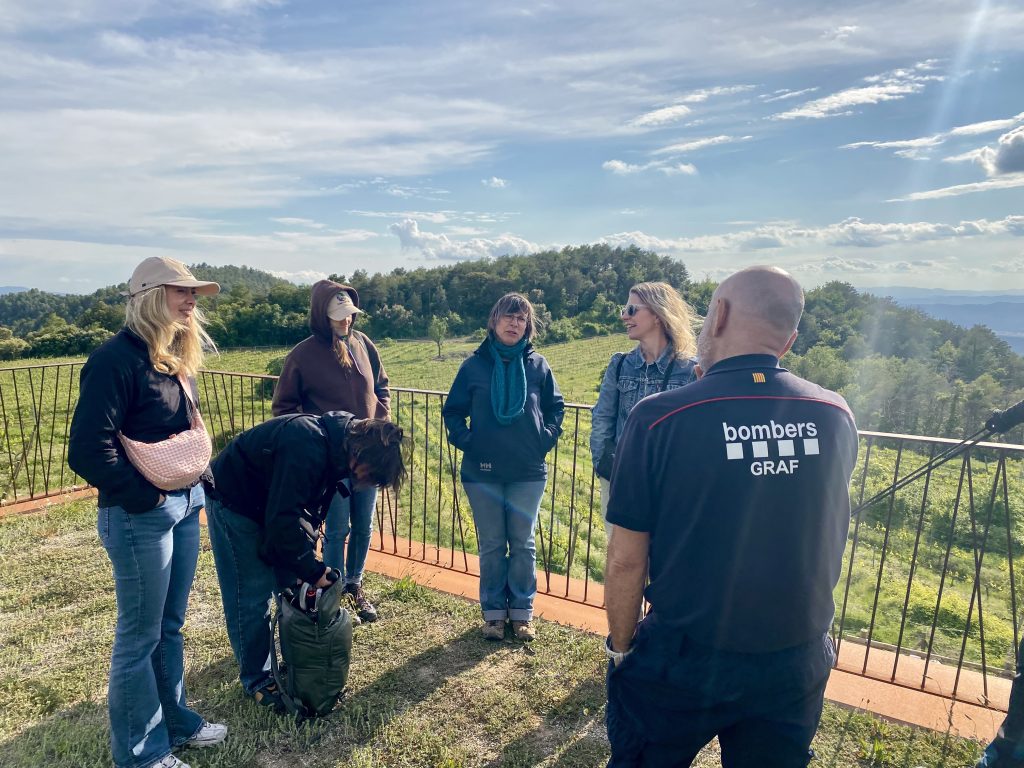
Our final stop at St. Miquel d’Oló Farm brought these ideas together beautifully. Surrounded by vineyards, pasture, and woodland, participants discussed how agricultural and forestry practices can reinforce each other.
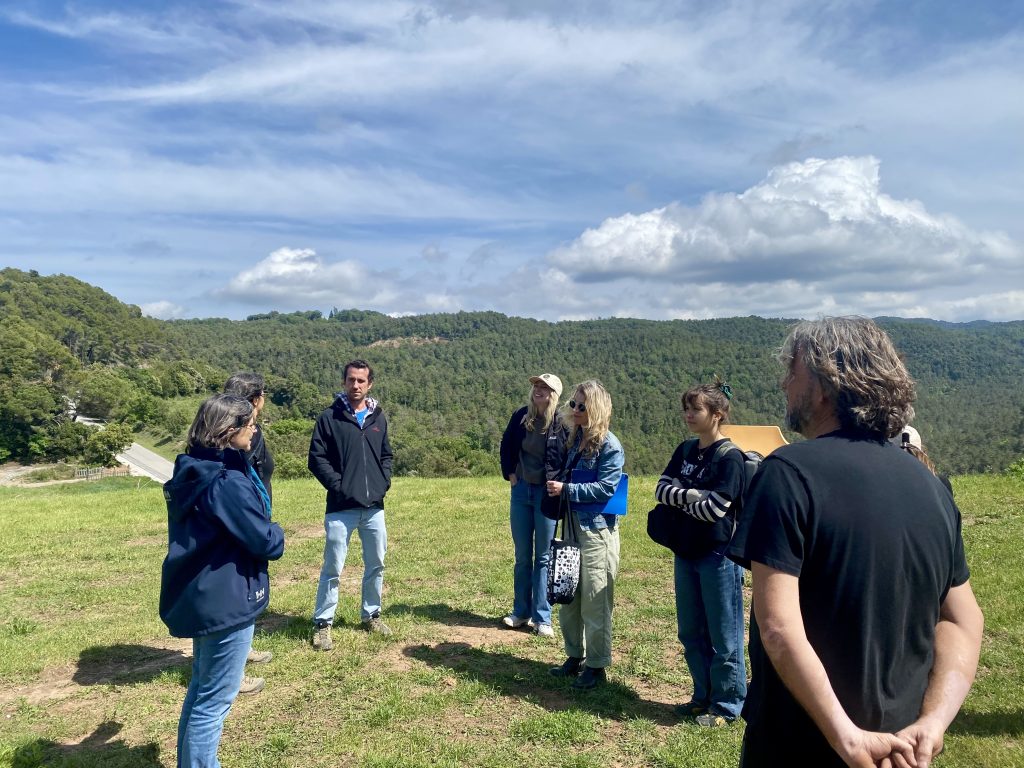
Final stop at St. Miquel d’Oló Farm, discussing the importance of mosaic landscapes for fire management
Asier Larrañaga, sub-inspector of the forest fire brigade and fire analyst, presented new approaches to landscape-level fire prevention, emphasizing the importance of collaboration between forestry and agriculture. Grazing, vineyards, and strategically managed forest areas can all contribute to more fire-resilient landscapes.
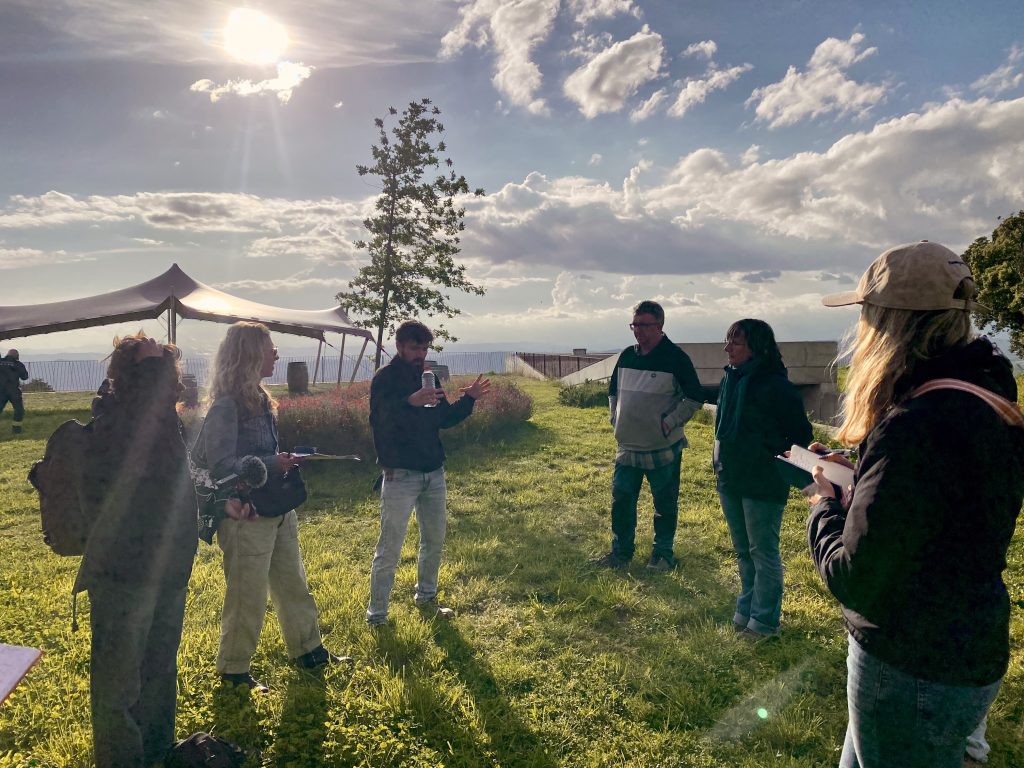
Winegrower Oriol Garriga offered a deeply personal perspective. When he and his family bought the property in 2013, they restored the house and planted vineyards using ecological farming methods. Yet fire risk remains his biggest concern.
For Oriol Garriga, maintaining people on the land is essential – not only for local economies, but also for socio-ecological resilience. Landscapes become vulnerable when they are abandoned. Producing and consuming local products, he argued, is part of sustaining both communities and ecosystems.
Oriol Garriga sharing the story behind his farm and why socio-ecological resilience matters
As the day ended and participants gathered overlooking the landscape, one thing became increasingly clear: the future of Mediterranean forests will not be shaped by forestry alone. It will depend on cooperation between scientists, forest owners, conservationists, farmers, businesses, policymakers, and local communities.
The Moianès Living Lab does not offer simple answers. Instead, it creates space for experimentation, dialogue, and shared learning in a time when climate change is rapidly reshaping what forests need – and what society expects from them.
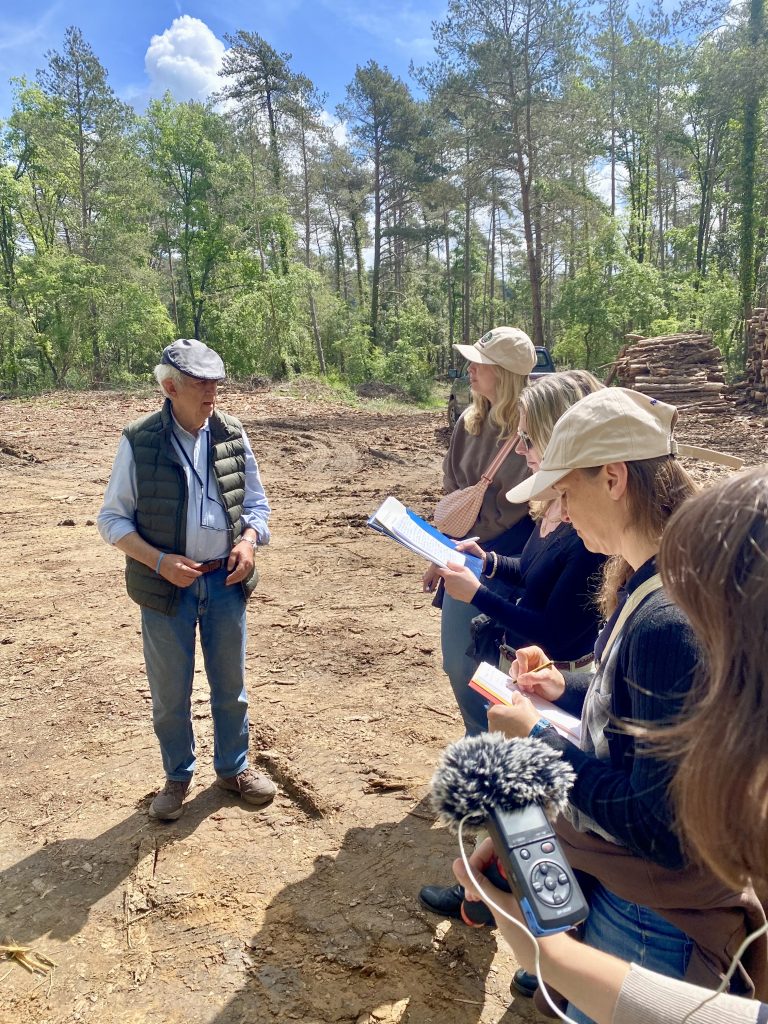
Local and international journalists interviewing Catalan forest owner Antoni Masferrer
In Catalonia a combination of ecological pressures and weakened forest stewardship is increasing fire risks and raising a key question: how can these forests remain resilient and viable?
To respond to this, Catalonia’s Moianès region is emerging as a testing ground for inclusive and place-based innovations. Here, integrative forest management approaches are being developed that combine wildfire prevention, biodiversity conservation, biomass use, and rural development – alongside new forms of collective governance adapted to fragmented ownership.
Together with our local Living Lab partners, we invited a small group of journalists to an immersive, on-site workshop in Moianès to explore these developments first-hand. Through exchanges with forest owners, researchers, NGO representatives, and local authorities, journalists gained grounded insights into how such approaches can work in practice.
Beyond showcasing these initiatives to journalists, the workshop was designed as a two-way dialogue – creating space to reflect on which narratives resonate, and how science and practice can better connect with media storytelling.
Over the coming weeks, we’ll share more insights from the workshop and highlight some of the innovative approaches stewarded within Catalonia’s Moianès region. Stay tuned!
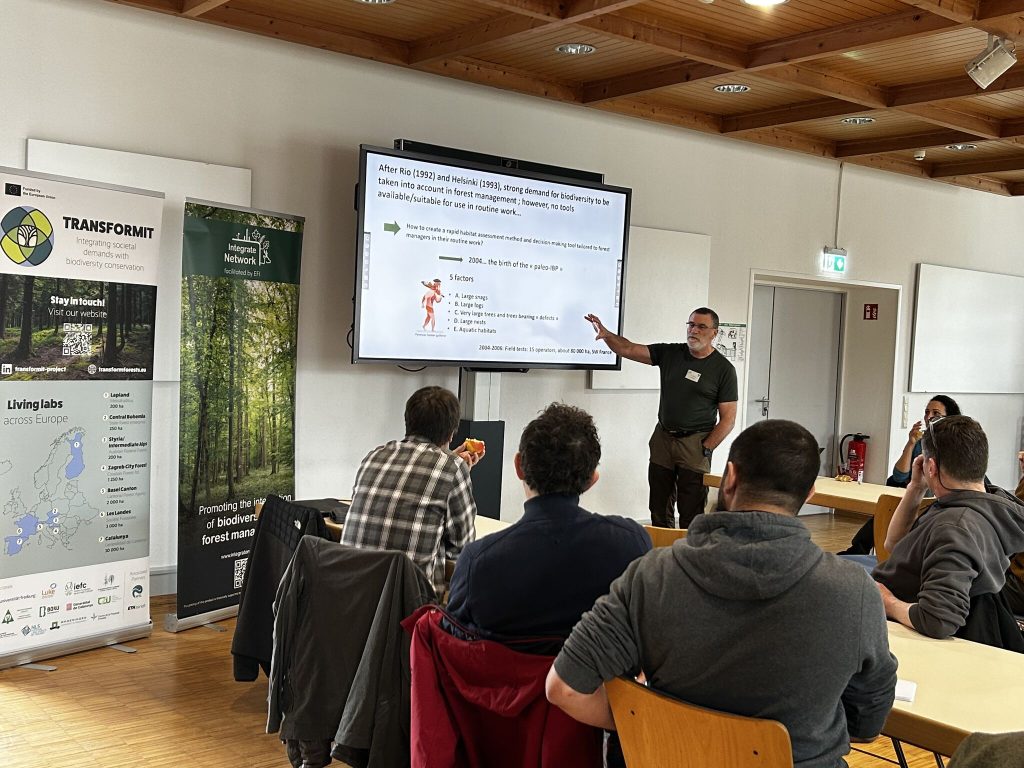
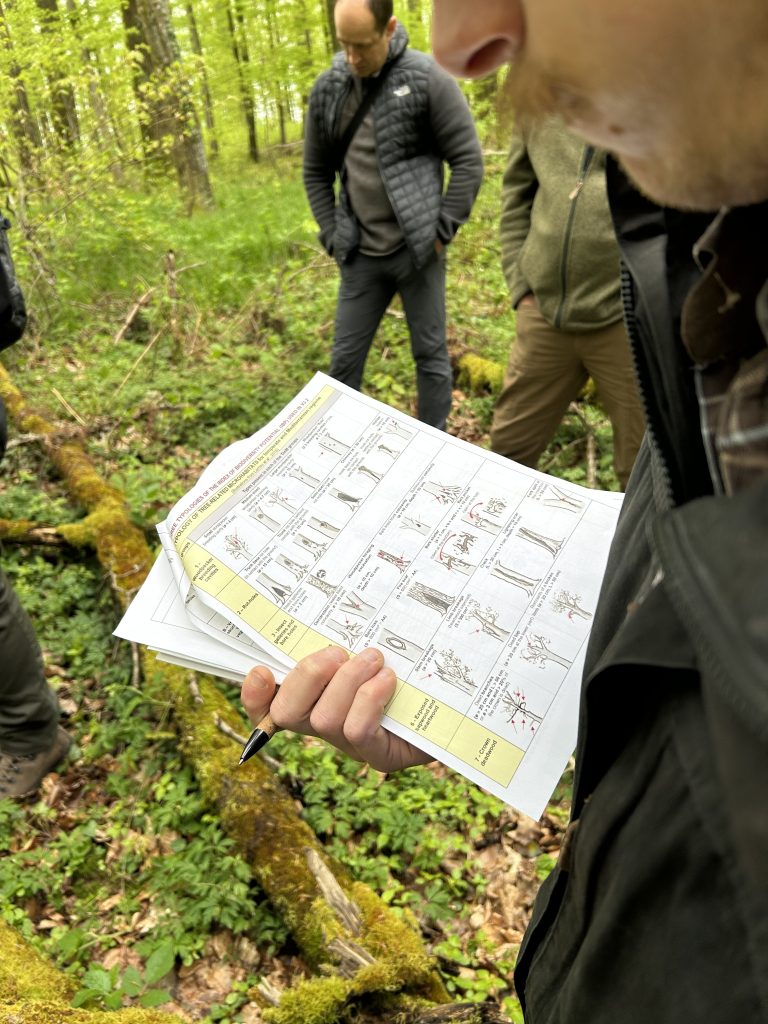
The recent “Train the Trainers” event in Binzen, Germany, jointly organised by TRANSFORMIT project and the Integrate Network, and attended by Jonathan Spazzi (Teagasc) and Dermot Dunphy (DAFM), was instrumental to further bring the IBP survey methodology front and centre as part of the Irish Marteloscope workshops. As fully booked events, these workshop series showcase the current interest in Ireland to learn more about the integration of biodiversity conservation into management practices and, in particular, the Index on Biodiversity Potential. Here a blend of forest owners, practitioners and students are coming together to take part in frank and meaningful discussions.
So far, the feedback received is excellent, says Irish Integrate Network member representative Jonathan Spazzi. The organizers expect around 80 participants to be trained this spring with more planned to attend trainings in Autumn.
Through the Integrate Network and a range of research and development projects, including SimInForest and the TRANSFORMIT project, collaboration across Europe between educators and researchers is ongoing on how best to best promote and communicate new, integrative, and closer-to-nature management solutions and ensure that forest health and productivity can continue to provide essential services to society’s collective well-being.
Blogpost by Gesche Schifferdecker and Andrea Barzagli
“Today, there is no longer discussion about the general value of deadwood. Now the discussion is only about how, when, and where to preserve it.”
I heard that line like a door closing on an old argument. And then, just as quickly, another door opened onto the real question: what does “keeping deadwood” actually look like in a forest that is also being managed for people?
That’s the thread running through The Life in Deadwood, the final documentary of the LIFE SPAN project – filmed across two pilot sites, the Cansiglio Forest (Italy) and the Sailershausen University Forest (Germany). Guided by Jörg Müller, professor of conservation biology and forest ecology at the University of Würzburg, the ~20‑minute film follows a quiet, ongoing “competition between humans and saproxylic organisms”.
The term itself invites a closer look: saproxylic – from Greek for “rotting wood”, describes species that live in, on, or from dead and dying trees. Not just visitors, but dependents. Beetle larvae tunneling through softening trunks, fungi dissolving lignin into soil, birds carving nesting cavities into wood already in transition. With that in mind, the film’s central tension sharpens: how do we manage forests without erasing the home of the species that rely on decay itself?
A different kind of forest “infrastructure”: Saproxylic Habitat Sites
LIFE SPAN’s proposal is practical and surprisingly hopeful: create a network of “Saproxylic Habitat Sites” (SHS) inside managed forests – small areas of senescence where the forest is allowed to look older, messier, and more complete. Think large trees kept standing, deadwood left in different forms, and patches of open space that let light spill onto the forest floor. As project coordinator Bruno De Cinti (CNR‑IRET) explains in the documentary, a network matters: when SHSs are connected across the landscape, saproxylic species can move, disperse, and persist. In other words, conservation stops being a single fenced-off point and becomes a living system woven into everyday forestry.
One of the most memorable moments is not a statistic or a map, but a shift in attention. The documentary becomes a kind of training for the senses – an invitation to notice what classical silviculture often overlooked (or actively removed): microhabitats, veteran trees, broken tops, cavities, and the fallen trunks that look like “waste” until you realise they are neighborhoods. As Daniel Kraus, manager of the German Sailershausen forest, puts it, the film helps us “develop a better eye”.
The voices inside the forest
Michael Junginger (University of Würzburg) and Umberto Di Salvatore (CREA‑PB) connect SHSs back to day‑to‑day management: what they suggest are not “more protected areas,” but an adaptive system that can change and grow with the forest. And in one scene of the documentary, Ruth Pickert (University of Würzburg) stands in a demonstration site that looks, at first glance, a little chaotic – and says the quiet part out loud: “we can drive change by inviting people in, talking, and creating spaces for discussion”.
My take-away
The Life in Deadwood doesn’t romanticise decay; it simply restores it to its rightful place in the forest story. Deadwood is shelter, food, and corridor. It is continuity. And if the debate has shifted from whether to keep it to how to keep it, LIFE SPAN offers a grounded answer: build networks of habitat, learn to see microhabitats, and let managed forests carry more of the forest’s full life cycle – standing, falling, and returning.
The video is entirely in English, but official Italian and German subtitles can be selected in the YouTube settings.
A new contribution in the Italian forestry practice magazine Sheerwood is spotlighting the TRANSFORMIT project’s work as a promising step toward more measurable and integrative forest management. Presented by Silvia Bruschini, the article focuses on the set of 17 key indicators designed by TRANSFORMIT experts to help translate complex ecological processes into practical tools for decision-making.
Indicators play a crucial role in forestry, offering measurable insights into biodiversity, forest resources, and socio-economic benefits. According to the publication, our TRANSFORMIT framework provides both quantitative and qualitative parameters that allow managers to monitor forest conditions, assess the impact of human activities, and guide sustainable practices over time.
Developed through a participatory process, these indicators are scalable from stand to landscape level and aligned with EU policy goals such as the European Green Deal. The article highlights their potential as a valuable reference for forest planning in Italy, offering a shared, science-based foundation for managing increasingly complex forest systems.
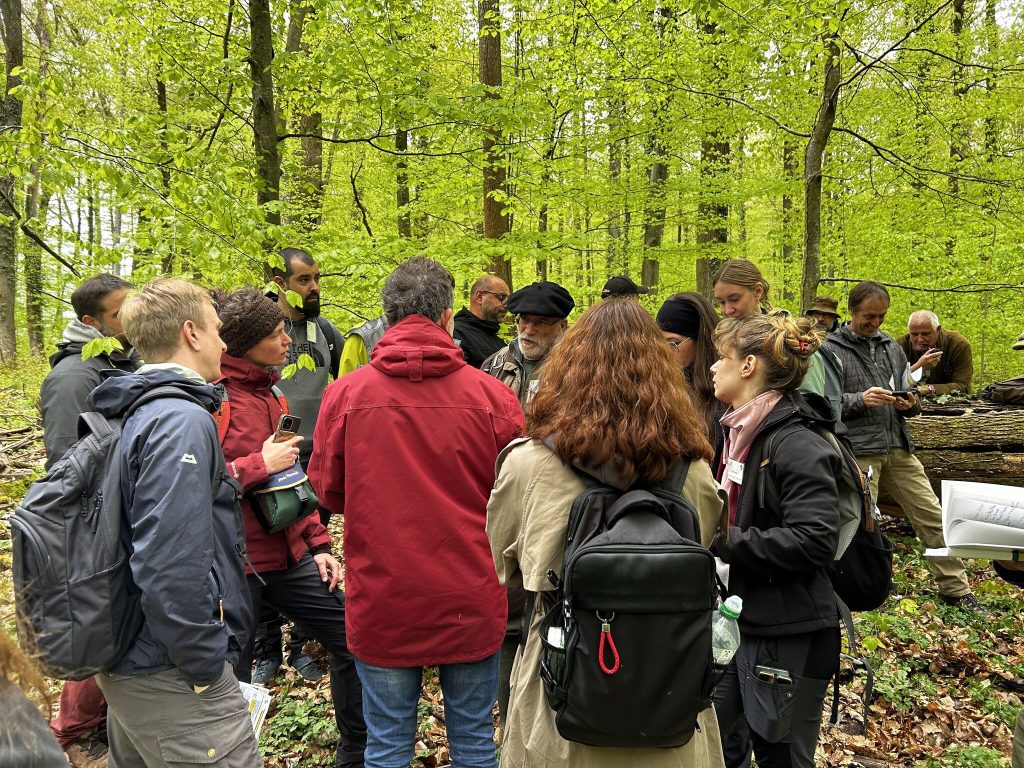
From 15–16 April, 30 forest practitioners, researchers, and representatives from 12 European countries gathered in Binzen, Germany, for a very special two-day workshop – the first-ever “Train the Trainers” event on IBP, organised by the Integrate Network in collaboration with the EU Horizon TRANSFORMIT Project. We specifically invited a small group of participants to allow for a real hands-on and interactive experience.
On the morning of the 15th, Laurent Larrieu (INRAE) and Pauline Marty (CNPF – Centre national de la propriété forestière) gave us in-depth insights into the science and development of the tool and its ten key factors of biodiversity. In the afternoon, theory was brought to life. In the forest, participants reviewed what had been discussed with real stands and conditions.
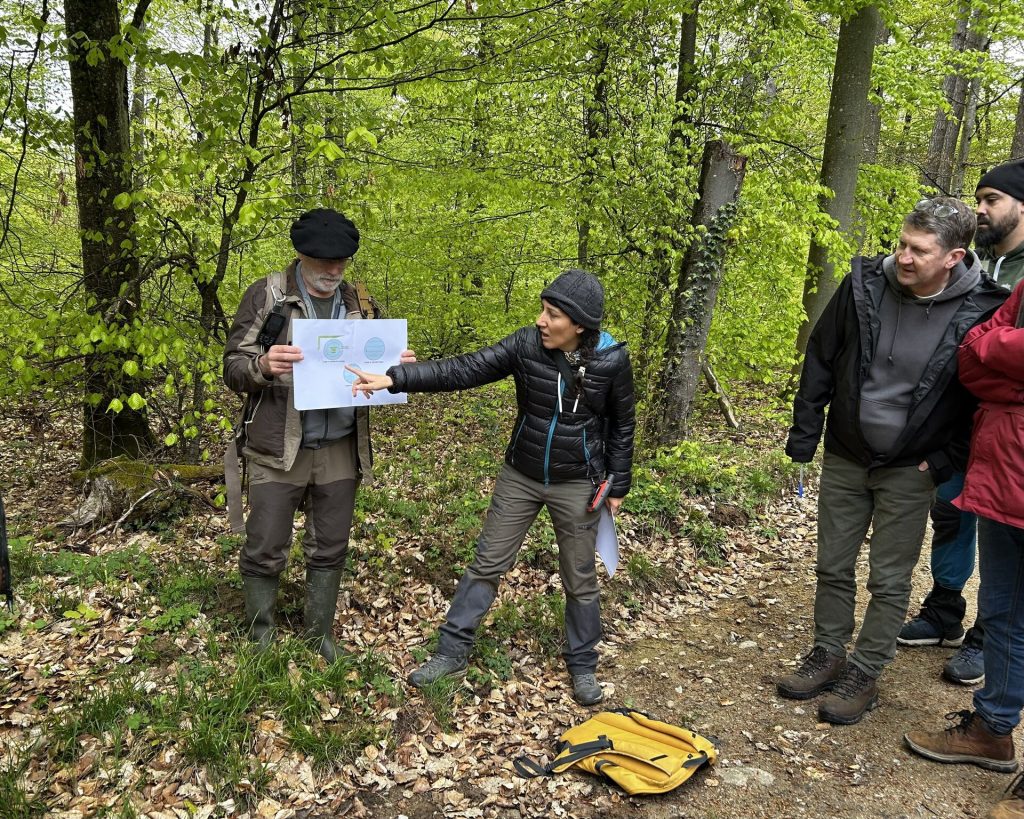
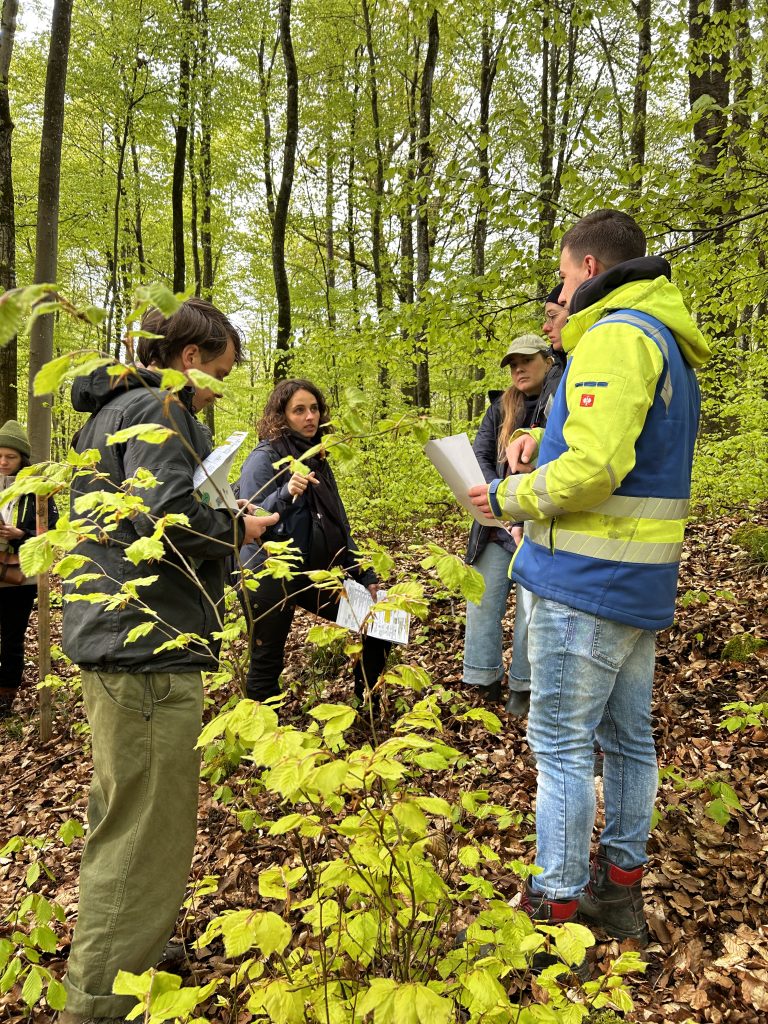
Our second day started in a marteloscope in Kandern – participants were split into four groups to test their knowledge and conduct the IBP survey at the forest site. Laurent and Pauline provided hands-on support throughout the exercise, and the local forest manager joined to share the history and management of the forest we were standing in.
Rich Q&As, deep group discussions, and diverse reflections from various national contexts and forest types across Europe – all of these made the exchange valuable, not only with the two trainers but also between participants.
Over the past two days, various participants shared with us their perspectives on the IBP, why the tool is relevant to their local context, and how they are hoping to bring the knowledge from the training back to their colleagues and forests.
With their commitment to bring the knowledge and application of the “Index of Biodiversity Potential” home, we’re grateful for the success of this first iteration of an IBP “Train the Trainers” event!
You could watch the afterevent video on the right to learn more about this event.
Curious to know more about the IBP? Dive into the topic through EFI’s “What is” series and stay tuned for our upcoming articles regarding the IBP, its potential applications, and our IBP “Train the Trainers” participants’ reflections on our two days together.
Forests in Europe are at a crossroads. Climate change is reshaping disturbance regimes, biodiversity is declining, and societies are demanding more from forests than ever before: timber, carbon storage, clean water, recreation and habitat for wildlife, all at once. Against this backdrop, forest managers are navigating a crowded landscape of concepts, frameworks and acronyms, each offering a different answer to the same fundamental question: What does it actually mean in practice to manage a forest well – that is, to provide the services societies need while at the same time strengthening the forests’ resilience and preparing them for the future?
Spruce forest affected by bark beetles. Bohemian Paradise, Czech Republic.
What has been missing?
Forest management concepts have multiplied over the past decades. Some of these names you might have heard before: Close-to-Nature Forest Management, Continuous Cover Forestry, Climate-Smart Forestry, Retention Forestry… But as noted in the paper, many of these approaches have remained “largely at the stand scale, even for ecosystem services that inherently depend on landscape-level processes”. Biodiversity elements, such as deadwood, habitat trees and rare species were frequently overlooked. Landscape connectivity was rarely part of the conversation.
Today, the pressures are sharper, and the expectations are higher. EU policies on climate, biodiversity and the bioeconomy pull forests in multiple directions at once. Intensive management can reduce adaptive capacity by simplifying stand structures and shortening rotation lengths. Meanwhile, research consistently shows that structurally diverse, species-rich forests are far better buffered against the more frequent and more severe natural disturbances caused by climate change.
What has been missing is not more concepts but more operational clarity. Many existing frameworks “articulate clear aspirations and guiding principles but lack fully developed, standardized operational guidelines”. Without that clarity, forest management approaches face the risk of remaining theoretical but having limited real-world impact on forests.
What is Integrative Forest Management (IFM)?
IFM is not a new idea. First conceptualized by Daniel Kraus and Frank Krumm in 2013 and further developed since, it has long been understood as a holistic approach that aims to integrate nature conservation and adaptation to global change into sustainable forest management. Within TRANSFORMIT, we refined and operationalized it into a working definition:
“Integrative Forest Management aims at integrating biodiversity conservation and global change adaptation into forest management for the sustainable provision of multiple ecosystem services. It is guided by natural and diverse forest structures, compositions, and dynamics to support ecosystem functioning and resilience. Its management practices consistently consider the tree, stand, and landscape scale and employ different silvicultural intensities, including intentionally unmanaged forest patches.”
In short, IFM is not a prescription for what a forest must look like. It is a framework that can be adapted to local ecological realities, management traditions and governance contexts, while keeping biodiversity and resilience at the center.
In practical terms, this definition is structured around 8 guiding principles:
Principle
What it means in practice
1
Retention of habitat trees, special habitats, and deadwood
Actively identifying, mapping, and retaining old trees, deadwood, and valuable habitats, not just what regulation requires, but beyond it
2
Promoting site-adapted native tree species
Prioritising native species suited to local conditions, while allowing climate-adapted non-native species in minority shares
3
Promoting natural tree regeneration
Favouring natural regeneration where possible, monitoring herbivore pressure, and protecting pioneer species in the landscape
4
Partial harvest and structural heterogeneity
Favouring selection harvesting over clear felling to maintain complex, uneven-aged stand structures
5
Promoting tree species variation and genetic diversity
Actively managing for diverse species mixtures aiming for a minimum of three tree species per stand and diverse provenances
6
Avoidance of intensive management operations
Limiting agrochemical use, constraining machine traffic to fixed extraction networks, retaining deadwood after salvage logging, and protecting watercourses
7
Supporting landscape heterogeneity and functioning
Planning explicitly for habitat connectivity, protection of rare habitats, and linkages between forested and non-forested areas at the landscape scale
8
Managing factors that hinder ecosystem functioning
Actively controlling invasive species and integrating natural disturbance processes, such as fire, storms, pest outbreaks, into management planning to build resilience
How do existing concepts measure up?
With this framework established, the paper undertakes a structured comparison of eight widely used European forest management concepts: Continuous Cover Forestry (CCF), Close-to-Nature Forest Management (CNFM), ProSilva, the Stepping Stone Concept (SSC), Retention Forestry (RF), TRIAD, Climate-Smart Forestry (CSF), and Closer-to-Nature Forest Management (CerNFM).
Figure 1: Overview of IFM-related concepts investigated. Each cell presents the concept’s abbreviation and a brief description. (Vitali et al., 2026)
As shown in the graph below, all eight concepts show some degree of alignment with IFM principles, at the level of broad principles, most cover at least half. But when assessed against the more specific operational attributes – the how, not just the what – the picture shifts considerably: existing concepts cover less than 40% of IFM’s desired attributes overall.
Figure 2: Spider-grams showing how each management concept aligns with the principles of IFM. (Vitali et al., 2026)
It is worth noting that this is not a ranking. Each concept has strengths that reflect its own origins and context. The more productive insight is that these concepts are complementary. IFM, as a common framework, makes that complementarity visible and actionable. As the paper puts it, by using IFM as a benchmark, the study helps “close gaps between high-level management goals and their practical implementation” through “a transparent dialogue between science, practice, and policy”.
To show what IFM implementation can look like over time, the paper includes an illustrative transition pathway for disturbance-prone Norway spruce monocultures affected by drought and bark beetles. It emphasizes that some benefits (e.g., using existing deadwood as habitat) can start immediately, while others (e.g., developing habitat trees or achieving structurally diverse mixed stands) take decades, requiring staged planning across short-, medium-, and long-term horizons (Figure 3).
Figure 3: From spruce monoculture to resilient forest: the timeline shows how Integrative Forest Management (IFM) actions unfold over decades through short-, mid-, and long-term actions that strengthen biodiversity, climate resilience, and ecosystem services.
A common framework for a shared challenge
Integrative Forest Management will not manage the beech forests in central Europe and the boreal pinewoods in Scandinavia with the same approaches. Regional conditions, traditions, ownership structures and governance frameworks all shape what is possible. This context-sensitivity is exactly the key feature of the framework. IFM is, as the paper describes it, “a unifying but non-prescriptive concept that is capable of integrating diverse forest management objectives”.
What it offers, above all, is a shared language: a structured way to have better conversations about forest management across scientific, policy and practitioner communities, and to identify honestly where existing approaches are strong and where the gaps remain.
The forests of Europe are facing pressures that will not wait. But with clearer thinking about what we are managing them for, and better tools for translating that thinking into action, we can manage them considerably better.
Read more: Valentina Vitali (lead-author), Frank Krumm, Andreea Spinu, Florian Schnabel, Jürgen Bauhus, Agata Konczal, Lorenz Schimetka, Sebastian Schwegmann, Georg Winkel, & Andreas Rigling. (2026). Managing European forests for biodiversity conservation and global change adaptation: An assessment of current management concepts. Forest Ecology and Management, 611, 123698. https://doi.org/10.1016/j.foreco.2026.123698
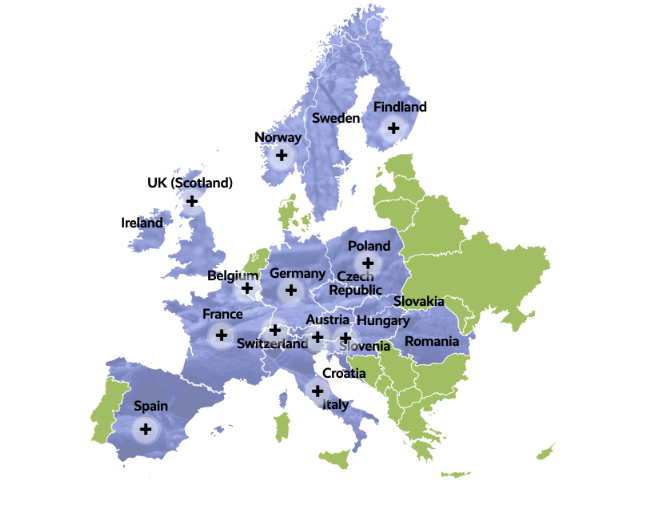
Across Europe, our unique network of TRANSFORMIT Satellite Demonstration Areas (SDAs) is bringing to life the diversity of forests, management traditions, and innovation pathways needed to address climate change. From Mediterranean landscapes to boreal forests and urban green spaces, these selected sites illustrate how locally adapted solutions can contribute to resilient, multifunctional forest systems. The SDAs aim at showcasing several good practice examples of Integrative Forest Management (IFM) across Europe, thus broadening the scope of expertise available and enlarging the IFM Network. These areas are now available on Main – Transformit.
Maps of TRANSFORMIT’s SDAs across Europe.
Close to Nature forest management in action
A beech forest in Kalebsberg, Germany.
Several German forest enterprises – including Schütt-Frank and Kalebsberg – demonstrate how close-to-nature forest management can build climate resilience. Their approaches emphasise natural regeneration, soil health, balanced wildlife populations, and stable forest microclimates. Together, they highlight a shift away from rigid management towards adaptive, self-regulating forest systems.
Forests for people: urban and social functions
In highly frequented landscapes such as the Kottenforst (Germany), the Sonian Forest (Belgium), and the City Forest of Baden (Switzerland), forests must balance recreation, biodiversity, and cultural heritage. These SDAs show how integrative management can meet societal expectations while maintaining ecological integrity. Innovative approaches like “ecosponsoring” in Switzerland further demonstrate new forms of collaboration between society and forest stewardship.
Multifunctionality across Europe
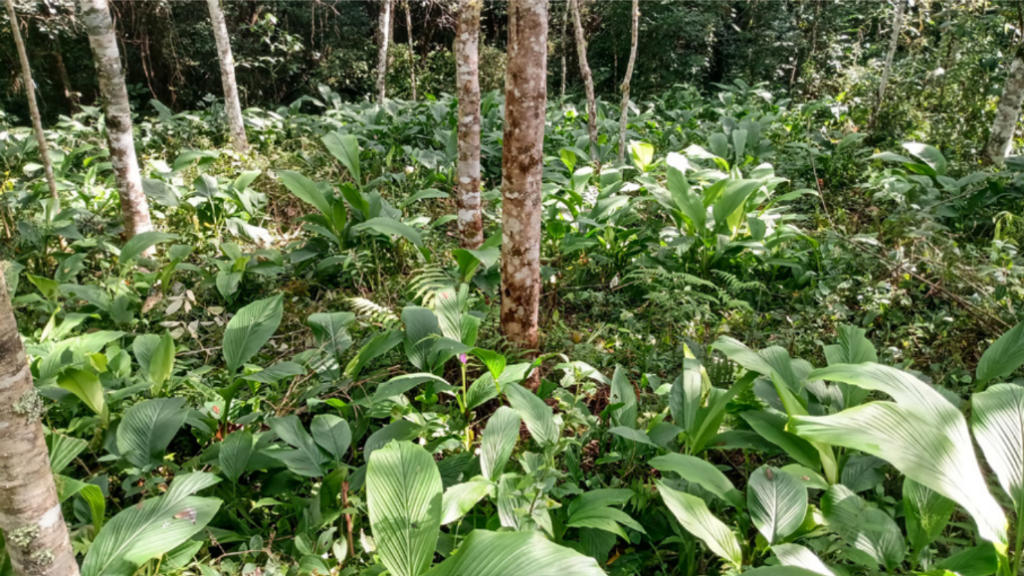
Agroforestry. Tree vegetation has established itself in an abandoned plantation with Turmeric (Curcuma longa) – Abbey St Bathans UK-Scotland Dobie family, Scotland.
From Scotland’s Abbey St Bathans to Slovenia’s Pahernik Forest and Norway’s Vestland region, forests are managed to deliver multiple ecosystem services. While timber production remains important, these SDAs also support biodiversity, cultural values, and education. In Poland’s Woziwoda Forest District, this balance is captured through the principle of “nature protection through moderate and rational use.”
Mediterranean innovation and adaptation
Our Southern Europe’s demonstration areas highlight innovation under climate pressure. In Spain, forests such as Vall d’en Bas and Ribera Salada explore how to combine biodiversity conservation with high-quality wood production, while others integrate fire as a natural and necessary management component. In Italy and France, sites like Val di Susa, Pratomagno, and Hèches focus on multifunctional forestry – balancing production, protection, and long-term ecosystem resilience in the face of climate change and biodiversity loss.
Forests for research and education
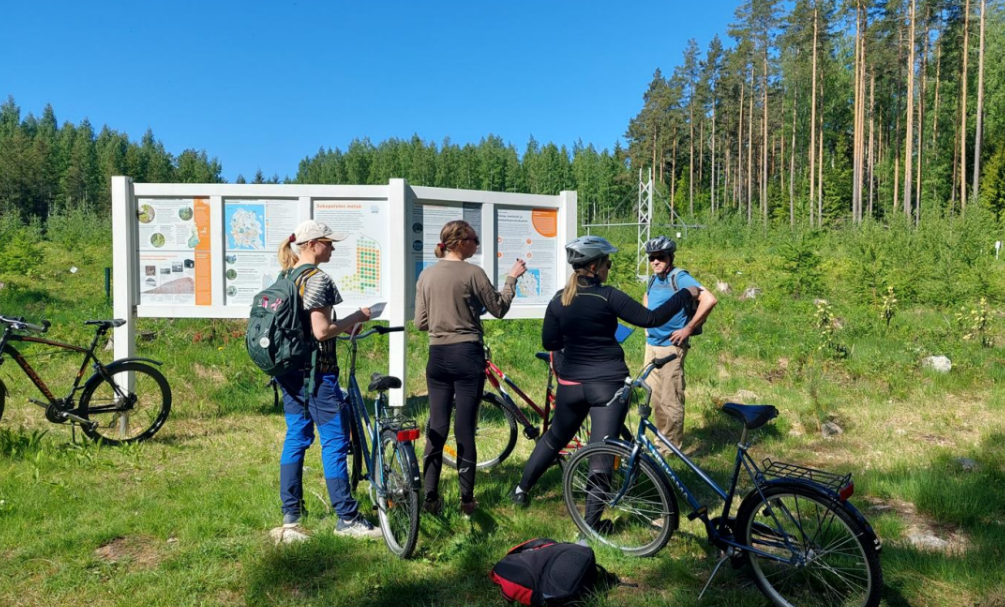
Training/Education at Punkaharju Research Park, Finland.
Some demonstration areas serve as centres for research and education, such as the Punkaharju Research Park in Finland, the University Forest Enterprise in Zvolen, Slovakia, and Universitätsforstamt Sailershausen in Germany. These sites connect science, practice, and society, ensuring that forest management is continuously informed by evidence and innovation.
By connecting these sites, TRANSFORMIT creates a living network of knowledge and practice, demonstrating that there is no single solution to climate and biodiversity-related challenges but many locally grounded pathways that, together, shape a more sustainable future for Europe’s forests.