
Beyond timber: how experts envision the future of non-wood forest products

by Gesche Schifferdecker, Jukka Tikkanen, Mikko Kurttila, and Rainer Peltola
When you explore a Finnish forest with experts like Jukka Tikkanen, Mikko Kurttila, and Rainer Peltola, you quickly realise that the forest economy is far richer than timber alone. Between the trees and under the canopy lies a quiet abundance: branches from Spruce trees, sap from birches, mushrooms, resin, berries. And now, more than ever, these non-wood forest products (NWFPs) are gaining attention in forest planning.
“Integration of NWF products into forest planning really depends on the product. If the growing stock data is up-to-date, the best production estimates come from products collected from trees – spruce shoots, resin, sap, birch leaves”, says Jukka Tikkanen, Research Director at University of Eastern Finland. Digital tools like Finland’s Metsään.fi would like to allow landowners to explore these potentials alongside timber data: an inclusion of NWTPs was technically piloted, but is not mainstreamed yet.
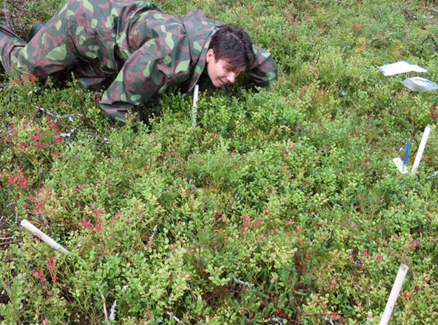
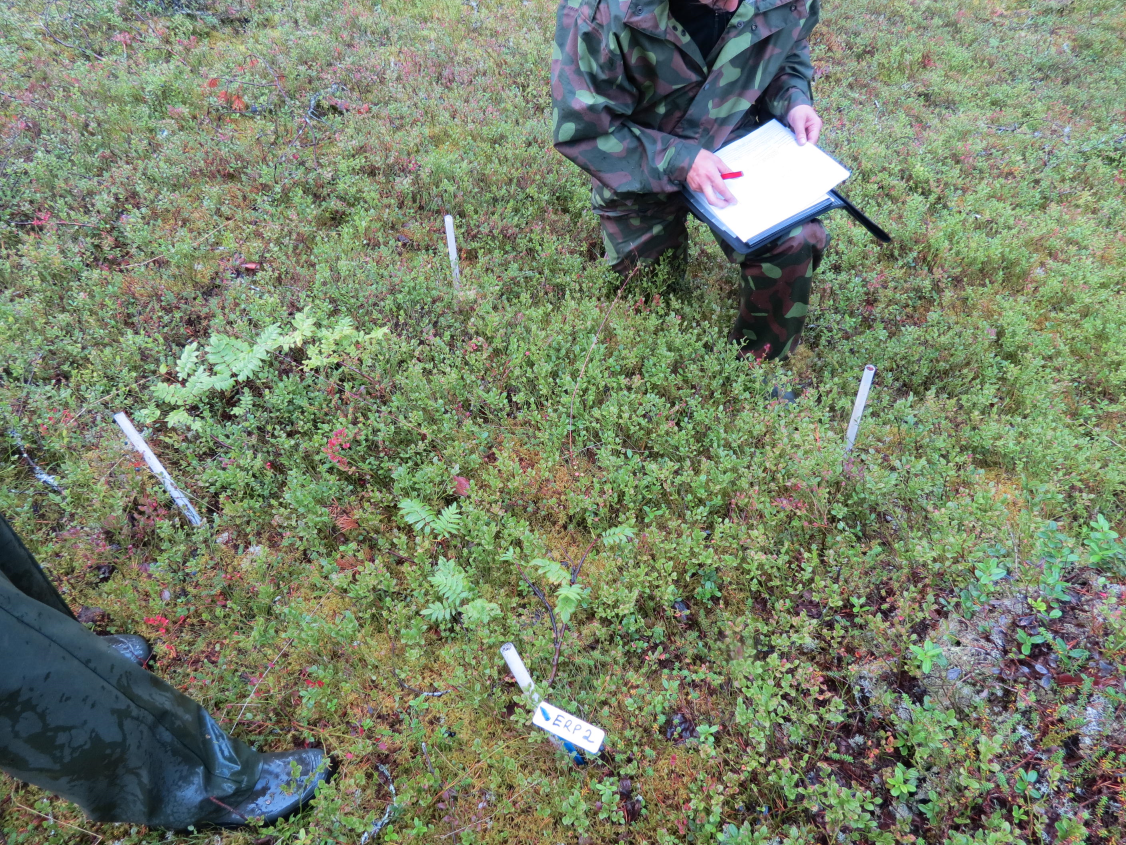
However, for berries and mushrooms, Jukka stresses the need for fieldwork: “General berry and mushroom estimates give a good idea, but business calculations need field investigations.”
Over the past years, his team has piloted natural product-oriented forest planning, which is a hands-on process combining terrain assessment with dialogue between the planner and landowner. “It’s meant to help landowners explore NWFPs as a complementary business. Timber doesn’t have to be the whole story”, emphasizes Jukka.
What a forest can offer: business planning
For Mikko Kurttila from Natural Resources Institute Finland (LUKE), the first step for forest owners is simple but often overlooked: “Owners need to consider what their forest properties can produce. Some may have birch suited for sap production. Others have young spruce stands perfect for collecting shoots in spring, or branches for the Christmas season. Older pines or spruces can offer resin.” He also stresses the limits set by Everyone’s Rights: “In general, owners should focus on NWFPs that are outside everyone’s rights. In Finland, this normally excludes berries and most mushrooms.”
Some forest owners have explored alternative ventures – like cultivating medicinal mushrooms. “People are curious about cultivating pakuri, but infecting substrates is expensive, and you must wait about ten years – I think that’s very risky”, says Mikko. For him, realistic business planning is essential: “Owners need proper calculation – labour, external services, opportunity costs, and expected revenue flows with different future prices and yields. The challenge is that advisors for this don’t really exist. Timber services do, but NWFP services don’t.”
The forest’s hidden harvest
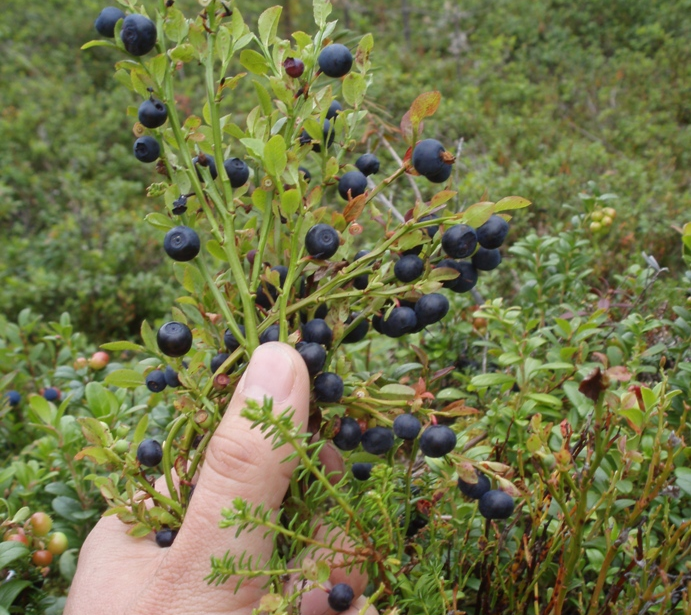
While Jukka and Mikko focus on planning and business, Rainer Peltola (LUKE) has spent over a decade improving our understanding of NWFP production, especially berries.
“For more than ten years, berry yield forecasts have used a partial citizen-science concept. We’ve made progress in collecting observations, and data quality has steadily improved”, explains Rainer. The biggest breakthrough came when weather data was integrated into the forecasting system: “The single biggest step forward has been combining weather data with berry observations – modelling the weather phenomena that influence yields. We now have models predicting pollination success and ripening of bilberries, lingonberries, and cloudberries.”
These models feed into Luke’s berry map service, where users can explore forecasts like pollination success for bilberry in 2025 on a 5×5 km grid. “We hope this helps pickers and berry companies plan their operations – guiding pickers and planning logistics”, summarizes Rainer.
A more diverse forest future
Taken together, the insights from Jukka, Mikko, and Rainer paint a clear picture: forests hold tremendous and partly untapped value – but only if we know how to read it, measure it, and plan for it. As Jukka concludes: “Fully integrating timber and non-wood forest products would make forestry more sustainable – and our landscapes richer.”
And perhaps that is the shift underway: a forest economy increasingly rooted in everything the forest quietly offers – season after season, year after year.


