“This is a fully automated machine translation. The quality and accuracy of machine translation can vary from one text to another and between different language pairs. TRANSFORMIT website admins do not guarantee the accuracy of the translation and accept no liability for possible errors. Please refer to the original text in its original English version if there is any doubt. Some content (such as images, videos, files, HTML links and acronyms) may not be translated or may be inaccurate due to the technical limitations of the system.”
“Indicators should be implementable, measurable, and aligned with other standards so they can ultimately support forest restoration and Integrative Forest Management across Europe,” said Gesche Schifferdecker as she wrapped up the webinar.
Co-organized with the Integrate Network, our webinar “From Indicators to Action – Bridging Science, Policy and Practice in Forest Restoration and Integrative Forest Management” brought together more than 90 participants from research, policy, and practice to explore how forest indicators can help ambitious restoration policies, particularly the EU Nature Restoration Regulation (NRR), to be effectively translated into action on the ground.
After Gergely Zagyvai, Integrate Network Chair 2026, opened the session with a welcome address, Stefanie Linser (University of Natural Resources and Life Sciences, Vienna (BOKU)) delivered a keynote presentation on the development of Integrative Forest Management indicators within the TRANSFORMIT project.
This was followed by a rich panel discussion, moderated by Gesche Schifferdecker, featuring José I. Barredo (JRC – European Commission), Bernhard Wolfslehner (European Forest Institute), Teresa Baiges Zapater (Centre De La Propietat Forestal), and Stefanie Linser (BOKU). Together, they explored how diverse forest-related indicators can support decision-making across different governance levels, the practical challenges of monitoring and reporting, and ways to bridge the gap between policy ambitions and practical implementation.
The panel ultimately agreed on one objective: we have to support our forests to become more resilient – and this can only be done if scientists, policy makers, practitioners, and communication experts work collaboratively.
Many thanks to our outstanding moderator, speakers and panelists, and to everyone who joined, asked questions, and shared their experiences!
Visit of the Delegation from the Chinese Academy of Forestry (CAF) within Bilateral Cooperation (SFI–CAF) and the TRANSFORMIT Project, 17–18 April 2026
Meeting room at the Slovenian Forestry Institute, CAF delegation
On Friday, 17 April 2026, the Slovenian Forestry Institute (SFI) welcomed a delegation from the Chinese Academy of Forestry (CAF) for a two-day programme dedicated to strengthening bilateral cooperation and advancing joint activities within the TRANSFORMIT project.
The visit began at the Slovenian Forestry Institute with welcome addresses by representatives of SFI, CAF and the Slovenia Forest Service, setting the stage for discussions on future scientific and professional collaboration between the institutions. Participants were introduced to the activities and research areas of SFI and exchanged views on opportunities for expanding cooperation in forestry research and practice.
Tour of the Centre’s laboratory facilities at the Slovenian Forestry Institute
The indoor programme continued with expert presentations covering sustainable forest management, forest restoration under changing environmental conditions, forest monitoring, and the bioeconomic dimensions of forestry. Particular attention was devoted to the TRANSFORMIT project and to the exchange of knowledge and experience between Slovenian and Chinese partners.
An important highlight of the meeting was the presentation by Prof. Zheng Yongqi on the upcoming International Workshop on Integrated Forest Management and Biodiversity Conservation (IFM), which will take place in Beijing from 15–17 July 2026. The presentation also introduced planned field visits scheduled for 18–20 July 2026 to either the Bawangling National Nature Reserve in Hainan Province or the Liangshui Experimental Forest Farm in Heilongjiang Province.
The delegation also visited the newly established Centre for Forest Seed Management, Nursery Production and Forest Protection at the Slovenian Forestry Institute. There, participants gained insight into the Institute’s research and professional activities related to forest reproductive material, nursery production and forest health.
The programme moved outdoors on Saturday, 18 April 2026, when SFI and the Slovenia Forest Service jointly organised a field day in the Gorenjska region.
At the IM forest monitoring plot at Brdo pri Kranju
The first stop was the intensive forest monitoring plot (IM, ICP Forests Level II) at the Brdo estate, where participants were introduced to the methodologies used for monitoring forest condition in Slovenia as part of the international ICP Forests programme.
From Brdo, the delegation continued to Pokljuka and the Mrzli Studenec site near the Slovenia Forest Service facilities. Here, participants were presented with the forest management plan for the area and took part in practical exercises using a marteloscope. The visit offered valuable insight into modern approaches to forest management planning and decision-making in practice.
Practical work with the marteloscope at the Mrzli Studenec site on Pokljuka
The field excursion then turned to one of the most pressing challenges facing European forests today: recovering from natural disturbances. Participants visited forest stands damaged by the severe windstorm that had struck the area earlier in March, discussing restoration measures and strategies for increasing forest resilience to natural disturbances and the impacts of climate change.
View of the peat bog
The programme concluded with a visit to the Goreljek peat bog in Triglav National Park. Participants explored the unique characteristics of this raised bog, considered one of the southernmost peat bogs of its kind in Europe. Presentations highlighted the processes of peat formation following the last glaciation, the ecological importance of peat mosses, and the exceptional conservation value of these sensitive wetland habitats.
The Goreljek peat bog area on Pokljuka
The two-day meeting once again demonstrated the importance of international cooperation in addressing shared challenges related to climate change, forest protection and the sustainable management of natural resources. By combining scientific expertise, practical experience and field-based learning, the visit further strengthened the partnership between Slovenian and Chinese forestry institutions and laid foundations for future collaboration.
by Gesche Schifferdecker (EFI), with editorial input from Teresa Baiges Zapater (CPF) and Rahel Könen (EFI)
What does it take to manage a forest in a world of increasing drought, wildfire risk, and uncertainty? Who decides what forests should provide – timber, biodiversity, climate protection, or recreation? How can so many different expectations be reconciled on the same piece of land? And what is the role of private forest owners in this complex environment?
These were some of the questions that framed our workshop on 7 May in the Moianès region of Catalonia, where we brought together journalists, researchers, forest owners, policy experts, conservationists, and practitioners. The event was organized by the European Forest Institute and the Forest Ownership Centre of Catalonia as part of the TRANSFORMIT project.
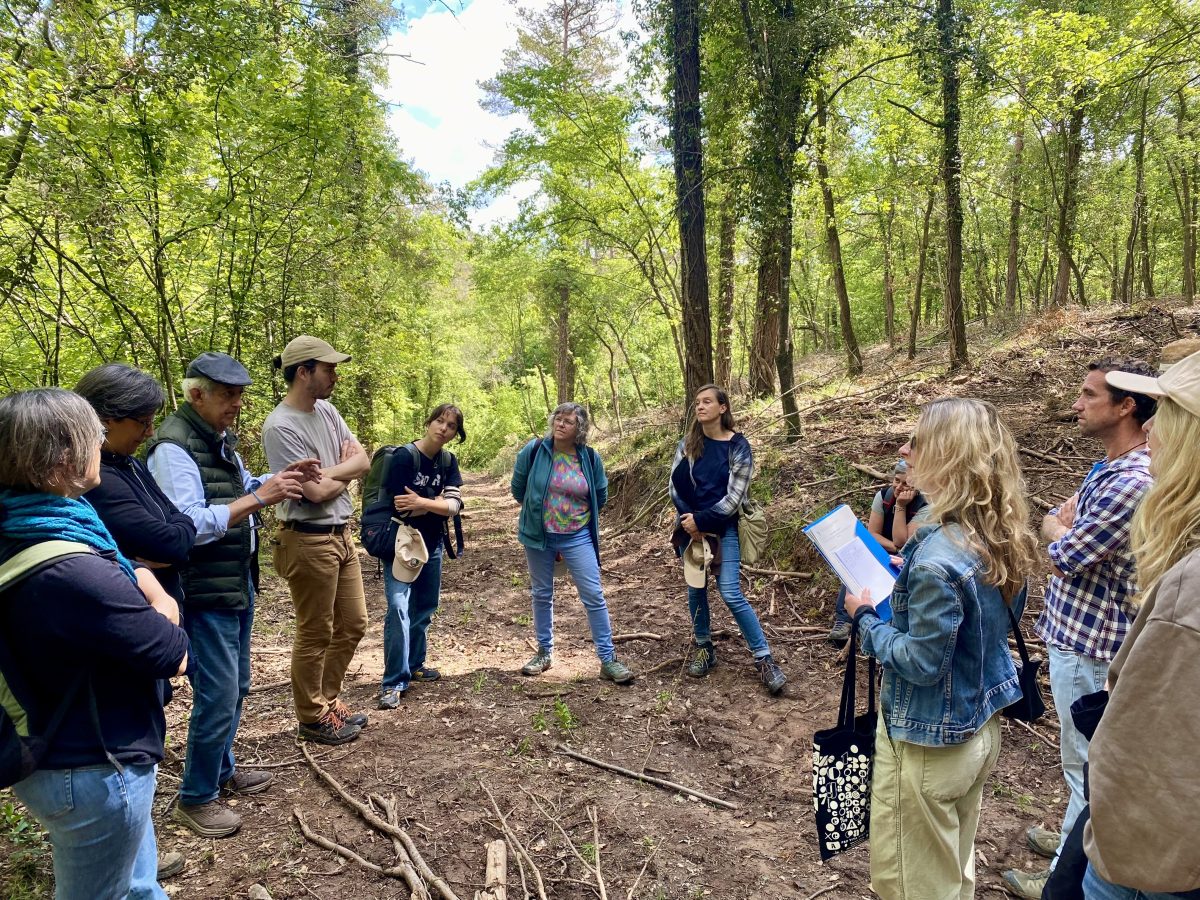
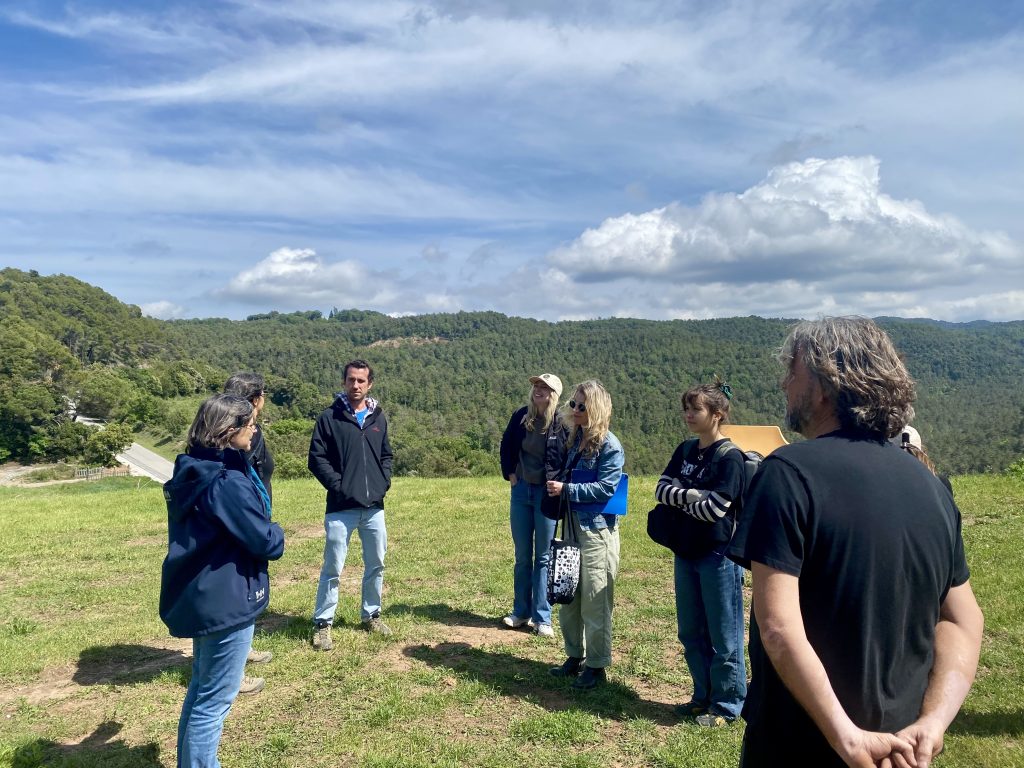
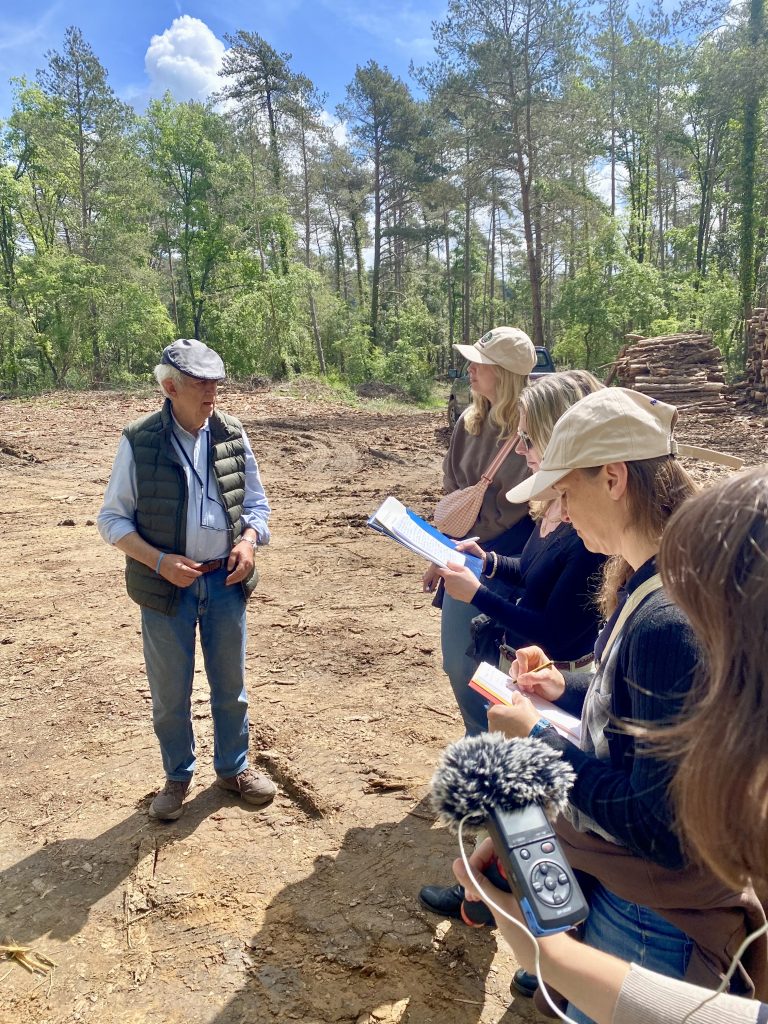
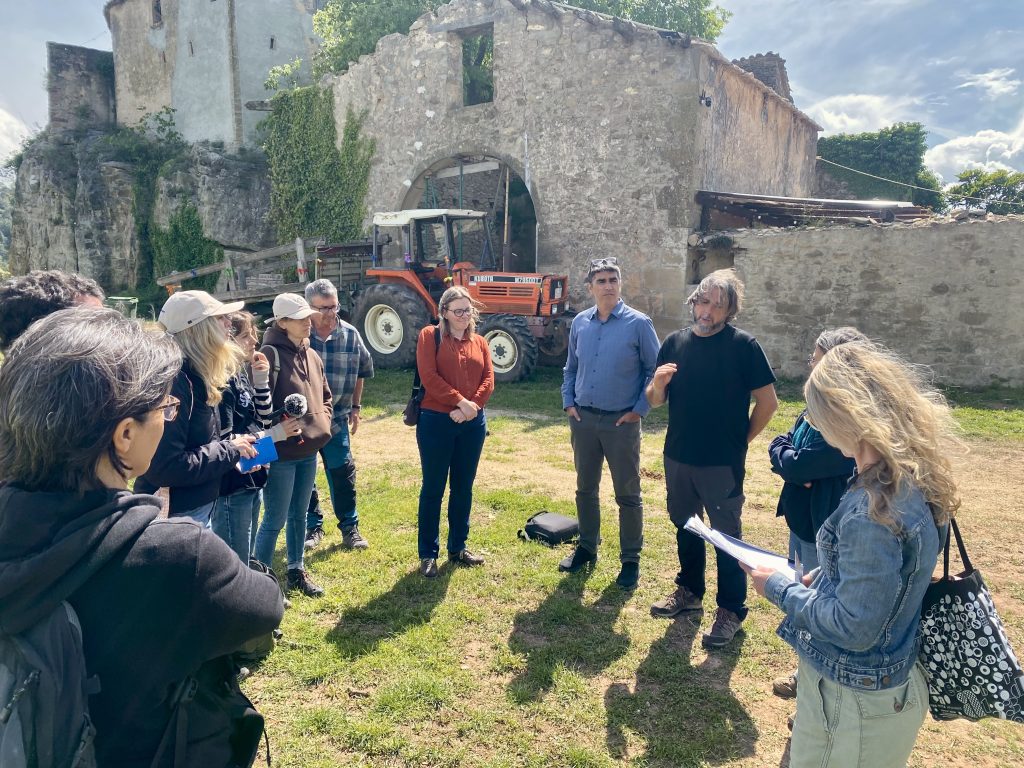
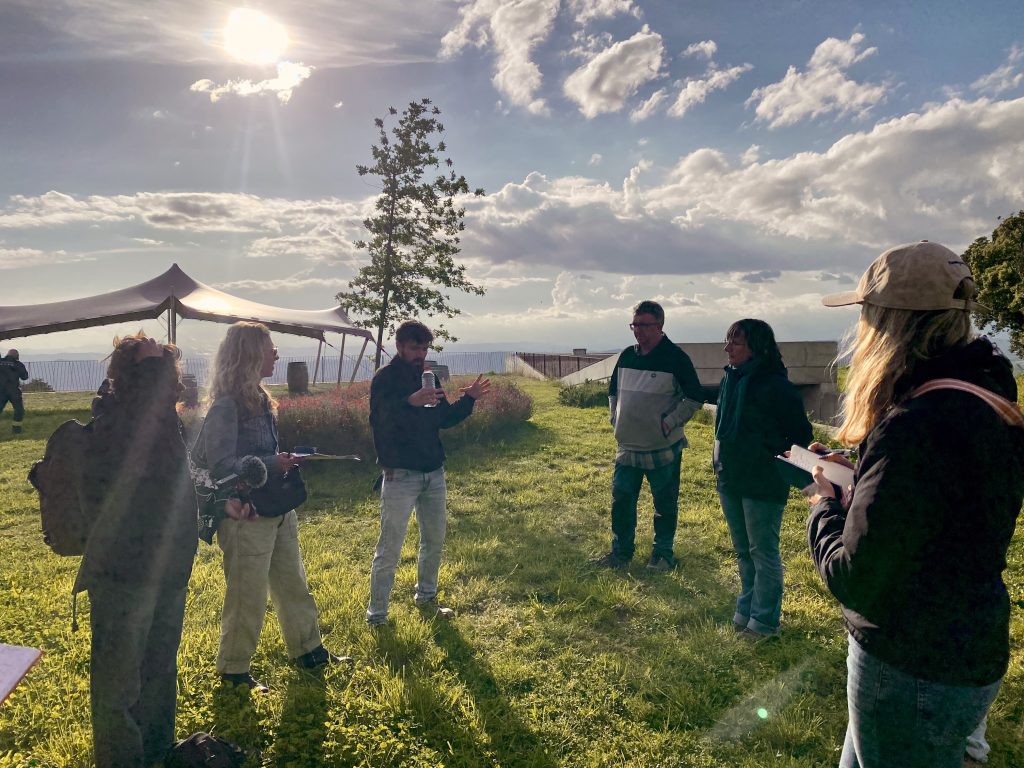
Crucially, this was not a conventional workshop. The Catalan region of Moianès is one of TRANSFORMIT project’s Living Labs – a landscape where different actors come together to test, observe, and co-develop new approaches to forest management in real time. Instead of staying in a conference room, we spent the day moving through the sites of the Living Lab: walking through forests, visiting farms and vineyards, and stopping in small villages – and speaking directly with the people who are dealing with these questions in practice.
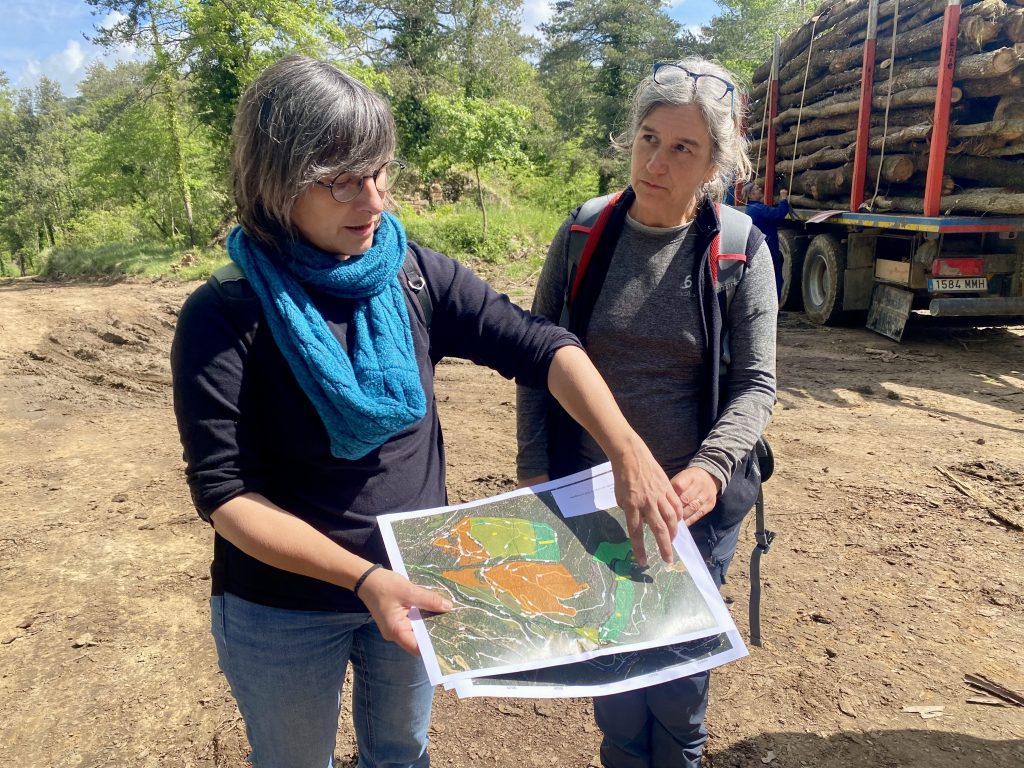
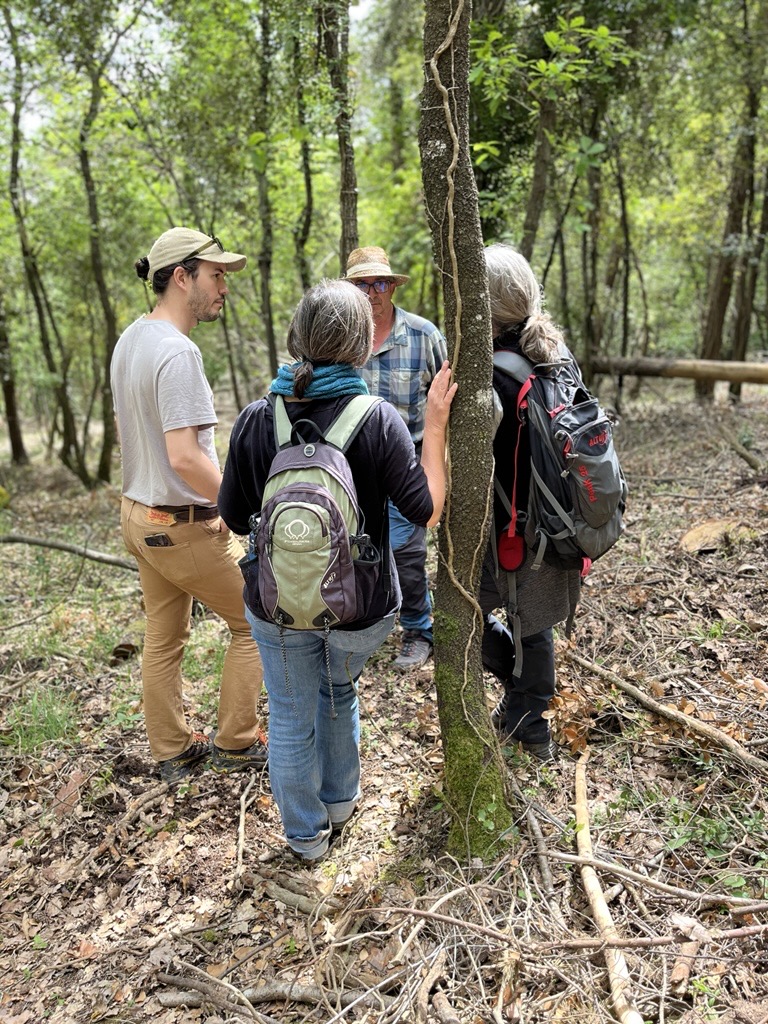
Group discussion at first field stop at La Noguera Farm near Castellterçol
The setting could not have been more relevant. In Catalonia, forests are everywhere. They stretch from the Mediterranean coast to the Pyrenees, covering nearly two thirds of the region. Yet despite this abundance, there is a striking paradox: only 1/3 of these forests are managed, often economically unprofitable, increasingly vulnerable to drought and wildfire, and frequently at the center of debate over what forests are actually most important for.
What emerged over the course of the day was not a single solution to Europe’s forest challenges, but something perhaps more important: a shared willingness in the Living Lab to experiment, collaborate, and rethink old divisions between conservation and production.
Integrative Forest Management – a more holistic approach?
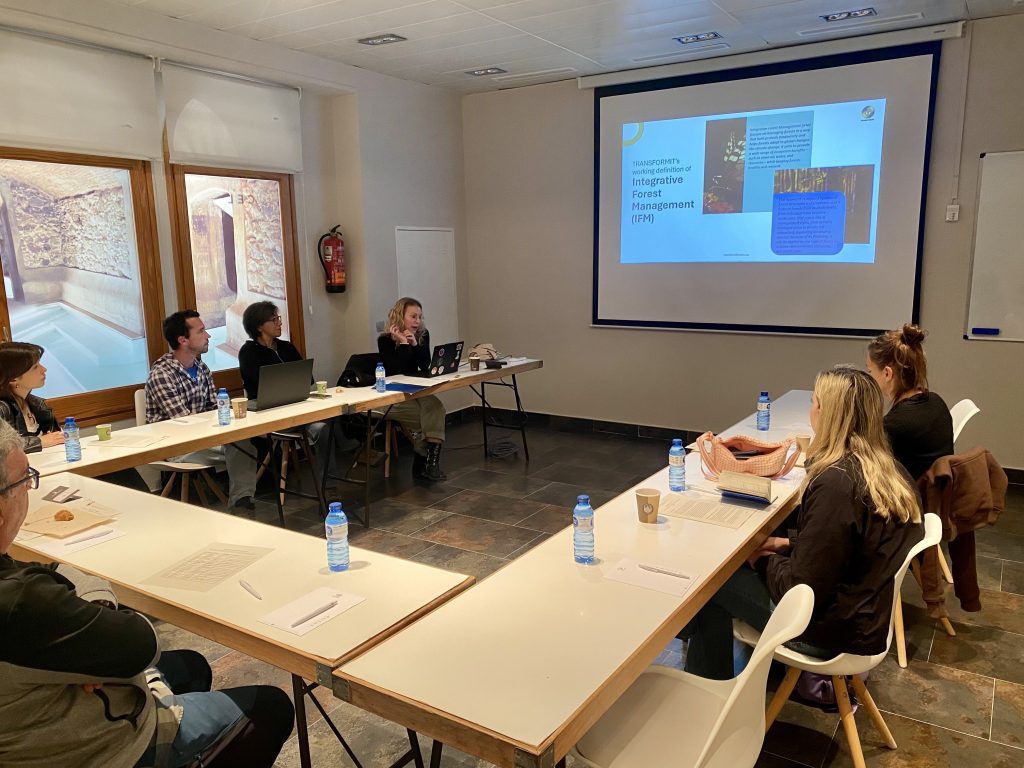
The morning began in Caldes with discussions around a term that would accompany us throughout the day: Integrative Forest Management (IFM). Unlike approaches that focus only on timber production or only on strict protection, IFM attempts to work across scales and interests. It recognizes forests as ecosystems that must simultaneously provide biodiversity, climate resilience, livelihoods, recreation, clean water, and raw materials. Compared to other areas in Europe, in the Mediterranean, forest management is already fulfilling many of the IFM criteria, then, what can IFM bring? What needs to be transformed?
Gesche Schifferdecker (EFI) introducing journalists to the vision behind Integrative Forest Management
One participant described IFM as a “landscape perspective” rather than a single management technique, using a broad understanding of landscape that also includes the people who live within it. Some areas may be actively managed, while others are left untouched. The key idea is flexibility: adapting management to local ecological and social conditions while trying to balance environmental, economic, and social objectives with the objectives of forest owners.
As the day unfolded, it became increasingly clear that small private forest owners – despite their diverse backgrounds and perspectives – are true stewards of forests. At the same time, the conversations showed that forestry is no longer discussed solely among foresters. Throughout the TRANSFORMIT project, partners have been working closely with forest owners, practitioners, policymakers, and conservation groups through workshops, trainings, webinars, and of course other Living Labs across Europe. The emphasis is on learning together rather than prescribing solutions from above.
That collaborative spirit felt particularly important in Catalonia, where forests are highly fragmented in terms of ownership, explained Teresa Baiges Zapater from the Forest Ownership Centre – Forestry administration of Catalonia (CPF). Around 78% of forests are privately owned, often by families with relatively small properties. Many owners inherited their land rather than actively choosing forestry as a profession, and forest management plans remain voluntary.
Teresa Baiges Zapater (CPF) and Mercè Vildardosa (CPF)
As we learned from the Forest Ownership Centre, Catalonia’s forests are also surprisingly young. Large areas of agricultural land were abandoned over the past century, allowing forests to regenerate naturally. While this reforestation has increased tree cover, it has also created dense, relatively uniform forests that are increasingly vulnerable to drought and wildfire.
Climate change and disturbances: changing realities for forest owners
The challenge is intensified by climate change. The years between 2012 and 2023 were described as the driest period in 200 years. During our first field stop at La Noguera Farm near Castellterçol, researcher Josep Maria Espelta from the Centre for Ecological Research and Forestry Applications (CREAF) explained that drought has already affected around 100,000 hectares of forest – an area comparable to the amount burned by fire in Catalonia since the 1980s.
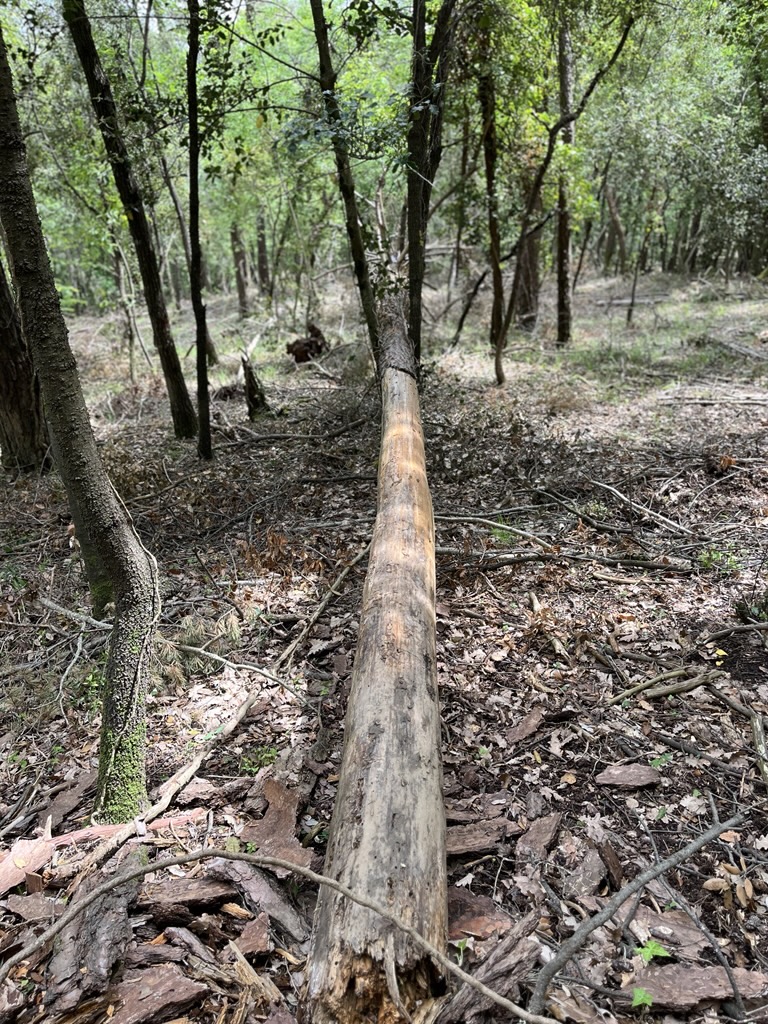
Standing among Scots pine forests, the consequences became tangible. Many trees were weakened or dead, competing for increasingly scarce water. As Josep Maria Espelta emphasized, drought is now becoming as important a disturbance as wildfire in Mediterranean forests.
This changing reality is forcing forest owners and managers to rethink old assumptions. One particularly interesting discussion focused on deadwood. Traditionally, removing dead trees has often been seen as necessary to reduce fire risk. Yet deadwood is also critical habitat for countless species and for forest resilience.
The Living Lab in Moianès is experimenting with different approaches: some plots have all deadwood removed, others retain 20%, while in some areas all deadwood remains, explained Eva Gabriel de Franscisco (CPF). Researchers are monitoring how biodiversity responds under these different scenarios, both at the forest stand and at the landscape scale. Rather than promoting one universal answer, the Living Lab approach allows stakeholders to test trade-offs together and adapt based on evidence and the local context.
How the Living Lab fosters collaboration
What made these discussions especially compelling was hearing not only from scientists, but also from local conservationists and forest owners.
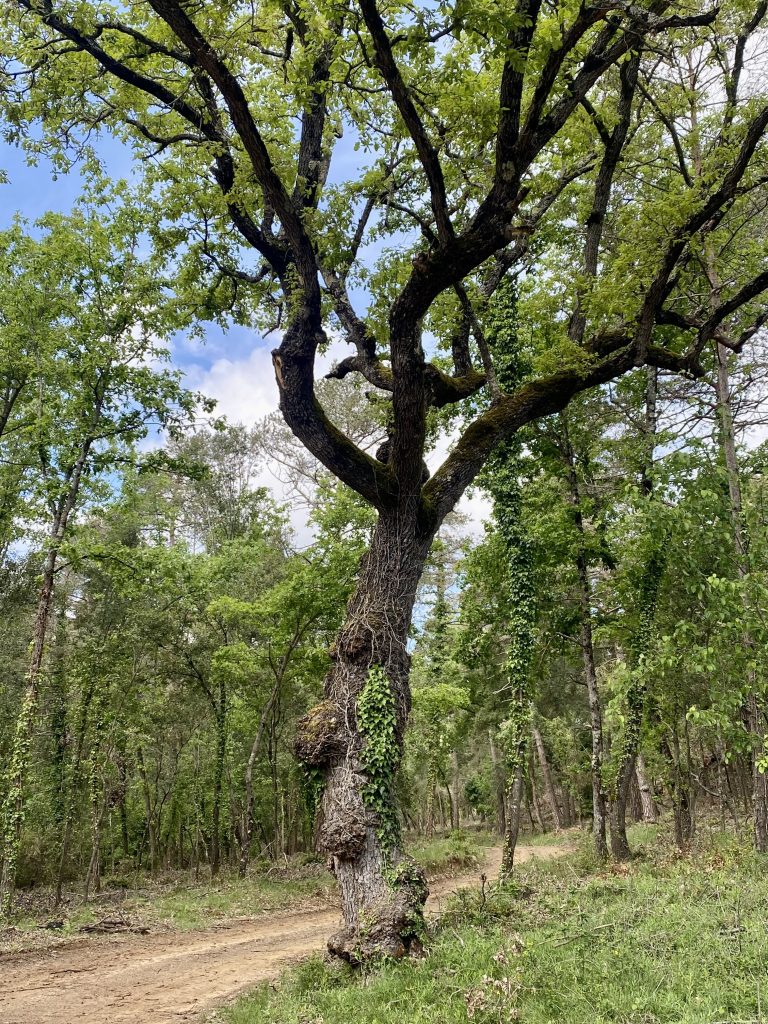
Pilar Clapers, a passionate birdwatcher and member of the local NGO El Fanal, spoke about why she joined the Living Lab. For her, collaboration between ecologists, forest owners, and managers is essential in a time of biodiversity decline. One story she shared stayed with many of us: after identifying a rare oak species for the region in the area where salvage logging was taken place, forest owner Antoni Masferrer agreed that these trees would remain untouched, even if their wood is valuable as firewood. A small decision perhaps, but one that symbolized the trust slowly being built between groups that are often portrayed as opponents.
Antoni Masferrer himself offered a perspective grounded in practicality and responsibility. His motivation for managing forests, he explained, is to leave them in a better condition for future generations while reducing fire risk and earning at least some modest income. At one point he compared forest management to going to the hairdresser: maintenance matters.
But his comments also revealed the economic fragility behind many privately owned forests. Timber prices remain low, much of the wood is used for pallets or pellets, and qualified labor is difficult to find and afford. Many forest owners are aging, while younger generations often have little interest in taking over management responsibilities.
“Forest owners don’t want to leave the forest as a burden,” he said.
And who should pay for this?
After lunch, discussions turned toward one of the central questions underlying the entire workshop: if society wants healthy, resilient, biodiverse forests, who should pay for them?
Catalonia’s Climate Credit System offers one possible answer. Presented by Teresa Baiges (CPF), the scheme aims to finance integrative forest management through payments for ecosystem services.
Unlike many carbon credit systems, the goal is not simply to maximize tree planting or carbon storage. Instead, the system focuses on maintaining healthy forests that are better adapted to climate change and less vulnerable to disturbances such as wildfire and drought.
One innovative aspect is that particularly forest owner associations – rather than individual owners – can apply. This encourages collaboration at landscape scale, which is crucial for addressing wildfire risk, and services related to water and ecological connectivity.
The credits are sold to both public and private actors, including companies interested in strengthening their environmental commitments or complying with emerging sustainability regulations. Because projects are local, buyers can visit the forests they support, creating a stronger connection between financing bodies and landscapes impacted by their sponsorship.
Importantly, the money is provided upfront rather than after management actions are completed, helping overcome one of the major barriers many forest owners face.
New landowners shaping transformation
In the afternoon, the focus shifted toward another transformation taking place in Catalonia’s forests: the changing profile of forest owners themselves.
One of the most inspiring conversations came from Dones de Bosc, the first association of female forest owners in Spain. Founded only in 2025, the network has already grown rapidly.
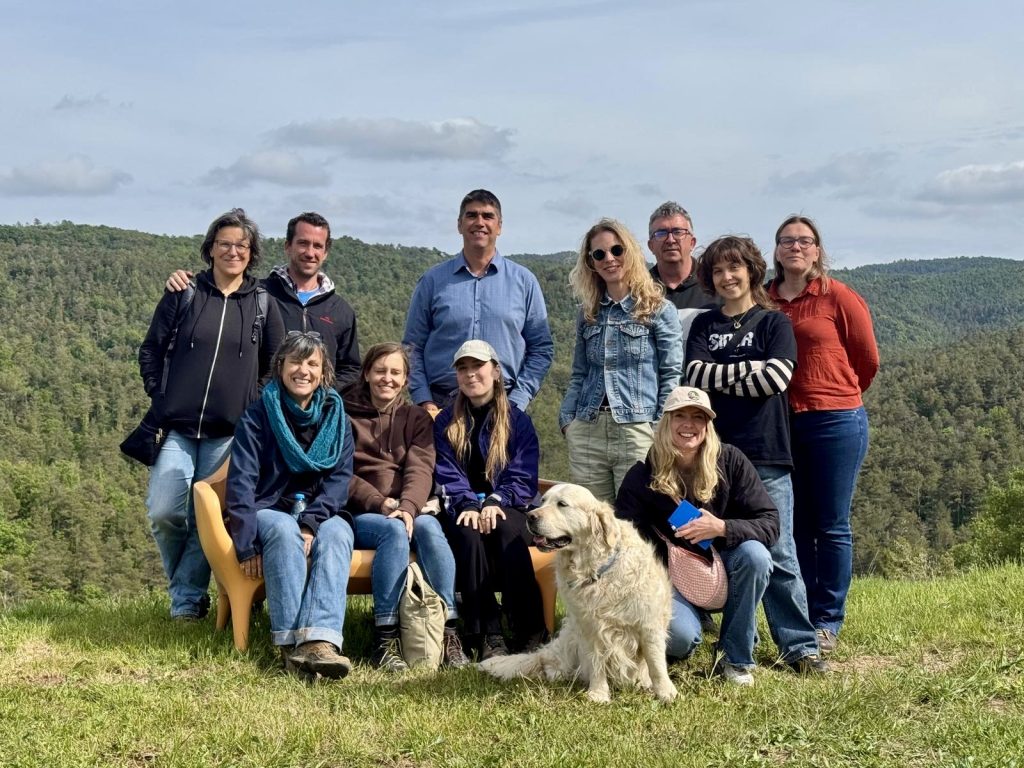
left to right (top row): Eva Gabriel (CPF), Pau Santeugini Ochoa de Aspuru (CPF), Jordi Tarradas (Boscat), Gesche Schifferdecker (EFI), Josep Maria Espelta (CREAF), Agatha Allain (Journalist), Solveig Andresen (Dones de Bosc); left to right (bottom row): Teresa Baiges Zapater (CPF), Linda Osusky (Journalist), Rahel Könen (EFI), Natalie Donback (Journalist)
One of its members, Solveig Andresen, explained that although many women own forests, they remain underrepresented in traditional forestry structures. The association aims not only to increase visibility and leadership, but also to create a supportive community for shared learning and collaboration.
During earlier training sessions organized by the Forest Ownership Centre, around 100 women attended workshops on developing forest management plans – a sign that interest and engagement are growing quickly. Several participants assumed that women may be more likely to approach forest ownership from perspectives centered around care, sustainability, and long-term stewardship rather than extractive models and principles.
At the same stop, Jordi Tarradas from the Federation of Forest Owners’ Associations Boscat highlighted the importance of local collaboration more broadly. For many small forest owners, individual management is economically impossible. Associations allow them to share knowledge, coordinate fire prevention efforts, and strengthen their political voice.
Third stop discussing various forest owners’ perspectives at Carlos Cortés’ land
New forest owner Carlos Cortés, who only recently bought a forest area of 120hectares, indicated that he is looking into different funding sources, and that he is grateful for the guidance of the Associations. His passion for his property became clear when he said: “I have heard a call from the land and that’s why I have bought it”. His primary goal is to increase the resilience of the forest and to maintain it for future generations, similar to the other forest owners who have joined our trip.
Managing land for production and fire prevention
Throughout the day, wildfire remained a recurring theme. In Mediterranean landscapes, fire prevention cannot rely only on what happens inside forests. It also depends on agriculture, grazing, and maintaining mosaic landscapes that slow the spread of fire.
Our final stop at St. Miquel d’Oló Farm brought these ideas together beautifully. Surrounded by vineyards, pasture, and woodland, participants discussed how agricultural and forestry practices can reinforce each other.
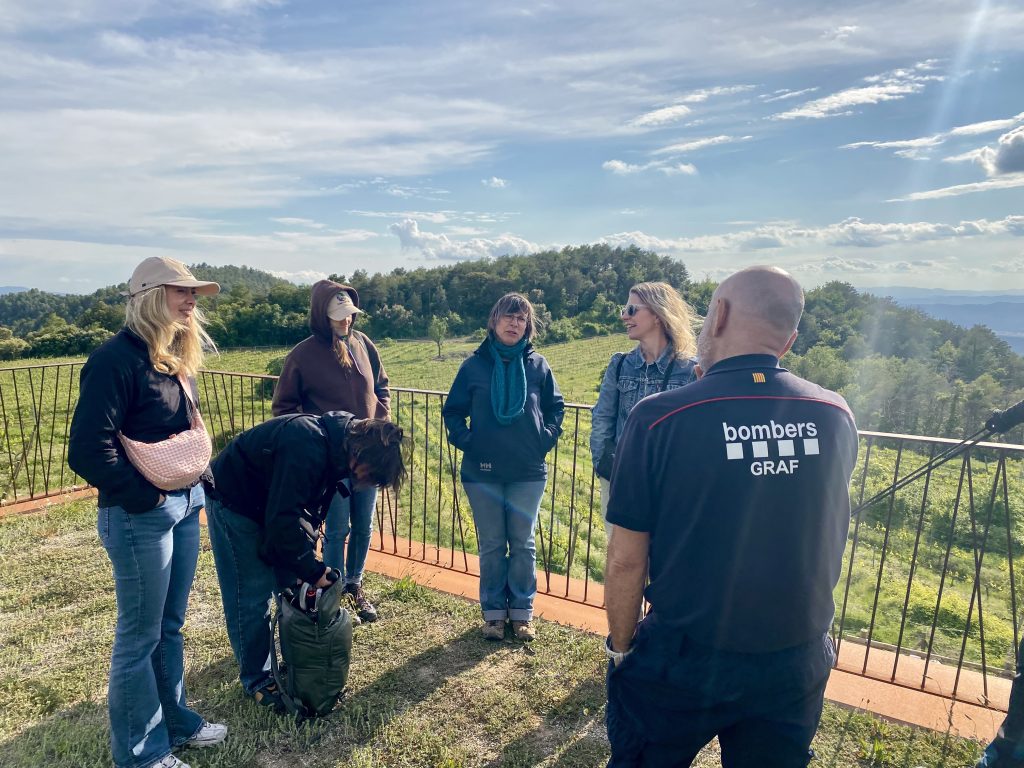
Final stop at St. Miquel d’Oló Farm, discussing the importance of mosaic landscapes for fire management
Asier Larrañaga, sub-inspector of the forest fire brigade and fire analyst, presented new approaches to landscape-level fire prevention, emphasizing the importance of collaboration between forestry and agriculture. Grazing, vineyards, and strategically managed forest areas can all contribute to more fire-resilient landscapes.
Winegrower Oriol Garriga offered a deeply personal perspective. When he and his family bought the property in 2013, they restored the house and planted vineyards using ecological farming methods. Yet fire risk remains his biggest concern.
For Oriol Garriga, maintaining people on the land is essential – not only for local economies, but also for socio-ecological resilience. Landscapes become vulnerable when they are abandoned. Producing and consuming local products, he argued, is part of sustaining both communities and ecosystems.
Oriol Garriga sharing the story behind his farm and why socio-ecological resilience matters
As the day ended and participants gathered overlooking the landscape, one thing became increasingly clear: the future of Mediterranean forests will not be shaped by forestry alone. It will depend on cooperation between scientists, forest owners, conservationists, farmers, businesses, policymakers, and local communities.
The Moianès Living Lab does not offer simple answers. Instead, it creates space for experimentation, dialogue, and shared learning in a time when climate change is rapidly reshaping what forests need – and what society expects from them.
Local and international journalists interviewing Catalan forest owner Antoni Masferrer
In Catalonia a combination of ecological pressures and weakened forest stewardship is increasing fire risks and raising a key question: how can these forests remain resilient and viable?
To respond to this, Catalonia’s Moianès region is emerging as a testing ground for inclusive and place-based innovations. Here, integrative forest management approaches are being developed that combine wildfire prevention, biodiversity conservation, biomass use, and rural development – alongside new forms of collective governance adapted to fragmented ownership.
Together with our local Living Lab partners, we invited a small group of journalists to an immersive, on-site workshop in Moianès to explore these developments first-hand. Through exchanges with forest owners, researchers, NGO representatives, and local authorities, journalists gained grounded insights into how such approaches can work in practice.
Beyond showcasing these initiatives to journalists, the workshop was designed as a two-way dialogue – creating space to reflect on which narratives resonate, and how science and practice can better connect with media storytelling.
Over the coming weeks, we’ll share more insights from the workshop and highlight some of the innovative approaches stewarded within Catalonia’s Moianès region. Stay tuned!
The recent “Train the Trainers” event in Binzen, Germany, jointly organised by TRANSFORMIT project and the Integrate Network, and attended by Jonathan Spazzi (Teagasc) and Dermot Dunphy (DAFM), was instrumental to further bring the IBP survey methodology front and centre as part of the Irish Marteloscope workshops. As fully booked events, these workshop series showcase the current interest in Ireland to learn more about the integration of biodiversity conservation into management practices and, in particular, the Index on Biodiversity Potential. Here a blend of forest owners, practitioners and students are coming together to take part in frank and meaningful discussions.
So far, the feedback received is excellent, says Irish Integrate Network member representative Jonathan Spazzi. The organizers expect around 80 participants to be trained this spring with more planned to attend trainings in Autumn.
Through the Integrate Network and a range of research and development projects, including SimInForest and the TRANSFORMIT project, collaboration across Europe between educators and researchers is ongoing on how best to best promote and communicate new, integrative, and closer-to-nature management solutions and ensure that forest health and productivity can continue to provide essential services to society’s collective well-being.
A new contribution in the Italian forestry practice magazine Sheerwood is spotlighting the TRANSFORMIT project’s work as a promising step toward more measurable and integrative forest management. Presented by Silvia Bruschini, the article focuses on the set of 17 key indicators designed by TRANSFORMIT experts to help translate complex ecological processes into practical tools for decision-making.
Indicators play a crucial role in forestry, offering measurable insights into biodiversity, forest resources, and socio-economic benefits. According to the publication, our TRANSFORMIT framework provides both quantitative and qualitative parameters that allow managers to monitor forest conditions, assess the impact of human activities, and guide sustainable practices over time.
Developed through a participatory process, these indicators are scalable from stand to landscape level and aligned with EU policy goals such as the European Green Deal. The article highlights their potential as a valuable reference for forest planning in Italy, offering a shared, science-based foundation for managing increasingly complex forest systems.
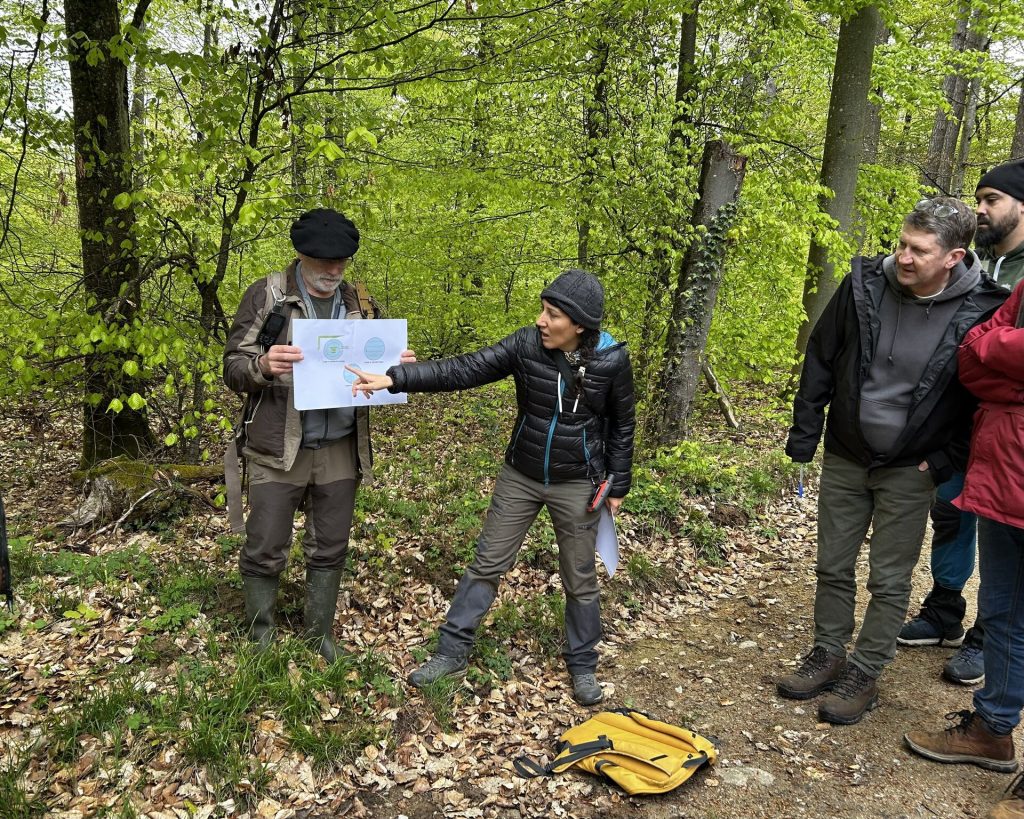
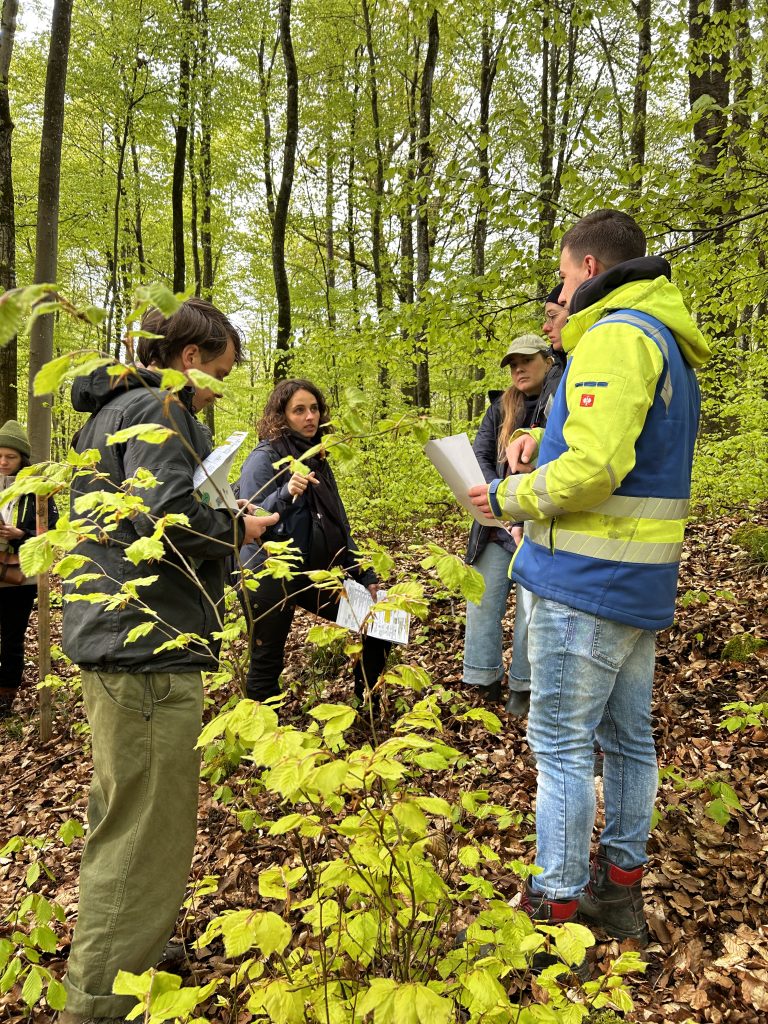
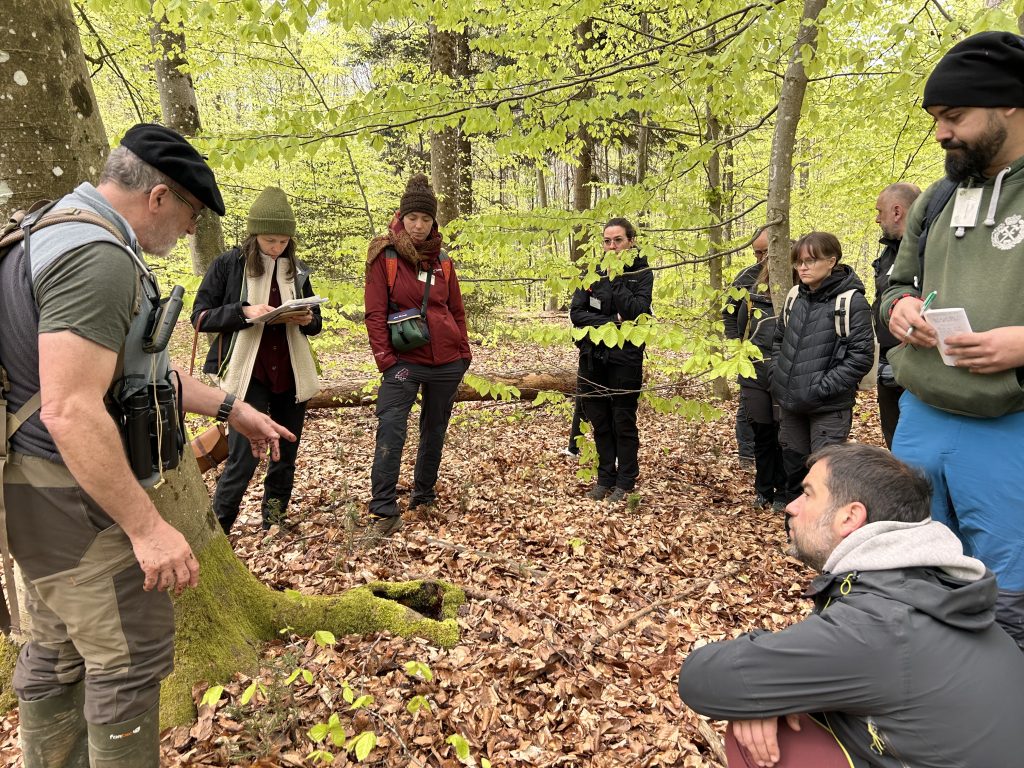
From 15–16 April, 30 forest practitioners, researchers, and representatives from 12 European countries gathered in Binzen, Germany, for a very special two-day workshop – the first-ever “Train the Trainers” event on IBP, organised by the Integrate Network in collaboration with the EU Horizon TRANSFORMIT Project. We specifically invited a small group of participants to allow for a real hands-on and interactive experience.
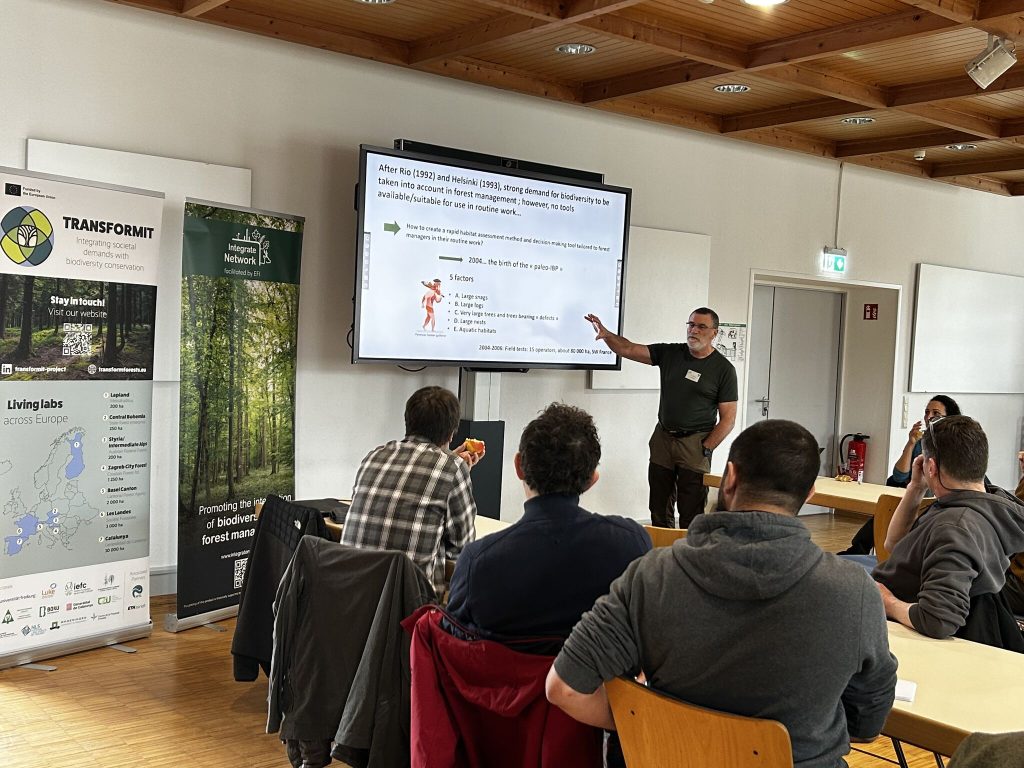
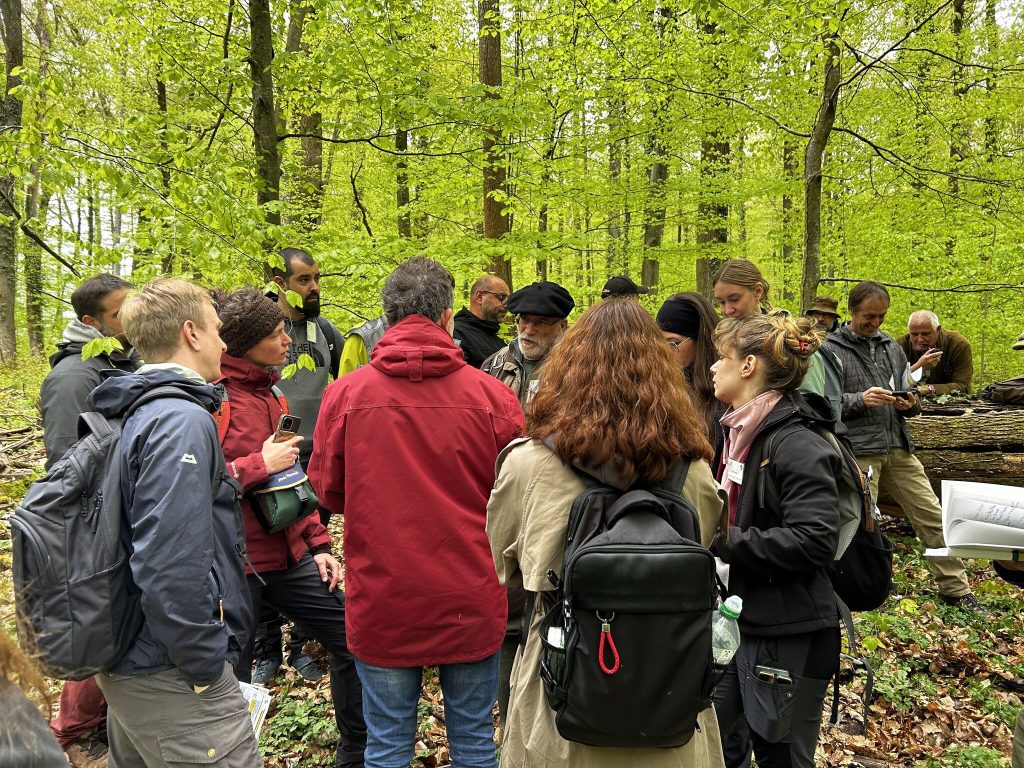
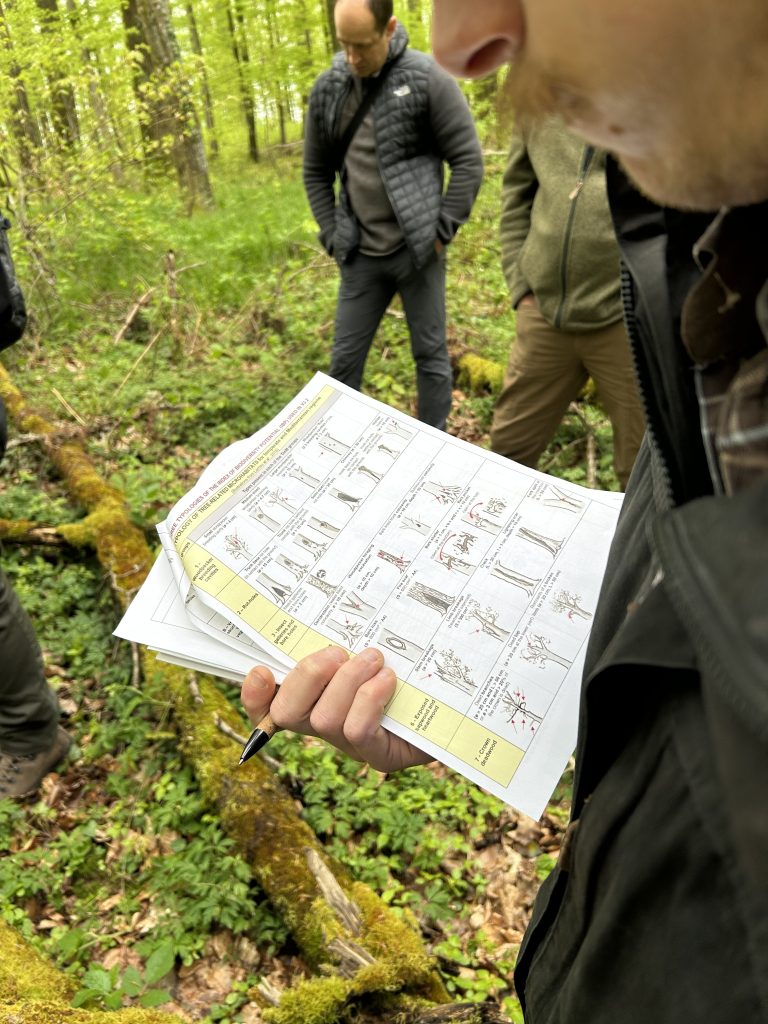
On the morning of the 15th, Laurent Larrieu (INRAE) and Pauline Marty (CNPF – Centre national de la propriété forestière) gave us in-depth insights into the science and development of the tool and its ten key factors of biodiversity. In the afternoon, theory was brought to life. In the forest, participants reviewed what had been discussed with real stands and conditions.
Our second day started in a marteloscope in Kandern – participants were split into four groups to test their knowledge and conduct the IBP survey at the forest site. Laurent and Pauline provided hands-on support throughout the exercise, and the local forest manager joined to share the history and management of the forest we were standing in.
Rich Q&As, deep group discussions, and diverse reflections from various national contexts and forest types across Europe – all of these made the exchange valuable, not only with the two trainers but also between participants.
Over the past two days, various participants shared with us their perspectives on the IBP, why the tool is relevant to their local context, and how they are hoping to bring the knowledge from the training back to their colleagues and forests.
With their commitment to bring the knowledge and application of the “Index of Biodiversity Potential” home, we’re grateful for the success of this first iteration of an IBP “Train the Trainers” event!
You could watch the afterevent video on the right to learn more about this event.
Curious to know more about the IBP? Dive into the topic through EFI’s “What is” series and stay tuned for our upcoming articles regarding the IBP, its potential applications, and our IBP “Train the Trainers” participants’ reflections on our two days together.
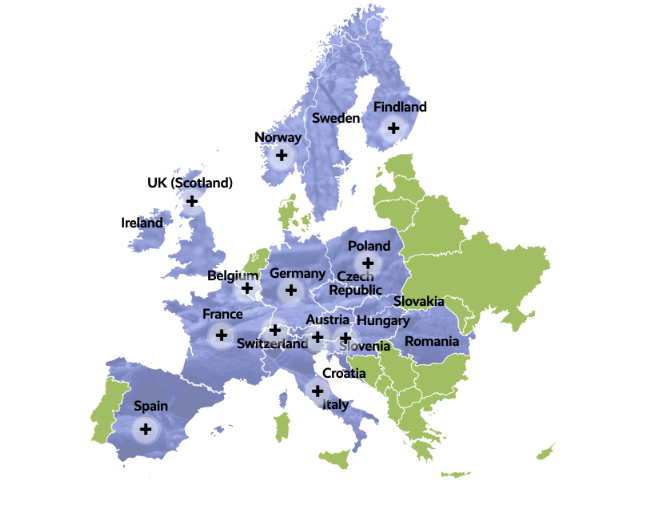
Across Europe, our unique network of TRANSFORMIT Satellite Demonstration Areas (SDAs) is bringing to life the diversity of forests, management traditions, and innovation pathways needed to address climate change. From Mediterranean landscapes to boreal forests and urban green spaces, these selected sites illustrate how locally adapted solutions can contribute to resilient, multifunctional forest systems. The SDAs aim at showcasing several good practice examples of Integrative Forest Management (IFM) across Europe, thus broadening the scope of expertise available and enlarging the IFM Network. These areas are now available on Main – Transformit.
Maps of TRANSFORMIT’s SDAs across Europe.
Close to Nature forest management in action
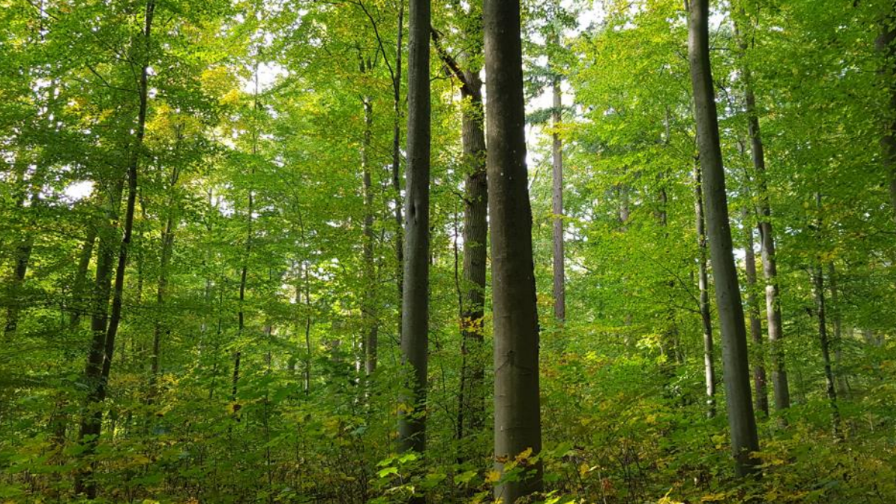
A beech forest in Kalebsberg, Germany.
Several German forest enterprises – including Schütt-Frank and Kalebsberg – demonstrate how close-to-nature forest management can build climate resilience. Their approaches emphasise natural regeneration, soil health, balanced wildlife populations, and stable forest microclimates. Together, they highlight a shift away from rigid management towards adaptive, self-regulating forest systems.
Forests for people: urban and social functions
In highly frequented landscapes such as the Kottenforst (Germany), the Sonian Forest (Belgium), and the City Forest of Baden (Switzerland), forests must balance recreation, biodiversity, and cultural heritage. These SDAs show how integrative management can meet societal expectations while maintaining ecological integrity. Innovative approaches like “ecosponsoring” in Switzerland further demonstrate new forms of collaboration between society and forest stewardship.
Multifunctionality across Europe
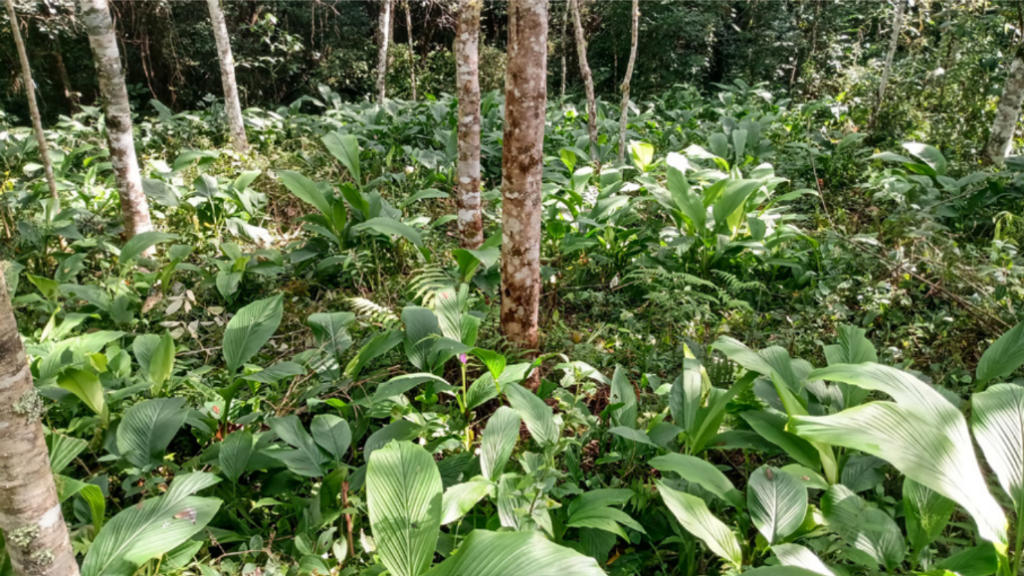
Agroforestry. Tree vegetation has established itself in an abandoned plantation with Turmeric (Curcuma longa) – Abbey St Bathans UK-Scotland Dobie family, Scotland.
From Scotland’s Abbey St Bathans to Slovenia’s Pahernik Forest and Norway’s Vestland region, forests are managed to deliver multiple ecosystem services. While timber production remains important, these SDAs also support biodiversity, cultural values, and education. In Poland’s Woziwoda Forest District, this balance is captured through the principle of “nature protection through moderate and rational use.”
Mediterranean innovation and adaptation
Our Southern Europe’s demonstration areas highlight innovation under climate pressure. In Spain, forests such as Vall d’en Bas and Ribera Salada explore how to combine biodiversity conservation with high-quality wood production, while others integrate fire as a natural and necessary management component. In Italy and France, sites like Val di Susa, Pratomagno, and Hèches focus on multifunctional forestry – balancing production, protection, and long-term ecosystem resilience in the face of climate change and biodiversity loss.
Forests for research and education
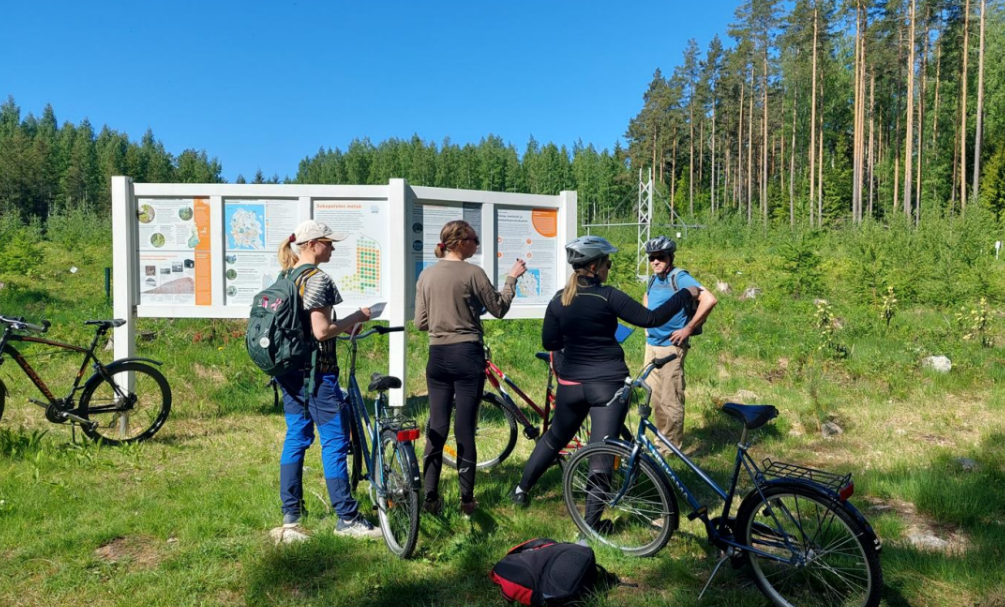
Training/Education at Punkaharju Research Park, Finland.
Some demonstration areas serve as centres for research and education, such as the Punkaharju Research Park in Finland, the University Forest Enterprise in Zvolen, Slovakia, and Universitätsforstamt Sailershausen in Germany. These sites connect science, practice, and society, ensuring that forest management is continuously informed by evidence and innovation.
By connecting these sites, TRANSFORMIT creates a living network of knowledge and practice, demonstrating that there is no single solution to climate and biodiversity-related challenges but many locally grounded pathways that, together, shape a more sustainable future for Europe’s forests.
The BOKU article for the International Day of Forests, written in German and accessible here, highlights how sustainable forest management can reconcile wood production, climate protection, and biodiversity conservation, using the Austrian Living Lab Wegscheid as a real-world testbed for new integrative practices. It showcases how Integrative Forest Management approaches – such as ecological landscape management, coordinated monitoring of habitat structures, and multi‑stakeholder Living Labs – operationalise the TRANSFORMIT vision of connecting use and conservation across Europe in practice.
At the beginning of October 2025, as the first hints of autumn brushed the forests of East Asia, a small team from Wageningen University & Research embarked on a journey deep into China’s diverse forest landscapes. Georg Winkel, Wenyuan Liang, and Lorenz Schimetka of the Forest and Nature Policy Group joined forces with Douglas Sheil from the Forest Ecology and Management Group. They traveled with a shared mission: to strengthen international scientific collaboration and learn from China’s evolving approaches to Integrated Forest Management (IFM).
“Our objective was simple but ambitious,” Lorenz Schimetka noted. “We wanted to understand how integrated forest management works in practice in China, and what Europe and China can learn from one another.”
Their hosts, the Chinese Academy of Forestry (CAF) and the Chinese Academy of Sciences (CAS), welcomed the delegation as part of an ongoing EU-China collaboration between the EU-TRANSFORMIT project and a Chinese research consortium. Both sides are united by the belief that forests must serve multiple purposes at once: conserving biodiversity while delivering a broad suite of ecosystem services, from climate regulation to livelihoods.
The journey’s first destination was Zhejiang Province, where on October 3 the team stepped into the serene expanses of Qianjiangyuan National Park. Mist clung to the slopes of one of China’s last remaining low-altitude subtropical evergreen broad-leaved forests. These woods are more than just ecologically important. They are a refuge for rare species like the elusive black muntjac and the white-necked long-tailed pheasant.
Standing among the ancient trees, one visitor reflected, “Here, conservation is not an add-on, but it is the core of forest governance.” The team observed a management philosophy centered firmly on protection, where biodiversity conservation defines decision-making rather than competing with it.
Lessons in the Xiaolongshan Mountains, Gansu Province
Three days later, on October 5, the researchers found themselves in a very different forest world. The Xiaolongshan mountains rise across the watersheds of the Yangtze and Yellow Rivers, forming a key ecological corridor rich in biodiversity and a focal point for China’s major reforestation efforts.
Walking through the forest, the group found themselves in lively discussions debating trade-offs, comparing policy realities, and recognizing how many of the challenges faced in China echo those in Europe. “Some policy trade-offs we see here are surprisingly familiar,” Georg Winkel remarked. “Sometimes forests pose similar challenges, whether in China or Europe.”
A meeting of minds in Beijing
On October 7, Beijing became the setting for a hybrid workshop at the Chinese Academy of Sciences. As scholars gathered in person and online, the Wageningen team stepped forward one by one to share their work.
Prof. Georg Winkel presented work on human–nature relationships and forest governance in Europe, offering insights into Europe’s ongoing debates on IFM.
Prof. Douglas Sheil spoke about the crucial role of large expanses of natural forest in sustaining the global water cycle and climate stability, emphasizing conservation that supports both ecosystems and local communities.
PhD candidate Lorenz Schimetka presented a global literature review examining how integrating biodiversity into production forests affects profitability and the uncertainties that still remain.
Dr. Wenyuan Liang explored China’s policy landscape, revealing how IFM is molded by international influences, national priorities, economic considerations, and the forest tenure system.
Online contributions expanded the dialogue further. Presentations from Dr. Marko Lovric and PhD candidate Marnix van de Sande (WUR), as well as Dr. Valentina Vitali (ETH Zurich) and Dr. Stefanie Linser (University of Natural Resources and Life Sciences, Vienna), connected perspectives from across Europe. Chinese scholars, including Prof. Xiangdong Lei, Dr. Yanfeng Bai, Prof. Yongqi Zheng, Prof. Yi Ding, Dr. Chaofan Zhou, Prof. Yi Xie, Dr. Weiye Wang, Prof. Xinlian Liang, and Dr. Zhiwen Gong, added equally rich insights from ongoing work across China’s forests.
Closing the journey in Beijing
Before returning home, the team made two final academic contributions. On October 8, Georg Winkel delivered a lecture for junior scholars at Renmin University of China. A day later, he opened the IUFRO Conference on Integrated Forest Governance, Policy and Economics with a keynote speech, helping frame the international discussions that followed.
The trip left the Wageningen delegation inspired by what they had seen and learned: new approaches, shared challenges, and the promise of continued collaboration. “What stood out most,” Georg Winkel concluded, “was not how different our contexts are, but how aligned our questions have become.” The hospitality of their Chinese hosts, and the rich exchange of ideas, set the stage for the next chapter: a return visit to Europe by Chinese partners planned for the coming year.
For now, the story continues to unfold, carried forward through the forests of both continents.