The forest that refused the rulebook

How a Czech forester challenges conventional approaches to forest restoration

by Gesche Schifferdecker (European Forest Institute)

What is the “right” thing to do with a forest after a disturbance? How do different groups define a “healthy” forest? When does intervention feel necessary – and when might non-intervention be the better choice? These questions brought us together with seven international and Czech journalists to visit a very special forest site called Velká Bíteš in the Monravia region, Czech Republic.

Joined by researchers, policy makers and forestry practitioners, we wanted to explore scientific, managerial, ecological, and societal perspectives to better understand and respond to changing forests. On a sunny early-autumn day, our local guide and forest manager, Jiří Nohel, provided us with an insightful excursion to several stops, where every forest stand told its own story.

First stop: conventional disturbance management

Eight years ago, a bark beetle outbreak swept through this part of the Czech landscape – an area formerly dominated by spruce and pine forests, which used to be economically successful for decades. We started our excursion with a visit of a site that was not managed by Jiří but dealt with in a more conventional way: Much of the area was clear-cut after the disturbances, followed by an expensive effort to replant it. More than €20,000 per hectare was spent on reforestation here, Jiří told us. However, the first thing we noticed was how difficult it was to call this area a forest. Besides some standing spruce deadwood, we could see mostly grass. Some planted beech trees stood there rather alone – they had suffered from the drought and heat this year – and as a shade-dependent species, generally struggled in these open, dry conditions. “From an ecological perspective, this simply is not a good place for these species to thrive,” said Jan Hofmeister, assistant professor and forest ecologist from the Czech University of Life Sciences.

Standing here with Jiří and the group of people from across the world, we began to understand that the story was not really about a drought that was followed by bark beetle attacks. Rather, it was about how we may respond to disturbances, once they happen to our landscapes.

“Nature lives in cycles,” was the message we took away from our conversation at the first excursion stop. Yet forestry in Czechia had tried to break those cycles, Jiří emphasized. As a forest manager, he looked at the forest disturbance problem differently from the more conventional forestry model. And, more importantly, he had been willing to act on that difference.

Second stop: deadwood for life

At our second stop, the contrast was striking. This land belongs to seven communities and the city and is managed by Jiří. Around 70 percent of the forest was logged after the bark beetle calamity. However, at the time, in 2019/2020, damaged trees could be sold for as little as €5 each. Jiří made an unusual decision: rather than investing heavily in tree planting, also called “artificial regeneration”, he left much of the forest to regenerate naturally.

This decision was not popular.

For several people accustomed to managing forests through planting, clearing and controlling, simply leaving the forest alone looked like neglect. Jiří was worried he would regret his decision: “I have been praying that it would work”. Eight years later, there was no remorse, but pride that he managed to stick to his plan.

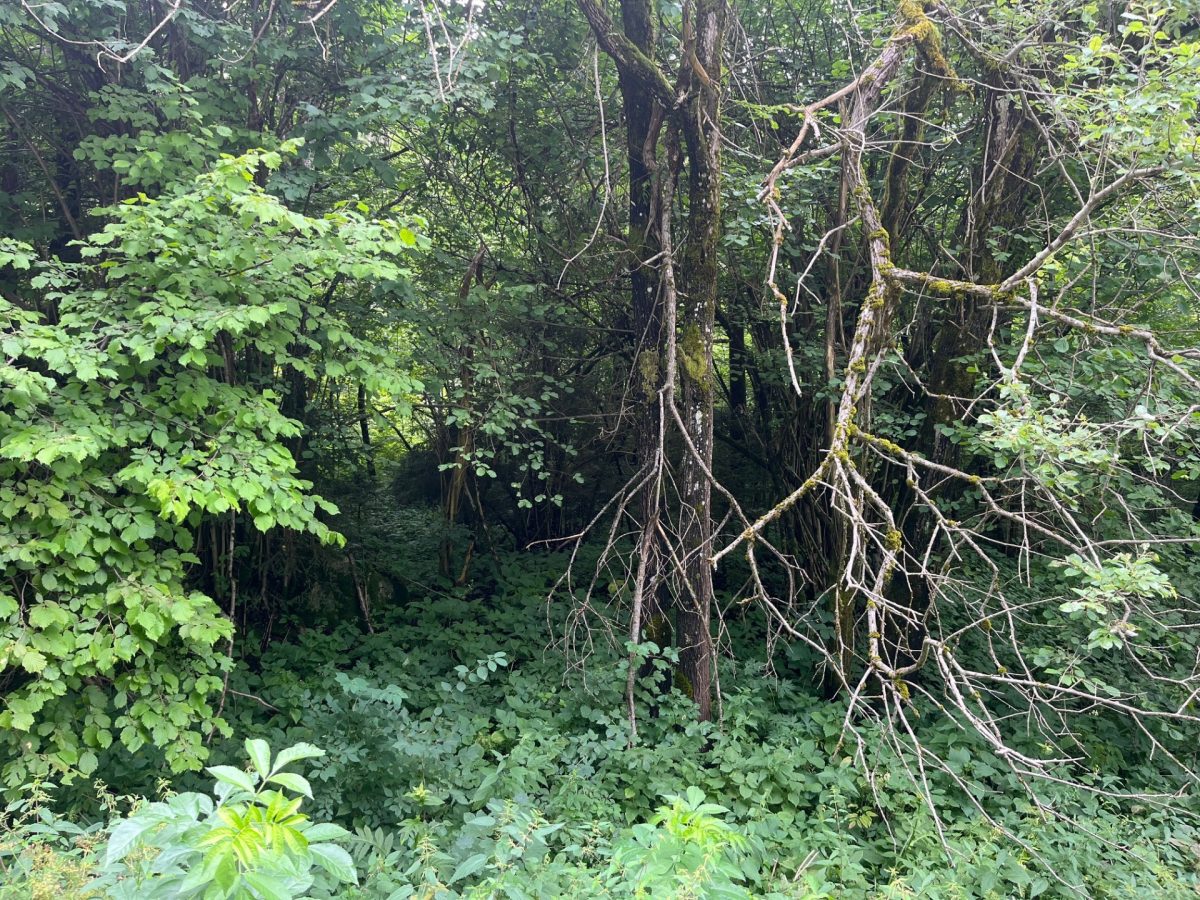
On that site, Birch had taken the lead. Young broadleaf trees were emerging beneath it. The forest was becoming more structurally diverse, and with that diversity came greater resilience to drought, said Jiří. Dead trees stood and laid across the landscape. At first glance they looked like waste. But Jan explained their role: deadwood stores carbon, feeds ecosystems and creates habitat. Birds use the dense birch layer. Browsing animals like row deer encounter natural obstacles. This enables for example little oaks to grow, whose leaves would have otherwise been eaten.

We also discussed some trade-offs: standing deadwood is dangerous for people to walk past, as it can fall at any moment. Hence, this forest was not inviting us to enter. “But maybe humans can accept that every now and then – for the forest to thrive”, said Miroslav Svoboda, Professor for Forest Ecology at the Faculty of Forestry and Wood Sciences, Czech University of Life Sciences Prague and scientific supporter of Jiří’s work. For upscaling this approach the safety issues for visitors might be a hurdle – but we did wonder: when seeing and being educated on the value of deadwood for nature to truly recover, may humans accept such a limitation in certain locations?

Third stop: a haven for biodiversity

At the third stop, Jiří ‘s experiment felt even more radical. In a community of only 50 inhabitants, he asked local decision makers to trust his approach. Instead of removing every spruce affected by the bark beetle, he left them standing.

Now the results were visible everywhere.

Birch, willow, oak, beech, ash, cherry and silver fir were appearing naturally. Jiří’ said that lynx and wolves have been spotted, and that locals identified a big owl moving through the landscape. Later, we learned that all the maple and oak trees across this 40-hectare area originated from just two maple and two oak trees. Nature, it seems, has its own surprisingly efficient distribution system.

In general, Jiří calls for horses and tractors rather than intensive machinery where possible, and plans to leave around 20 percent of trees after harvesting to decay and provide havens for biodiversity. When talking about harvesting, Jiří made clear: his decision not to intervene was also an economic one. He wanted to save costs both for the state and the local community, costs for wood extraction and replanting. However, his approach to forest management is also aimed at wood production, with an integrative approach to simultaneously promote biodiversity and forest resilience.

Walking through the forest, we realized that Jiří ‘s approach was not really “doing nothing.” He had chosen not to fight natural processes, but to work with them.

Forth stop: into the wilderness

At our final stop, every few metres seemed to reveal another surprise. “This forest society is overflowing with life,” Jiří said, proud and smiling. It was obvious: pine trees at the top level, standing deadwood everywhere, young birches, maples and cherries, five-metre-high trees that did not exist here a few years ago, and even a black stork nest. It was the “wildest” forest many of us had ever seen. “This is one of the very few forests in the Czech Republic where no salvage-logging took place”, Miroslav told us. He also shared an anecdote that he had visited this forest with managers who follow a “close-to-nature” approach. “This forest was way too wild for them,” the professor laughed.

Finally, our guide left us with some food for thought: “Although timber is a great material and resource, everything that we use for living is over-dimensional,” Jiří said. This is why he is an advocate of a circular, bio-based economy and zero-growth.

When we left the forest, I suddenly had the feeling that Jiří’s most remarkable quality is not that he knows exactly what the forest will become. It is that he is prepared and willing to give it enough space to find out for itself.

Media Study Trip to Velká Bíteš leads to four Czech media reports on forest recovery after disturbance

On 1 October 2026, as part of the 2nd TRANSFORMIT Media Study Trip, journalists travelled to Czechia to explore practices of post-disturbance forest management at our Velká Bíteš Satellite Demonstration Areas (SDA). We are happy to share that the trip has already resulted in four reports in Czech media:

This workshop was organised by the European Forest Institute and the Czech University of Life Sciences Prague with the local partner at Velká Bíteš SDA. Three international and five local journalists, including a team from Czech National Television, has joined this trip. Together they walked through forests affected by bark beetle outbreaks and spoke directly with researchers and forest managers. Jiří Nohel, manager of the community forests in Velká Bíteš, guided the group through the day, whereas Miroslav Svoboda and Jan Hofmeister from CZU provided scientific input. The mayor of Velká Bíteš, Ing. Markéta Lavická, also joined the excursion.

More insights from the study trip will follow soon, and we will share further stories as they appear!

When knowledge travels, collaboration grows

24 September 2026 | Našice, Croatia

What happens when a new approach to understanding forest biodiversity moves from the training room into the forest itself? In Našice, Croatia, participants from forestry and nature conservation came together to find out.

On 24 September, the first national Integrative Biodiversity Potential (IBP) workshop in Croatia brought together 19 experts from different organisations and backgrounds. The workshop was organised by the Croatian Forest Research Institute and Unique Forests Ltd., which represents the Croatian Satellite Demonstration Area (SDA) in TRANSFORMIT.

The workshop built directly on the IBP train-the-trainer event in Binzen, Germany, where five Croatian trainers had learned how to introduce the methodology to colleagues and stakeholders at national and local level. Now, it was time to put that knowledge into practice.

Learning to see the forest differently

The day began at the premises of Unique Forests Ltd., where participants were introduced to TRANSFORMIT and the IBP methodology. Martina Kičić from the Croatian Forest Research Institute explained the different factors used to assess the biodiversity potential of a forest.

But the real learning started when the group left the meeting room and headed into a nearby forest.

Together with trainers Martina Kičić and Karmen Vugdelija, participants worked through the IBP factors in the field, discussing what to look for and how different features of the forest contribute to its biodiversity potential. They then had the opportunity to carry out their own assessments on two selected plots.

This hands-on approach sparked lively discussions throughout the day. Participants brought perspectives from forest management, protected area management and nature conservation, creating an opportunity to explore how the methodology could be useful across different parts of the forest sector.

From a workshop to future cooperation

The workshop brought together representatives of Croatian Forests Ltd., Unique Forests Ltd., the Public Institution for the Management of Protected Areas and Other Protected Natural Values in the City of Zagreb, and the Public Institution Nature Park Žumberak–Samoborsko gorje, alongside experts from the Croatian Forest Research Institute.

This mix of perspectives was one of the workshop’s strengths. Rather than simply introducing a new assessment method, the day created space for participants to exchange experiences, ask questions and consider how IBP could be applied in the Croatian context.

It also highlighted the wider value of the TRANSFORMIT network. The collaboration between the Croatian Forest Research Institute and Unique Forests Ltd. grew through TRANSFORMIT activities and provided the foundation for bringing the IBP methodology to a wider group of Croatian stakeholders.

From training trainers to assessing forests together, the first national IBP workshop marks an important step towards making biodiversity a more integrative part of forest management in Croatia.

From local concerns to joint solutions: co-creating the future of Tuchola’s forests 

For people living next to the Polish forests of Tuchola, the forest is part of everyday life. It is a place for walking, recreation and connecting with nature – but it also provides shade, reduces noise and wind, and contributes to the quality of the local environment. With a bypass planned near one residential neighbourhood, these functions have become even more important to local residents. 

In March 2026, residents approached the Tuchola Forest District with a clear request: they wanted the forest directly adjacent to their homes to be recognised as a “social forest” and managed in a way that would preserve its recreational and protective functions. In particular, they asked for partial cutting instead of clear-cutting. 

The request came at a time when the Tuchola Forest District was establishing a Local Cooperation Team to strengthen dialogue between those involved in, managing and using the surrounding forests. The Team brings together a diverse group of stakeholders: representatives from government administration and local authorities, the State Forests, national and landscape parks, primary and secondary schools, post-secondary and forestry education institutions, a university of life sciences, and civil society. 

This broad group creates a space where different perspectives and types of knowledge can meet – from professional forest management and nature conservation to education, local government and the everyday experience of people living next to the forest. 

From dialogue to practical solutions 

At the Team’s first meeting on 11 March 2026, participants agreed that informing the public about planned operations, consulting local communities and jointly exploring solutions can help build trust and address the different expectations placed on forests. 

The residents’ request was subsequently discussed at the Team’s meeting on 23 March. Together, participants identified forest areas that were particularly important to local residents and discussed possible management approaches. One outcome was a recommendation to reclassify around 10 hectares of forest immediately adjacent to residential areas from commercial timber stands to forests serving a social function – so-called “social forests”. 

The dialogue then moved from the meeting room into the forest itself

During an on-site meeting in May, residents whose properties border the forest met with representatives of the Tuchola Forest District to discuss the planned operations. The participants looked at the area together and discussed the differences between clear-cutting and partial cutting. The Forest District had already decided to replace clear-cutting with partial cutting in the relevant area, while also explaining the safety requirements that meant mature trees within approximately 15 metres of private properties would still need to be removed. 

The planned bypass added another layer of complexity. While trees in the southern part of the area will need to be removed because of the road construction, the remaining forest can continue to play an important protective role for nearby residents. The discussion therefore focused not only on which trees would be removed, but also on how the forest could continue to provide social and protective functions afterwards. 

Together, the participants agreed on a set of practical principles for future management. These include: 

  • maintaining a 15-metre safety strip along residential boundaries, with the possibility of reducing it to 10 metres in specific cases; 
  • protecting seedlings and undergrowth during forestry operations; 
  • using existing trails for timber extraction; 
  • carrying out partial cutting in a way that maintains the forest’s protective function against noise from the planned bypass; 
  • creating an ecotone zone along residential plots, with residents involved in selecting and planting suitable species; 
  • avoiding harvesting, extraction and soil preparation during designated quiet hours; and 
  • applying the same principles to subsequent management operations, subject to their inclusion in the forest management plan for the coming decade. 

Integrating different perspectives on the forest 

The experience in Tuchola shows how stakeholder dialogue can translate different perspectives into practical forest management solutions. Residents bring their everyday experience of the forest and its importance for their quality of life. Forest managers contribute knowledge about silviculture, safety and sustainable management, while local authorities, protected-area managers, educational institutions and civil society bring additional perspectives on the wider social and environmental role of the forest. 

The process does not remove the trade-offs between different forest functions. Instead, it provides a space to discuss them openly and explore how ecological, social and economic objectives can be considered together. 

For TRANSFORMIT, this is an important part of Integrative Forest Management in practice: bringing different stakeholders into the process, combining different forms of knowledge and working together to adapt forest management to changing local needs and conditions. 

The Tuchola experience also highlights the value of building dialogue before decisions are made – creating opportunities for stakeholders not only to respond to forest management, but to help shape solutions for the future. 

Valuing Diversity: What does biodiversity conservation mean for the financial performance of production forests?

How does integrating biodiversity conservation into forests managed for wood production affect their financial performance?

A new study from the TRANSFORMIT project examines this question through a systematic review of the available evidence, exploring where conservation measures create financial trade-offs, where they can generate synergies, and how much the results depend on the way costs and benefits are assessed. 

The review has screened a total of 5,305 publications, resulting in the selection of 53 most relevant studies across 15 countries, covering 814 conservation scenarios and a wide range of measures, including longer rotation periods, deadwood retention, habitat and veteran trees, reduced fragmentation, continuous-cover forestry and greater tree species diversity. 

What does the evidence show?

What does the evidence show? 

Across the studies reviewed, integrating biodiversity conservation into wood-production forests was associated with a slight average reduction in financial performance compared with business-as-usual management. However, the picture is far from uniform. The financial effects varied considerably depending on the conservation measure, forest biome, regeneration system and the assumptions used in the financial models. 

Importantly, the review shows that what is included in the financial assessment can substantially change the results. When biodiversity benefits were considered, conservation scenarios were on average 19.7% more financially favourable than business as usual. When such benefits were not included, they were on average 22.2% less favourable. 

These benefits can take different forms, including the insurance value associated with more biodiverse and hence resilient forests, improved timber quality or quantity, reduced operational costs and additional income options e.g. through payments for ecosystem services. Such benefits were however only (partially) included in about half of the existing financial assessments. 

Trade-offs and potential synergies

The findings also highlight that the financial implications cannot be separated from the specific conservation approach. Some measures, such as deadwood promotion and habitat or veteran tree retention, were frequently associated with financial costs, particularly where they were modelled primarily through reduced timber production or additional management costs without consideration of potential benefits. 

Other approaches showed potential for financial synergies under certain conditions. For example, continuous-cover forestry and increased tree species diversity were associated with more favourable financial outcomes in some analyses but not in all. 

The review also points to important differences between forest contexts. Conservation measures were associated with more positive financial outcomes in tropical forests, while average effects were more negative in temperate and boreal forests. Similarly, results differed between naturally and artificially regenerating forests, with reduced profitability in former and increased profitability in the latter. 

The role of uncertainty

A key message of the review is that financial assessments of biodiversity conservation are strongly shaped by assumptions. All of the included studies relied on modelling, and only around half applied sensitivity analyses to explore uncertainty. 

Factors such as discount rates, timber prices, costs, forest growth and disturbances can however substantially influence the results. Climate-related disturbances were explicitly considered in only four of the 53 studies, despite their potential to change the financial implications of different management strategies drastically. 

The authors therefore call for more transparent assumptions, broader consideration of biodiversity and ecosystem-service benefits, and more empirical, long-term evidence to complement model-based assessments. 

Why this matters for integrated forest management

The study is part of TRANSFORMIT, which explores how forests can be managed to strengthen biodiversity, ecosystem services and resilience while maintaining their capacity to provide wood and other benefits. 

The review provides an important evidence base for this work. It shows that biodiversity conservation and wood production cannot simply be understood as opposing objectives: the financial implications depend on the conservation measure, forest context and which costs and benefits are taken into account. 

Understanding both trade-offs and  synergies is essential for developing more integrated approaches to forest management, as well as policy instruments that support both the use of synergies and the mitigation of trade-offs. 

Read the full paper: Schimetka, L.R., Hoogstra-Klein, M.A., Konczal, A.A. et al. Valuing Diversity: A Systematic Review of the Financial Impacts of Biodiversity Conservation in Forests Managed Primarily for Wood Production. Curr. For. Rep. 12, 27 (2026). https://doi.org/10.1007/s40725-026-00288-6

Integrative Forest Management indicators in Italian practice magazine

A new contribution in the Italian forestry practice magazine Sheerwood is spotlighting the TRANSFORMIT project’s work as a promising step toward more measurable and integrative forest management. Presented by Silvia Bruschini, the article focuses on the set of 17 key indicators designed by TRANSFORMIT experts to help translate complex ecological processes into practical tools for decision-making.

Indicators play a crucial role in forestry, offering measurable insights into biodiversity, forest resources, and socio-economic benefits. According to the publication, our TRANSFORMIT framework provides both quantitative and qualitative parameters that allow managers to monitor forest conditions, assess the impact of human activities, and guide sustainable practices over time.

Developed through a participatory process, these indicators are scalable from stand to landscape level and aligned with EU policy goals such as the European Green Deal. The article highlights their potential as a valuable reference for forest planning in Italy, offering a shared, science-based foundation for managing increasingly complex forest systems.

Read the article (in Italian) here: Gestione forestale integrata: gli indicatori TRANSFORMIT – Rivistasherwood.it

One framework, many forests: Integrative Forest Management as a shared language for Europe? 

by Shanqing Gao & Valentina Vitali

Forests in Europe are at a crossroads. Climate change is reshaping disturbance regimes, biodiversity is declining, and societies are demanding more from forests than ever before: timber, carbon storage, clean water, recreation and habitat for wildlife, all at once. Against this backdrop, forest managers are navigating a crowded landscape of concepts, frameworks and acronyms, each offering a different answer to the same fundamental question: What does it actually mean in practice to manage a forest well – that is, to provide the services societies need while at the same time strengthening the forests’ resilience and preparing them for the future? 

A new paper “Perspective: Managing European forests for biodiversity conservation and global change adaptation: An assessment of current management concepts” published in Forest Ecology and Management by Valentina Vitali and colleagues (2026), developed within the TRANSFORMIT project, takes a step back to make sense of this complexity and offers a structured way forward. 

Spruce forest affected by bark beetles. Bohemian Paradise, Czech Republic.

What has been missing? 

Forest management concepts have multiplied over the past decades. Some of these names you might have heard before: Close-to-Nature Forest Management, Continuous Cover Forestry, Climate-Smart Forestry, Retention Forestry… But as noted in the paper, many of these approaches have remained “largely at the stand scale, even for ecosystem services that inherently depend on landscape-level processes”. Biodiversity elements, such as deadwood, habitat trees and rare species were frequently overlooked. Landscape connectivity was rarely part of the conversation. 

Today, the pressures are sharper, and the expectations are higher. EU policies on climate, biodiversity and the bioeconomy pull forests in multiple directions at once. Intensive management can reduce adaptive capacity by simplifying stand structures and shortening rotation lengths. Meanwhile, research consistently shows that structurally diverse, species-rich forests are far better buffered against the more frequent and more severe natural disturbances caused by climate change. 

What has been missing is not more concepts but more operational clarity. Many existing frameworks “articulate clear aspirations and guiding principles but lack fully developed, standardized operational guidelines”. Without that clarity, forest management approaches face the risk of remaining theoretical but having limited real-world impact on forests. 

What is Integrative Forest Management (IFM)? 

IFM is not a new idea. First conceptualized by Daniel Kraus and Frank Krumm in 2013 and further developed since, it has long been understood as a holistic approach that aims to integrate nature conservation and adaptation to global change into sustainable forest management. Within TRANSFORMIT, we refined and operationalized it into a working definition: 

“Integrative Forest Management aims at integrating biodiversity conservation and global change adaptation into forest management for the sustainable provision of multiple ecosystem services. It is guided by natural and diverse forest structures, compositions, and dynamics to support ecosystem functioning and resilience. Its management practices consistently consider the tree, stand, and landscape scale and employ different silvicultural intensities, including intentionally unmanaged forest patches.” 

In short, IFM is not a prescription for what a forest must look like. It is a framework that can be adapted to local ecological realities, management traditions and governance contexts, while keeping biodiversity and resilience at the center. 

In practical terms, this definition is structured around 8 guiding principles: 

 Principle What it means in practice 
1 Retention of habitat trees, special habitats, and deadwood Actively identifying, mapping, and retaining old trees, deadwood, and valuable habitats, not just what regulation requires, but beyond it 
2 Promoting site-adapted native tree species Prioritising native species suited to local conditions, while allowing climate-adapted non-native species in minority shares 
3 Promoting natural tree regeneration Favouring natural regeneration where possible, monitoring herbivore pressure, and protecting pioneer species in the landscape 
4 Partial harvest and structural heterogeneity Favouring selection harvesting over clear felling to maintain complex, uneven-aged stand structures 
5 Promoting tree species variation and genetic diversity Actively managing for diverse species mixtures aiming for a minimum of three tree species per stand and diverse provenances 
6 Avoidance of intensive management operations Limiting agrochemical use, constraining machine traffic to fixed extraction networks, retaining deadwood after salvage logging, and protecting watercourses 
7 Supporting landscape heterogeneity and functioning Planning explicitly for habitat connectivity, protection of rare habitats, and linkages between forested and non-forested areas at the landscape scale 
8 Managing factors that hinder ecosystem functioning Actively controlling invasive species and integrating natural disturbance processes, such as fire, storms, pest outbreaks, into management planning to build resilience 

How do existing concepts measure up? 

With this framework established, the paper undertakes a structured comparison of eight widely used European forest management concepts: Continuous Cover Forestry (CCF), Close-to-Nature Forest Management (CNFM), ProSilva, the Stepping Stone Concept (SSC), Retention Forestry (RF), TRIAD, Climate-Smart Forestry (CSF), and Closer-to-Nature Forest Management (CerNFM). 

Figure 1: Overview of IFM-related concepts investigated. Each cell presents the concept’s abbreviation and a brief description. (Vitali et al., 2026) 

As shown in the graph below, all eight concepts show some degree of alignment with IFM principles, at the level of broad principles, most cover at least half. But when assessed against the more specific operational attributes – the how, not just the what – the picture shifts considerably: existing concepts cover less than 40% of IFM’s desired attributes overall. 

Figure 2: Spider-grams showing how each management concept aligns with the principles of IFM. (Vitali et al., 2026) 

It is worth noting that this is not a ranking. Each concept has strengths that reflect its own origins and context. The more productive insight is that these concepts are complementary. IFM, as a common framework, makes that complementarity visible and actionable. As the paper puts it, by using IFM as a benchmark, the study helps “close gaps between high-level management goals and their practical implementation” through “a transparent dialogue between science, practice, and policy”. 

To show what IFM implementation can look like over time, the paper includes an illustrative transition pathway for disturbance-prone Norway spruce monocultures affected by drought and bark beetles. It emphasizes that some benefits (e.g., using existing deadwood as habitat) can start immediately, while others (e.g., developing habitat trees or achieving structurally diverse mixed stands) take decades, requiring staged planning across short-, medium-, and long-term horizons (Figure 3). 

Figure 3: From spruce monoculture to resilient forest: the timeline shows how Integrative Forest Management (IFM) actions unfold over decades through short-, mid-, and long-term actions that strengthen biodiversity, climate resilience, and ecosystem services. 

A common framework for a shared challenge 

Integrative Forest Management will not manage the beech forests in central Europe and the boreal pinewoods in Scandinavia with the same approaches. Regional conditions, traditions, ownership structures and governance frameworks all shape what is possible. This context-sensitivity is exactly the key feature of the framework. IFM is, as the paper describes it, “a unifying but non-prescriptive concept that is capable of integrating diverse forest management objectives”. 

What it offers, above all, is a shared language: a structured way to have better conversations about forest management across scientific, policy and practitioner communities, and to identify honestly where existing approaches are strong and where the gaps remain. 

Within TRANSFORMIT, we are building on this foundation by developing indicators for IFM, testing implementation pathways via 7 Living Labs and over 30 Satellite Demonstration Areas across Europe, and working through networks like the Integrate Network, with its more than 200 demonstration sites across Europe, to connect science and practice in ways that can scale.  

The forests of Europe are facing pressures that will not wait. But with clearer thinking about what we are managing them for, and better tools for translating that thinking into action, we can manage them considerably better. 


Read more: Valentina Vitali (lead-author), Frank Krumm, Andreea Spinu, Florian Schnabel, Jürgen Bauhus, Agata Konczal, Lorenz Schimetka, Sebastian Schwegmann, Georg Winkel, & Andreas Rigling. (2026). Managing European forests for biodiversity conservation and global change adaptation: An assessment of current management concepts. Forest Ecology and Management, 611, 123698. https://doi.org/10.1016/j.foreco.2026.123698  

Diversity in Integrative Forest Management: our Satellite Demonstration Areas

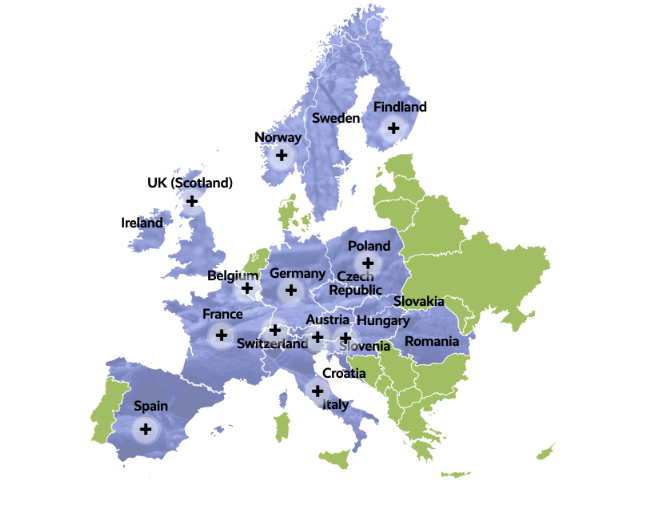
Across Europe, our unique network of TRANSFORMIT Satellite Demonstration Areas (SDAs) is bringing to life the diversity of forests, management traditions, and innovation pathways needed to address climate change. From Mediterranean landscapes to boreal forests and urban green spaces, these selected sites illustrate how locally adapted solutions can contribute to resilient, multifunctional forest systems. The SDAs aim at showcasing several good practice examples of Integrative Forest Management (IFM) across Europe, thus broadening the scope of expertise available and enlarging the IFM Network. These areas are now available on Main – Transformit.

Maps of TRANSFORMIT’s SDAs across Europe.

Close to Nature forest management in action

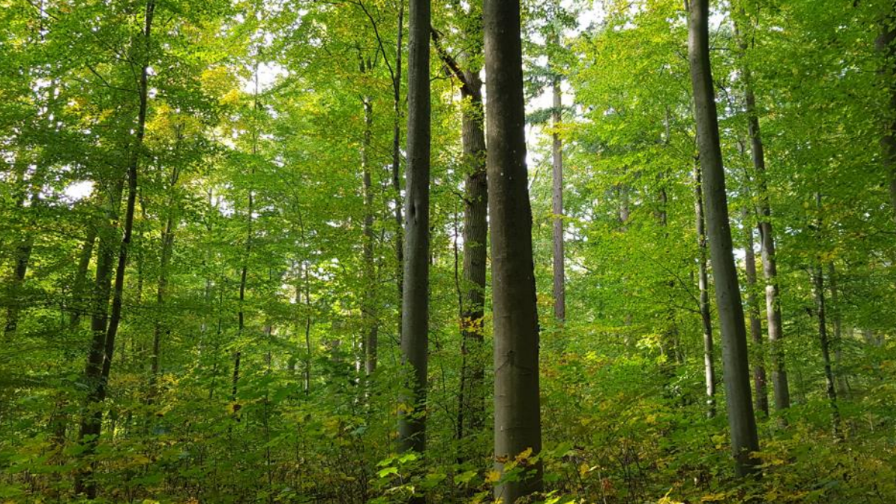
A beech forest in Kalebsberg, Germany.

Several German forest enterprises – including Schütt-Frank and Kalebsberg – demonstrate how close-to-nature forest management can build climate resilience. Their approaches emphasise natural regeneration, soil health, balanced wildlife populations, and stable forest microclimates. Together, they highlight a shift away from rigid management towards adaptive, self-regulating forest systems.

Forests for people: urban and social functions

In highly frequented landscapes such as the Kottenforst (Germany), the Sonian Forest (Belgium), and the City Forest of Baden (Switzerland), forests must balance recreation, biodiversity, and cultural heritage. These SDAs show how integrative management can meet societal expectations while maintaining ecological integrity. Innovative approaches like “ecosponsoring” in Switzerland further demonstrate new forms of collaboration between society and forest stewardship.

Multifunctionality across Europe

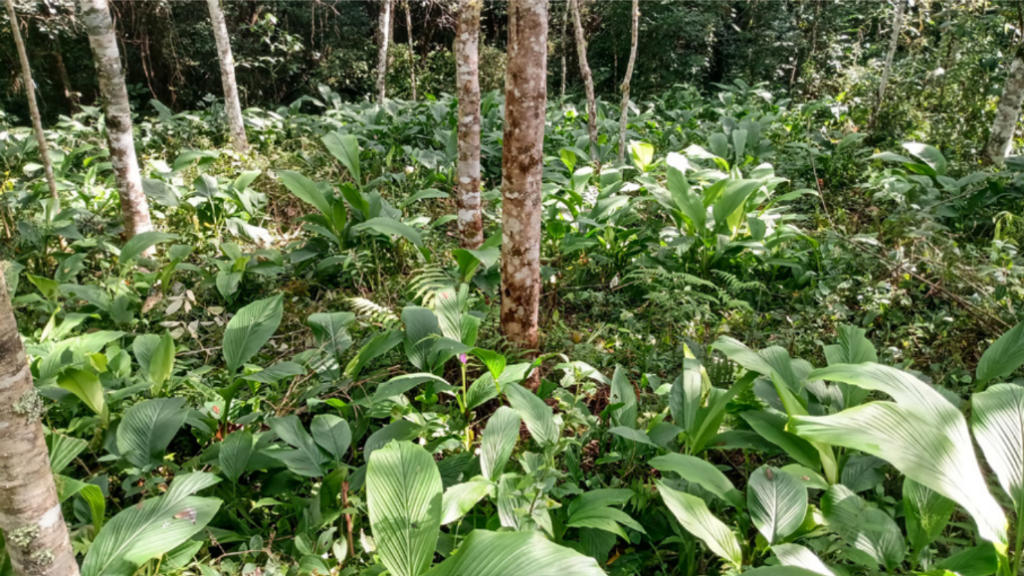
Agroforestry. Tree vegetation has established itself in an abandoned plantation with Turmeric (Curcuma
longa) – Abbey St Bathans UK-Scotland Dobie family, Scotland.

From Scotland’s Abbey St Bathans to Slovenia’s Pahernik Forest and Norway’s Vestland region, forests are managed to deliver multiple ecosystem services. While timber production remains important, these SDAs also support biodiversity, cultural values, and education. In Poland’s Woziwoda Forest District, this balance is captured through the principle of “nature protection through moderate and rational use.”

Mediterranean innovation and adaptation

Our Southern Europe’s demonstration areas highlight innovation under climate pressure. In Spain, forests such as Vall d’en Bas and Ribera Salada explore how to combine biodiversity conservation with high-quality wood production, while others integrate fire as a natural and necessary management component. In Italy and France, sites like Val di Susa, Pratomagno, and Hèches focus on multifunctional forestry – balancing production, protection, and long-term ecosystem resilience in the face of climate change and biodiversity loss.

Forests for research and education

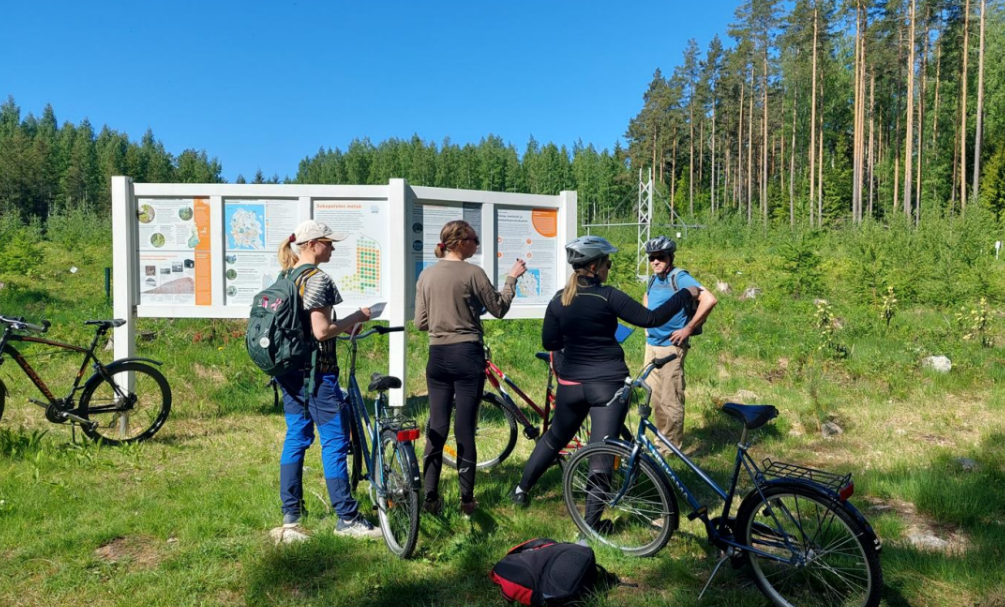
Training/Education at Punkaharju Research Park, Finland.

Some demonstration areas serve as centres for research and education, such as the Punkaharju Research Park in Finland, the University Forest Enterprise in Zvolen, Slovakia, and Universitätsforstamt Sailershausen in Germany. These sites connect science, practice, and society, ensuring that forest management is continuously informed by evidence and innovation.

By connecting these sites, TRANSFORMIT creates a living network of knowledge and practice, demonstrating that there is no single solution to climate and biodiversity-related challenges but many locally grounded pathways that, together, shape a more sustainable future for Europe’s forests.

Beyond timber: how experts envision the future of non-wood forest products

by Gesche Schifferdecker, Jukka Tikkanen, Mikko Kurttila, and Rainer Peltola

When you explore a Finnish forest with experts like Jukka Tikkanen, Mikko Kurttila, and Rainer Peltola, you quickly realise that the forest economy is far richer than timber alone. Between the trees and under the canopy lies a quiet abundance: branches from Spruce trees, sap from birches, mushrooms, resin, berries. And now, more than ever, these non-wood forest products (NWFPs) are gaining attention in forest planning.

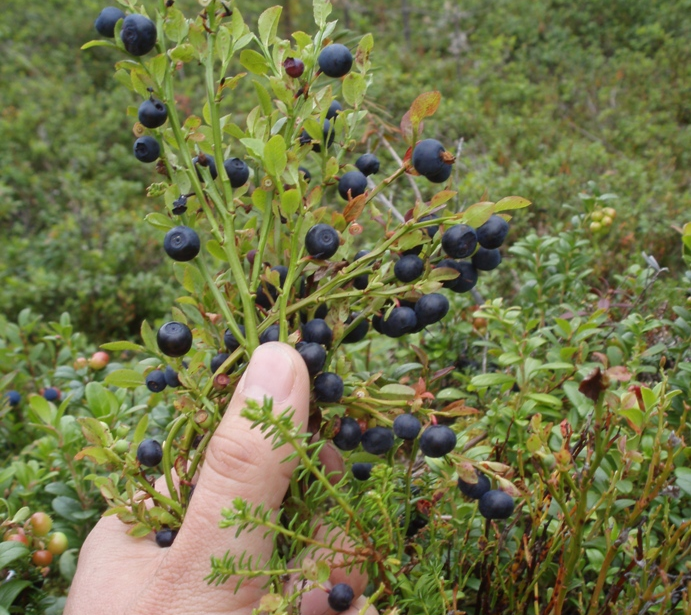
A productive bilberry shrub (photo: Rainer Peltola)
A productive bilberry shrub (photo credit: Rainer Peltola)

“Integration of NWF products into forest planning really depends on the product. If the growing stock data is up-to-date, the best production estimates come from products collected from trees – spruce shoots, resin, sap, birch leaves”, says Jukka Tikkanen, Research Director at University of Eastern Finland. Digital tools like Finland’s Metsään.fi would like to allow landowners to explore these potentials alongside timber data: an inclusion of NWTPs was technically piloted, but is not mainstreamed yet.

However, for berries and mushrooms, Jukka stresses the need for fieldwork: “General berry and mushroom estimates give a good idea, but business calculations need field investigations.”

Over the past years, his team has piloted natural product-oriented forest planning, which is a hands-on process combining terrain assessment with dialogue between the planner and landowner. “It’s meant to help landowners explore NWFPs as a complementary business. Timber doesn’t have to be the whole story”, emphasizes Jukka.

What a forest can offer: business planning

For Mikko Kurttila from Natural Resources Institute Finland (LUKE), the first step for forest owners is simple but often overlooked: “Owners need to consider what their forest properties can produce. Some may have birch suited for sap production. Others have young spruce stands perfect for collecting shoots in spring, or branches for the Christmas season. Older pines or spruces can offer resin.” He also stresses the limits set by Everyone’s Rights: “In general, owners should focus on NWFPs that are outside everyone’s rights. In Finland, this normally excludes berries and most mushrooms.”

Some forest owners have explored alternative ventures – like cultivating medicinal mushrooms. “People are curious about cultivating pakuri, but infecting substrates is expensive, and you must wait about ten years – I think that’s very risky”, says Mikko. For him, realistic business planning is essential: “Owners need proper calculation – labour, external services, opportunity costs, and expected revenue flows with different future prices and yields. The challenge is that advisors for this don’t really exist. Timber services do, but NWFP services don’t.”

The forest’s hidden harvest

While Jukka and Mikko focus on planning and business, Rainer Peltola (LUKE) has spent over a decade improving our understanding of NWFP production, especially berries.

“For more than ten years, berry yield forecasts have used a partial citizen-science concept. We’ve made progress in collecting observations, and data quality has steadily improved”, explains Rainer. The biggest breakthrough came when weather data was integrated into the forecasting system: “The single biggest step forward has been combining weather data with berry observations – modelling the weather phenomena that influence yields. We now have models predicting pollination success and ripening of bilberries, lingonberries, and cloudberries.”

These models feed into Luke’s berry map service, where users can explore forecasts like pollination success for bilberry in 2025 on a 5×5 km grid. “We hope this helps pickers and berry companies plan their operations – guiding pickers and planning logistics”, summarizes Rainer.

A more diverse forest future

Taken together, the insights from Jukka, Mikko, and Rainer paint a clear picture: forests hold tremendous and partly untapped value – but only if we know how to read it, measure it, and plan for it. As Jukka concludes: “Fully integrating timber and non-wood forest products would make forestry more sustainable – and our landscapes richer.”

And perhaps that is the shift underway: a forest economy increasingly rooted in everything the forest quietly offers – season after season, year after year.

Wegscheid’s Living Lab: where woodpeckers and forest managers find their place 

High up in the Styrian hills of Austria, where spruce crowns shimmer like scales in shifting light, a quiet transformation is underway. It began with a growing realization: forests can be managed and alive at the same time. 

© ÖBf/Thomas Pfatschbacher

How it all began: A forest rethinks its future 

The Austrian Federal Forests had long recognized their responsibility as caretakers of some of the country’s most precious natural areas. This commitment continuous today, extending not only to the management of protected areas but also to the integration of conservation ideas and guidelines into the management of commercially used forest across the country. Gradually, approximately half of the forest districts have now been equipped with an Ecological Landscape Management concept, ensuring that biodiversity is increasingly woven into everyday forest operations. 

The Ecological Landscape Management isn’t just an add-on. It became a new way of thinking:  forest plans now include not only economic but also ecological data, every decade-long operational plan accounts for habitats, and every stand is seen through the dual lens of use and nature conservation. 

This same shift lies at the heart of TRANSFORMIT’s mission of Integrated Forest Management.  

And so, when a Living Lab was to be established in Austria, the choice felt obvious: the 8,155-hectare forest district of Wegscheid. A region where the four pillars of Ecological Landscape Management, namely conservation and renaturation, habitat connectivity, process protection, and a conservation areas register are already invented. 

The TRANSFORMIT Living Lab would focus on one of these pillars: creating a net of habitat stepping stones through the forest for specific umbrella-species. 

A defining moment: When crisis becomes catalyst 

If there is a single snapshot that captures the spirit of Wegscheid, it may be the moment local foresters walked through stands devastated by bark beetles. Spruce – when planted decades ago outside its natural range – often had fallen victim to increasing temperatures, drought, storms, and pests. The landscape partly looked raw, wounded. Yet instead of discouragement, something else took root: determination. 

Foresters, researchers, and partners understood that this painful transformation was also an opportunity. As bark beetle outbreaks now slowly decline, conversations in Wegscheid have shifted. How can forests be rebuilt to withstand climate change? How can biodiversity become the foundation of resilience? 

In that moment, the spirit of the Living Lab crystallized: experimenting boldly, learning continuously, and working together for forests that can face an uncertain future.  

© ÖBf

The heart of the Living Lab 

Imagine a woodpecker. A black woodpecker perhaps, or a three-toed one, flying across a patchwork of forest stands. Not every piece of forest is equally suitable as a habitat for the bird. Some are young, some uniform, some still healing from storms or bark beetle attacks. What this bird needs is a network of stepping stones: pockets rich in habitat trees, deadwood, shelter, and food. 

In 2022, foresters in Wegscheid began mapping exactly that. Around 512 hectares were selected as habitat connectivity stepping stones: old stands, naturally regenerating patches, areas rich in deadwood and microhabitats. Across these areas, management was redesigned: 

  • No clear-cuts 
  • Multi-stage interventions instead of single harvests 
  • Habitat trees retained 
  • Deadwood deliberately left to decay 
  • Forest edges shaped in gentle, irregular forms 
  • Regeneration encouraged with ecologically valuable tree species 

The goal? To ensure that woodpeckers, and with them countless other species, find suitable habitats and can move safely and thrive across the forest landscape via these “stepping stones”. 

From science to practice 

As part of TRANSFORMIT, three Marteloscope training sites were created. These sites give stakeholders a hands-on way to experience forest decision-making: 

  1. A mature stepping-stone stand, rich in habitats for woodpeckers
  2. A naturally regenerated, yet unmanaged stand full of tree diversity  
  3. A young spruce stand, marked by heavy bark peeling damage; an honest reflection of the challenges the region faces 

Visitors stepping into these Marteloscopes literally walk into the questions the Living Lab is trying to answer. 

Working in the Wegscheid Living Lab is many things at once 

Working in the Wegscheid Living Lab is an experience shaped by contrasts. On the one hand, it is deeply experimental: new methods are tested directly in real forest stands, where every decision has visible consequences. At the same time, it is fundamentally community-driven, bringing together foresters, scientists, and local stakeholders who learn from each other and share responsibility for the landscape they shape. The work can be challenging, especially in an environment marked by extreme weather events, past calamities, and the legacy of outdated stand structures. Yet it is also profoundly inspiring. Every habitat tree that remains standing, every piece of deadwood deliberately left to decay, and every young, diverse stand growing toward maturity symbolizes a step toward greater resilience. Above all, the Living Lab is a place where hope meets pragmatism. A space where vision and hands-on action come together. 

What changes do we expect? 

Within the TRANSFORMIT framework, the Wegscheid Living Lab examines how effectively the concept of habitat-connectivity stepping stones can be implemented under real-world conditions. It explores where challenges emerge during this process, how these ecologically valuable areas can be secured and maintained over the long term, and how integrated forest management can move from theory into daily practice. The findings from Wegscheid are intended to do more than support local decision-making; they will contribute to a broader mission. By generating evidence-based insights and practical principles, the Living Lab helps pave the way for scaling up Integrated Forest Management across Europe and supports the ambitious goals embedded in current EU forest and biodiversity policies. 

TRANSFORMIT aims to support the goals of the EU Green Deal, the Biodiversity Strategy, and the EU Forest Strategy 2030. The lessons from Wegscheid (on connectivity, resilience, and the integration of conservation into forest use) will help shape these European ambitions. 

Because in the end, the story of Wegscheid is not just a local one. It is part of a much larger narrative: learning how forests can adapt, recover, and thrive, while still providing the resources and services society depends on. 

And in a quiet corner of Styria, the forest is beginning to show how IFM can foster biodiversity at the same time – a small but promising step.